
Research before retail
Good gear starts with the route, not the product.
Practical, research-based guides for senior-pet routines where measurements, setup, and tolerance matter more than a long list of products.

- Buying guides
- 27
- Problem guides
- 77
- Compared product records
- 100
Guide library
Find the smallest useful next step
Start with the senior-dog library, then use the cat starter library when that is your pet. Begin with the broad home route and narrow the problem. Use a buying guide only when the type of gear is already clear. Sudden pain, limping, weakness, or major mobility changes belong with a veterinarian first.
Senior dog routes, daily-care problems, and spec-checked gear organized by the decision in front of you.
Start here
Use the mobility hub when you are not sure whether the next step is traction, access help, handler support, bedding, cleanup, or low-impact enrichment.
Senior dog mobility aids by daily problem
Choose between traction, access, handler support, rest, cleanup, or low-impact enrichment gear by the daily problem you are trying to solve.
Problem guides
Read these first when the question is situational, not just a product category.
Everyday dog care
Practical choices for dogs of every age, from everyday routines to seasonal situations.
- Should You Try a Dog Halloween Costume? Check Fit and Comfort FirstDecide whether to try a dog Halloween costume with simple fit, movement, and comfort checks, plus clear signs that mean remove it or skip it.
- Dog Barking at Halloween Doorbells? Plan the Evening FirstPlan a Halloween front-door routine for a dog that barks at the doorbell: set up a familiar retreat, manage visitor access, and save reward practice for later.
- Daylight Saving Time and Your Dog: Plan the Fall Feeding ShiftPlan a gradual fall feeding and walk routine for your dog around the U.S. daylight saving time change, while keeping bathroom needs and prescribed medication timing in view.
- Can Dogs Eat Pumpkin? Check the Label Before SharingCheck a pumpkin product's ingredient list before sharing it with your dog: plain pumpkin may be an occasional snack, while pie mixes and spiced desserts are different foods.
- What Colors Can Dogs See? Blue, Yellow, and the LimitsDogs see color, with broad blue/yellow distinctions and reduced red/green discrimination. Learn what the two-cone model explains—and what remains unknown about a dog’s exact view.
- Can Dogs Eat Turkey? Check the Meat Before SharingIf you share turkey with your dog, check for fully cooked, plain, boneless, skinless meat; keep bones, gravy, seasoning, and fatty scraps out of reach.
- Why Do Dogs Tilt Their Heads? What the Evidence ShowsWhat a small toy-name study found about dog head tilts, why it cannot explain every tilt, and when a constant tilt needs veterinary attention.
- Why Do Dogs Eat Grass? What to Notice NextLearn what is known about dogs eating grass, why a specific cause may be unclear, when to contact your vet, and how to check treated lawns.
- Why Do Dogs Get the Zoomies? Energy, Excitement, and ContextNo specific cause is known. Clear hazards; contact a veterinarian for apparent pain or distress.
- Can Dogs Eat Apples? What to Remove Before SharingDogs can have plain apple flesh as an occasional treat. Wash it, remove the seeds, core, and stem, then cut the flesh into bite-size pieces.
- Do Dogs Dream? What Sleep Research Can Tell UsScientists think dogs dream, but a sleep movement cannot reveal a specific dream. See what dog REM data and rat research do—and do not—show.
Start at home
Begin with the routes and routines your dog uses every day.
Access and transfers
Work through beds, stairs, vehicles, thresholds, and assisted movement.
- Dog ramp vs stairs for senior dogsChoose an access aid by the height, available floor space, approach, traction, and the dog's current movement pattern.
- How to help an old dog get into a carChoose between a ramp, handler support, a lower target, or alternate transport without pushing through pain or fear.
- Senior dog refuses a rampCheck pain signals, stability, angle, surface grip, and the approach before deciding whether to retrain or change the setup.
- Senior dog safe path from bed to doorMap the nighttime route from bed to door, including the bed exit, floor path, thresholds, lighting, and cleanup points.
- How to move a senior dog without carryingMatch assisted movement, a ramp, transport, or a simpler route to the actual transition the dog cannot manage.
- Senior dog won't jump on bedCheck for new pain or weakness, then compare the floor route, furniture height, and the dog's tolerance for stairs or a ramp.
- Dog Slipping on Wood Stairs? Start With Access and the Exact SurfaceIf a dog slips on wood stairs, start by limiting unsupervised access, locating the problem area, and checking the exact surface before adding traction.
Traction and paws
Choose between a covered route, paw gear, grooming checks, or a mixed setup.
- Senior dog slipping on hardwood floorsMap slick zones, add a stable traction path, check paws, and decide when ramps, paw gear, or handler support fit.
- Senior dog traction options comparedCompare route coverage, paw-level grip, grooming checks, and access setup by where and when slipping happens.
- Dog socks vs rugs for hardwood floorsDecide whether the problem is best handled with a covered route, paw gear, or a deliberate combination of both.
- Dog socks vs toe grips for senior dogsCompare fabric coverage, nail-level contact, paw tolerance, fit maintenance, and route coverage before choosing paw gear.
- Dog socks keep falling offTroubleshoot sliding, twisting, straps, nail length, paw fur, sizing, and whether a stable rug path fits better.
- How to Clean Dog Paws After a Walk: Towel, Wipes, or a Paw Washer?Choose an after-walk dog paw cleanup by visible dirt and your dog's comfort: when to use a towel, damp cloth, dog wipes, or an optional paw cup.
Walks and transport
Plan shorter outings, rest breaks, cabins, entry, and handler load.
- Dog wagon vs stroller for senior dogsChoose by cabin floor, entry path, route control, brakes, storage, and what the handler can safely load and steer.
- Large dog stroller for senior dogsCheck cabin space, entry path, route control, brakes, storage, and handler burden before comparing listings.
- Senior dog gets tired on walksSeparate vet-first stop signs from stable-case pacing, shorter routes, rest breaks, and low-impact alternatives.
- Dog Leash for Elderly Owners: What to Check Before a WalkLooking for a dog leash for elderly owners? Check handler control, loose-lead behaviour, route safety, and when a leash alone is not enough.
Travel and Safety
Prepare rear-seat restraint and vehicle fit before a planned trip.
- How to set up a rear seat for a senior dog car tripA parked-car zone audit that separates restraint placement, mobility-aware boarding, stable ordinary-travel posture, loose hazards, temperature, and rehearsal.
- How to fit a dog car harness before a vet tripMeasure, introduce, fit, and route a dog car harness before a veterinary trip, with mobility-aware checks and clear stop conditions.
Daily care
Handle nails, food labels, accidents, rest, and low-impact enrichment.
- Bed protection for senior dog accidentsBuild a washable bedding and floor-protection routine while keeping new or changing accidents in the veterinary conversation.
- Senior dog low-impact enrichment ideasMatch gentle play, sniffing, stable surfaces, and rest breaks to short energy windows without pushing through a sudden slowdown.
- Senior dog nail care at homeDecide whether a short home nail-care session fits today, when to stop, and when a veterinarian or groomer should take over.
- Senior dog food label checklistRead nutritional adequacy, life stage, calories, guaranteed analysis, ingredients, and label claims before comparing foods.
- Senior Dog Pacing at Night? What to Note and Tell Your VetA new nighttime pacing pattern cannot identify its cause. Note the timing and what you have already noticed, then share it with your veterinarian.
- Dog Scared of Thunder? Make a Safer Storm PlanIf your dog is scared of thunder, plan a familiar retreat, lower escape risk, and know when to contact your veterinarian.
- Dog Keeps Shaking Head and Scratching Ears? When to Call a VetRepeated head shaking and ear scratching do not identify a cause. Learn which visible changes to report and when your dog may need urgent veterinary assessment.
Buying guides
Compare spec-checked senior dog products once you know the type of gear that fits the problem.

Best Dog Ramps For Senior Large Dogs
Compare senior dog ramps by length, width, grip, weight capacity, storage, and setup safety before checking current Amazon listings.
Best Dog Ramps For Cars For Senior Dogs
Compare dog ramps for cars, SUVs, and trucks by length, vehicle entry height, folded storage, width, grip surface, product weight, and reviewed product-detail links.

Best Dog Ramps For Beds And Couches For Senior Dogs
Compare indoor dog ramps for beds, couches, and sofas by furniture height, room footprint, ramp length, width, grip surface, storage, and Amazon product links.

Best Orthopedic Dog Beds For Senior Large Dogs
Compare orthopedic dog beds for senior large dogs by usable sleep area, foam profile, liner protection, cover care, bolsters, and current Amazon listings.

Best Toys For Senior Dogs
Compare toys for senior dogs by play style, texture, food enrichment, cleaning, supervision needs, and current Amazon listings.

Best Traction Socks for Dogs on Hardwood Floors
Compare 4 reviewed traction socks for dogs by paw-width sizing, 360-degree or double-sided grip, straps, cleaning, and fit on hardwood floors.

Best Dog Booties For Senior Dogs Indoors
Compare indoor dog booties and paw-cover traction aids for senior dogs by paw-width fit, sole grip, retention, floor marking, cleaning, tolerance, and supervised use.

Senior Dog Car Harnesses: Fit, Routing, and Crash Evidence
Compare Kurgo chest-and-neck fit with EzyDog girth and belt routing, while separating maker restraint claims from independent certification.

Best Dog Nail Grinders for Senior Dogs: Simple, Guarded, or Two-Speed?
Compare three exact dog nail grinders by visibility near the quick, control mode, speed adjustment, guard guidance, grip, session setup, and clear stop boundaries.
Best Dog Nail Grips For Senior Dogs
Compare dog nail grips, nail wraps, paw-pad stickers, and paw-pad coating alternatives for senior dog traction by fit path, contact area, replacement routine, and supervised use.

Best Non-Slip Floor Runners for Dogs
Compare 6 reviewed non-slip floor runners, runner rugs, and rug pads for dogs by hallway fit, backing, edge profile, cleaning, and floor compatibility.

Dog Diapers for Senior Dogs: Full Diaper or Male Wrap?
Compare full diapers and male wraps by body coverage, fit measurement, washable versus disposable routine, model-specific care, and skin checks.

Best Senior Dog Stairs For Beds, Couches, And Cars
Compare senior dog stairs and dog steps for beds, couches, and cars by access location, total height, step rise, tread depth, grip surface, storage, cleaning, and reviewed product-detail links.

Best Washable Pee Pads For Senior Dogs
Compare washable pee pads for senior dogs by placement, size, pack count, absorbent construction, backing, floor grip, laundry routine, and reviewed Amazon affiliate links where available.

Best Support Harnesses For Senior Dogs
Compare support harnesses for senior dogs by support type, body zone, sizing, handle placement, male clearance, cleaning, wear checks, and reviewed Amazon affiliate links where available.
Best Dog Slings For Senior Dogs
Compare rear-support dog slings for senior dogs by support pad shape, handle height, size range, male clearance, stay-on straps, cleaning, wear checks, and reviewed Amazon affiliate links where available.

Best Dog Wagons for Large and Senior Dogs
Compare 6 reviewed options: 3 purpose-built dog wagons and 3 large stroller alternatives for senior dogs, with cabin, entry, brake, fold, and handler-burden facts.

Best Elevated Dog Bowls For Senior Dogs
Compare elevated dog bowls for senior dogs by feeding height, bowl capacity, splash or spill design, stand material, floor footprint, cleaning, and Amazon product links.
Best Low Entry Dog Beds For Senior Dogs
Compare low-entry dog beds for senior dogs by front opening, bed shape, sleep surface, foam or fill, washable covers, protection layers, floor fit, and reviewed product-detail links.
Best Waterproof Dog Bed Covers For Senior Dogs
Compare waterproof dog bed covers for senior dogs by fitted coverage, liner versus blanket style, barrier layer, sizing, backing, wash routine, and reviewed official product-detail links.
A starter library for senior cat access and home routines, kept separate from dog-specific mobility and product advice.
Start here
Begin with the familiar route to rest, food, water, litter, and shared rooms before changing several parts of the home at once.
Senior cat home access checklist
Review an older cat's route to rest, food, water, litter, and familiar rooms before changing the whole setup.
Problem guides
Read these first when the question is situational, not just a product category.
Senior cat home
Review familiar routes, resources, and planned-visit preparation for an older cat.
- How to Trim Overgrown Cat Claws in a Senior CatTrim an overgrown senior cat's claws only when your cat is calm and the tip is clear. Contact a veterinarian if the claw is painful, injured, embedded, or unclear.
- Older Cat Not Responding to Your Voice? Start With a Gentler ApproachWhen an older cat misses voice cues or startles at your approach, let them see you first, keep familiar routines, and arrange a veterinary assessment.
- Senior Cat Not Grooming? What to Check With Matted FurA conservative coat-change check for a senior cat: what to record, when gentle handling should stop, and when mats or skin changes need professional assessment.
- Senior Cat Eating Less: What to Track Before the VetA call-first observation log for a senior cat eating less: what changed at meals, what else to note, and which signs should not wait.
- Cat straining in the litter box: constipation or a urinary emergency?Call-first guidance for a cat straining with little, no, or uncertain urine output; observations to share without delaying veterinary care.
- Senior cat carrier routine before vet visitsUse a short, voluntary carrier routine before a planned appointment and keep clinic-contact decisions separate from product, treatment, and diagnosis claims.
- Senior cat home access checklistReview an older cat's route to resting places, food, water, litter, and familiar rooms before changing the whole setup.
- Where to Put a Litter Box for a Senior CatWalk the route from your senior cat’s resting place to the litter box: same-floor access, a quiet approach, easy entry and a clear way out.
- Senior Cat Yowling at Night? Notice What Else Has ChangedNew nighttime calling in an older cat deserves a closer look. Know when to seek urgent care, what changes to note, and what to tell your veterinarian.
- Senior Cat Sitter Instructions: A Printable Care HandoverPrepare an organized care handover for your senior cat sitter with our printable worksheet, covering routines, contacts, supply stations, and visit notes.
- How to Weigh a Senior Cat at Home and Keep a Useful Weight LogLearn how to weigh a senior cat at home using a low-weight scale, record clear entries without restraint, and maintain an organized log for your veterinarian.
- Senior Cat Vet Visit Checklist: Records, Videos, and Questions to BringOrganize your senior cat’s records, routine, dated videos and questions for a vet visit, with printable sheets for preparation and the clinic’s answers.
- How Do You Count Your Senior Cat’s Sleeping Breathing Rate?Count whole breaths during quiet sleep, keep the count and timing clear, and use your veterinarian’s reporting plan. Distressed breathing takes priority over a log.
- Your Vet Asked for a Senior Cat Urine Sample. What Should You Prepare?Prepare for a clinic-requested senior cat urine sample: ask about the test, collection materials, labeling and delivery, and know when to call instead.
- Cat Dropping Food but Still Hungry? Look Beyond AppetiteA cat may still want food while chewing becomes uncomfortable. Learn what dropped food can tell you, what it cannot, and what to ask your veterinarian.
- Older Cat Throwing Up Undigested Food? Describe What HappenedUndigested food does not identify the cause. Describe visible effort, preserve uncertainty about unwitnessed episodes, and ask your veterinary clinic what happens next.
- Older Cat Sneezing? What to Tell Your VetNew repeated sneezing deserves a call. Describe visible nasal changes, know which signs need urgent help, and leave the cause to your veterinarian.
- Senior Cat Diarrhea: What to Notice and Tell Your VetWhen an older cat has loose stool, describe what you saw, keep uncertain details honest, and ask your veterinary team about care and a requested sample.
- Older Cat Limping? What to Do About a New ChangeContact your vet about a new limp. Know when to call immediately, describe changed leg use without testing it, and avoid assuming it is just age.
- Senior Cat Hiding More Than Usual: How to RespondWhen an older cat hides more than usual, keep a safe retreat available and contact your veterinarian without forcing a response or assuming it is age.
- Older Cat Coughing but No Hairball? What to Do NextRepeated coughing without a hairball needs veterinary attention. Know urgent signs and describe what you have already seen without trying to diagnose the cause.
- Elderly Cat Shaking Their Head? What to Tell Your VetRepeated head shaking warrants veterinary contact. Learn which already-visible changes to report and why ear debris alone cannot identify the cause.
- Older Cat Having a Seizure? What to Do FirstWhat to do during a possible seizure in an older cat: contact your vet, avoid restraint, and describe what happened without delaying care to collect notes.
- Older Cat Losing Balance? Call Before Assuming Vestibular DiseaseSudden balance loss in an older cat needs a veterinary call. Learn what to report without diagnosing vestibular disease or testing at home.
- Senior Cat Bad Breath? Call Before Treating the SmellNew or persistent bad breath in a senior cat deserves a veterinary check. Learn what the smell can and cannot tell you, what to report, and why a freshener is not a diagnosis.
- Senior Cat Drooling: When to Observe and When to Call a VetSome cats drool while relaxed and purring. Learn how to note a new pattern of senior cat drooling and when to call your veterinarian.
- Senior Cat Overgrooming One Spot? Don’t Assume StressRepeatedly licking one spot and thinning fur in a senior cat call for factual observation and a veterinary conversation, not a stress diagnosis.
- Senior Cat Drinking More Water? Call With the Whole HistoryA senior cat drinking more needs a veterinary conversation, not a bowl diagnosis. Note food moisture, other sources, medications, supplements, and changes already seen.
- Older Cat Eye Discharge? Call Before Using DropsNew eye discharge in an older cat deserves prompt veterinary attention. Record visible changes and call before using human eye drops or testing vision at home.
Cat hydration
Review drinking routines, water station placement, and cleaning.
- Where to put cat water bowls—and how often to clean themA room-by-room placement map and cleaning routine for quiet, accessible cat water stations in single- and multi-cat homes.
- Cat drinking less: what to check at homeA calm checklist for checking a cat who seems to be drinking less, including food moisture, bowl access, urine, behavior, and when to call a veterinarian.
Everyday cat care
Practical routines and seasonal safety for cats of every age.
- Are Glow Sticks Safe for Cats? Keep Them Out of PlayKeep glow accessories out of cat play, and contact a veterinarian or poison service if your cat chews one or may swallow its contents or casing.
- Why Do Cats Knead? What “Making Biscuits” Can MeanLearn what kitten kneading does, why adult cats may continue the behavior, and how to add a soft barrier if claws on your lap feel uncomfortable.
- Why Do Cats Have Whiskers? What Those Sensitive Hairs DoCats use sensitive whiskers to collect close-up information through touch, air movement, and vibration. Learn what that can tell us—and why whiskers should stay intact.
- Why Do Cats Hiss? Give Them Space FirstA hiss can warn that a cat wants distance when frightened, threatened, or uncomfortable. Learn what it does—and does not—tell you, and how to allow retreat.
- Why Do Cats Sleep So Much? Frequent Naps, Familiar PatternsCats often rest and wake in repeated bouts, but no single pattern explains a nap. Compare with your cat’s usual rhythm and contact a veterinarian about a marked change.
- Why Do Cats Meow? Food, Attention, and ContextCats can learn that meowing gets a response from people, but a sound does not reveal one exact need. Notice the situation and changes in your cat’s usual pattern.
- Why Does My Cat Follow Me? Attention, Routine, and ContextCats may follow you for attention, company, curiosity, food anticipation, or a familiar routine. Notice the setting; following alone does not prove affection or separation anxiety.
- Why Do Cats Wag Their Tails? Read the Whole CatTail swishes need context. Notice the whole cat; discuss changes with a veterinarian.
Buying guides
Published senior cat product guides will appear here after their evidence and release checks are complete.

Best Low-Entry Litter Boxes For Senior Cats
Compare low-entry litter boxes for senior cats by entry design, footprint, side or rim details, open-top access, cleaning details, and Amazon product links.

Best Automatic Litter Boxes for Senior Cats: Open View, Low Entry, or Simple Logs?
Compare three automatic litter boxes for older cats by access geometry, cleaning safeguards, observation, app logs, setup limits, and transition needs.

Cat Puzzle Feeders: Stationary Tower, Rolling Ball, or Reach-In Maze?
Compare three cat puzzle feeder formats by floor movement, paw access, difficulty adjustment, dry-food loading, cleaning, and ration monitoring.

Hard Cat Carriers for Vet Visits: Small, Medium, or 360-Degree Access?
Compare exact Catit hard-shell models by external size, maker standing-height limits, access, and storage; interior clearance and unlisted weight limits remain unknown.

Cat Water Fountains: Compact 2L, Shared 1 Gallon, or Battery 5L?
Compare three exact stainless drinking-surface fountains by capacity, listed dimensions, cord or battery mode, flow format, and model-specific filter and cleaning care.
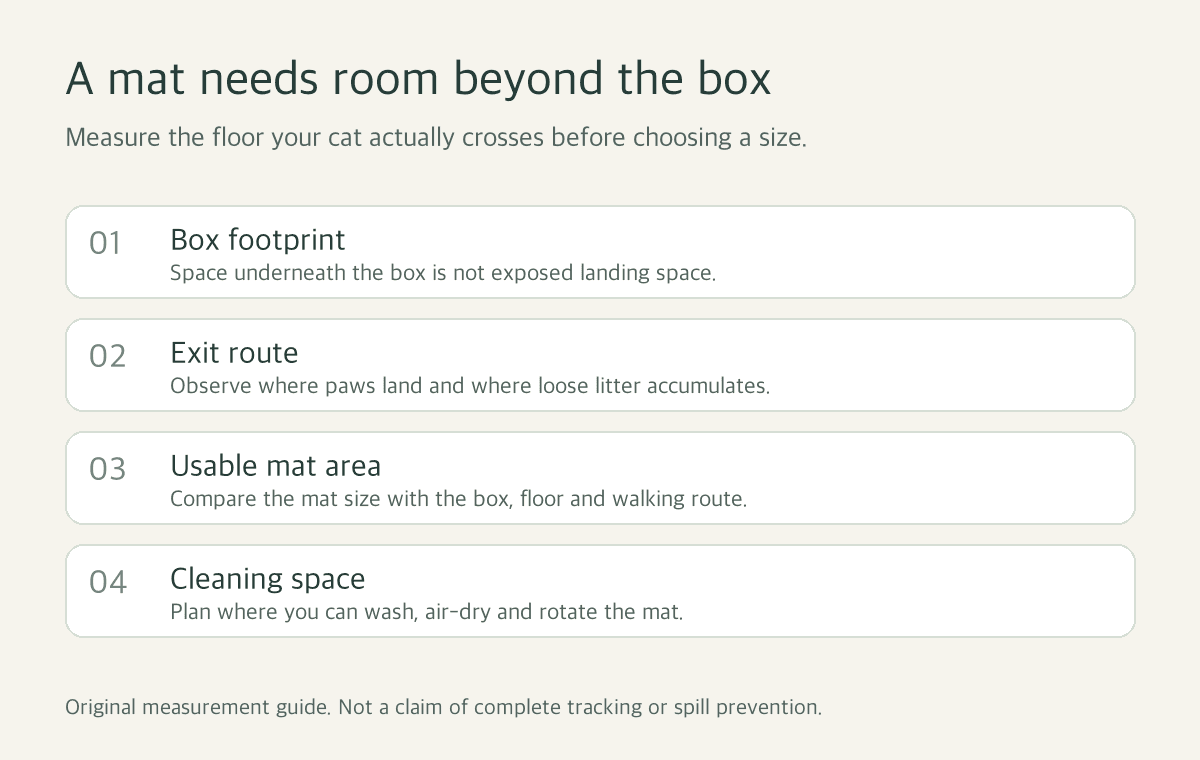
Mat for Under a Litter Box: Measure Coverage and Cleanup First
Measure your cat's exit route and box footprint before choosing a litter mat; Gorilla Grip 24x17 fits some setups, cleaning location matters.
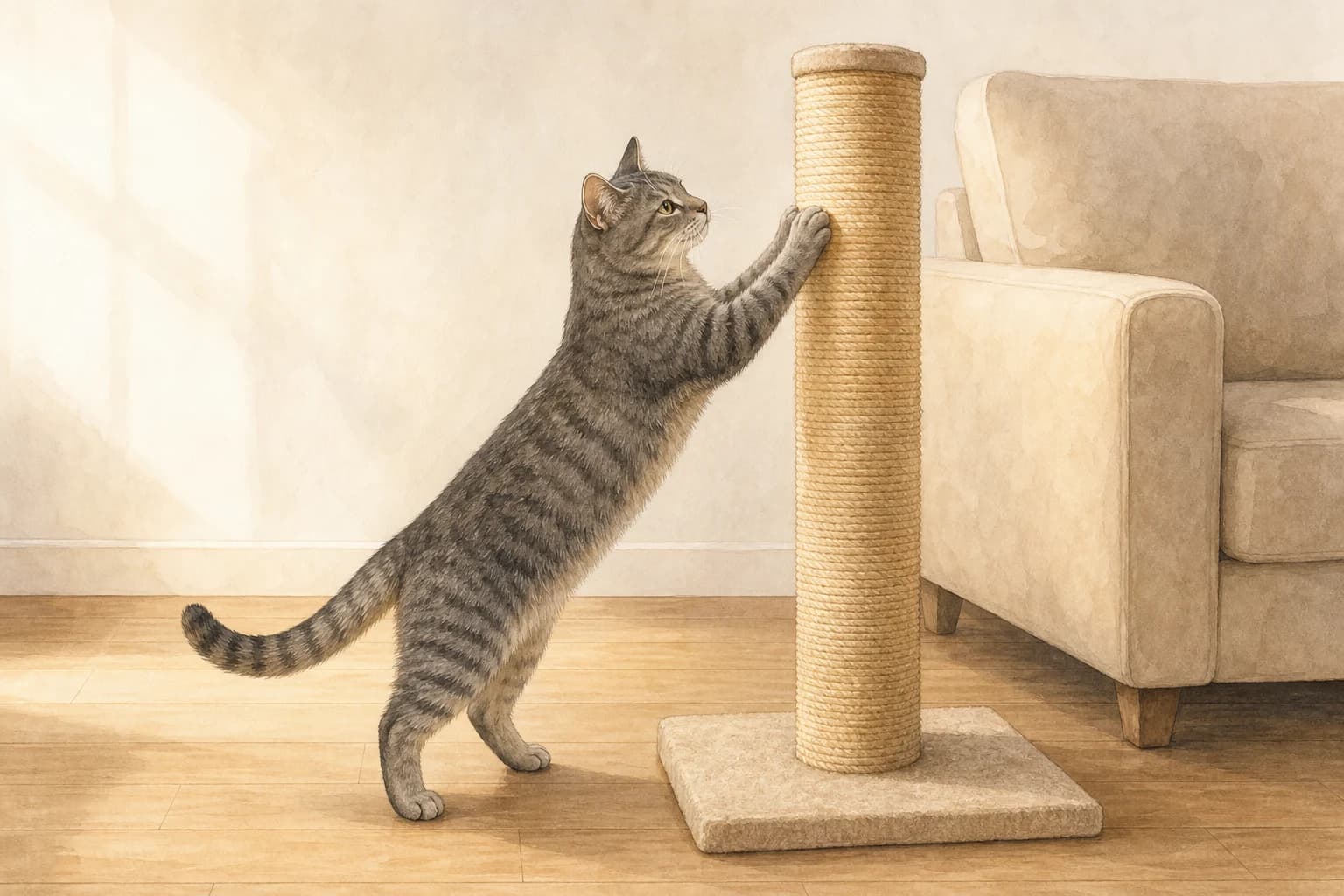
Cat Scratching Post Buying Guide: When a 32-Inch Sisal Post Fits
Check whether a vertical scratching post suits your cat's usual direction, available space, and reach before comparing one documented model.