
Senior cat care · claw trimming
How to trim overgrown cat claws in a senior cat
If an older cat's claw catches on carpet, check the claw before reaching for clippers. You may trim only a small, clearly visible tip when your cat is calm, the claw is intact, and gentle paw handling is already familiar. If the claw is curled into a paw pad, injured or painful, your cat resists, or you cannot identify a safe tip, stop and ask your veterinary team to assess it or demonstrate a trim.
Cats Protection lists carpet snagging among the signs to check and advises a veterinary appointment if a claw may be growing into a paw pad.
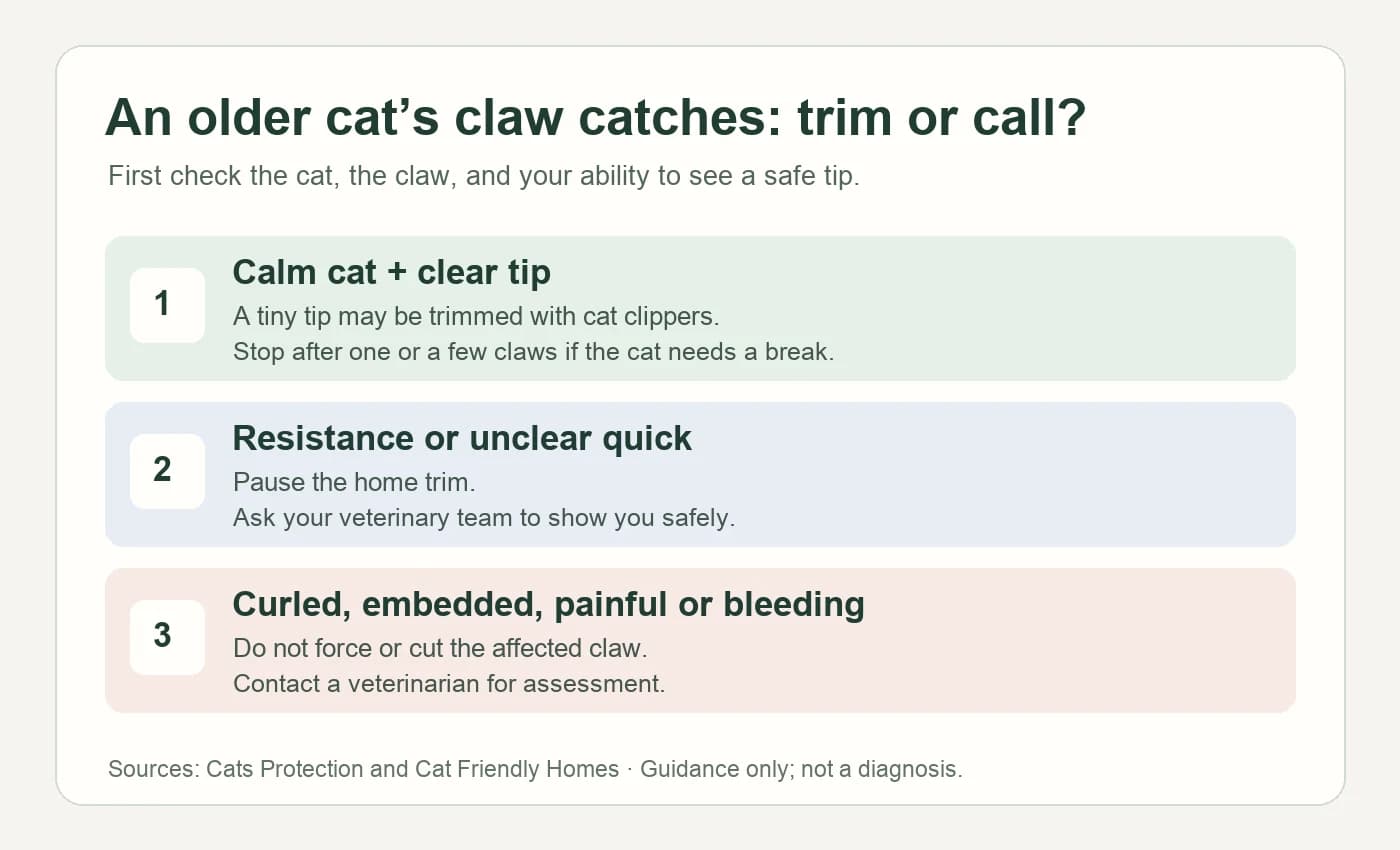
Check the claw before you touch a paw
Look while your cat is resting or moving normally. A claw that stays visible when the paw is relaxed, catches on a blanket or carpet, taps on a hard floor, or seems difficult to retract is worth checking. These signs can point to overgrowth; they do not explain why it happened. Older cats can have overgrown, thick, or brittle claws, and Cornell advises checking senior cats' nails regularly rather than assuming a change is simply age. (Cats Protection; Cornell Feline Health Center)
Do not tug on a snagged claw to make it come free. If your cat is settled and already comfortable with gentle paw handling, look without restraining them. Stop if they pull away, stiffen, vocalize, or try to leave; you do not need to finish the check in one sitting.
When a home trim is reasonable
Consider clipping only when all of these conditions are true:
- Your cat is relaxed and already permits gentle paw handling.
- The claw is intact and is not curled into or pressing on the paw pad.
- You can clearly distinguish a tiny tip from the quick and can see where the clippers will cut.
- You have small trimmers made for cat claws and can stop immediately if your cat becomes uncomfortable.
Cat Friendly Homes recommends cat-sized trimmers, a calm setting, gradual practice, breaks, rewards, and asking a veterinarian for advice or a demonstration. If paw handling is new, make the first session a brief touch-and-reward practice only; do not turn it into a forced trim. (Cat Friendly Homes / FelineVMA)
A short routine for a calm, cooperative cat
Trim only the clear tip
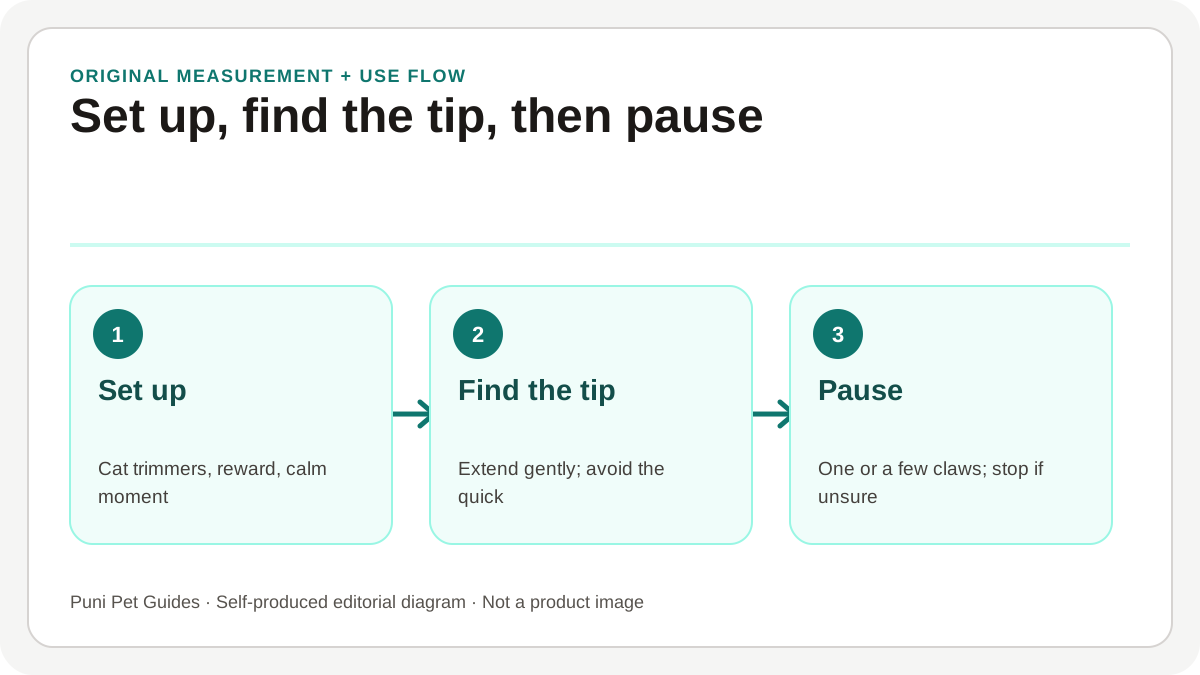
Set up first
Have cat nail trimmers and a reward ready before you begin. Choose a quiet moment when your cat is already settled. If you are unsure about the tool or cut line, ask a veterinarian or veterinary nurse to demonstrate before trimming.
Extend one claw gently
Hold the paw only if your cat accepts it. Apply gentle pressure to the toe pad to make the claw visible; do not squeeze.
Clip just the end
Remove only a small, clearly visible tip, staying well away from the quick near the base of the claw. Cornell describes the quick as pink tissue containing blood vessels and nerve endings; cutting it can cause pain and bleeding. If the safe tip is hard to see, including on a dark or opaque claw, do not guess. Leave that claw for a veterinary demonstration or trim. (Cats Protection; Cornell Feline Health Center)
Pause before doing more
Offer a reward and stop after one claw or a small number if your cat remains comfortable. Spread the work over short sessions instead of trying to finish every claw at once. Stop when your cat needs a break.
For older cats, Cornell recommends checking nails weekly and trimming if needed; Cat Friendly Homes notes that trim frequency depends on a cat's lifestyle. Treat a weekly check as a reminder to look, not a universal trim schedule. Ask your veterinarian what routine fits your cat.
Stop and contact your veterinarian
Do not trim an embedded, injured, painful, or unclear claw
- The claw curves into, touches, or appears stuck in the paw pad.
- It is broken, bleeding, or your cat reacts as if it hurts.
- You cannot see a safe tip or tell where the quick is, or your cat will not tolerate a gentle check.
- The claw or your cat's response has changed suddenly or is getting worse.
Do not pull, twist, or try to free an embedded claw. Cats Protection advises making a veterinary appointment if a claw may be growing into the pad or if you notice a change. Tell the clinic what you saw and when; let the veterinary team decide whether examination or a professional trim is needed. A new physical change in a senior cat should not automatically be treated as normal aging.
Make a short note for the clinic
You do not need to diagnose the cause or keep handling the paw to gather details. If useful, note what you already observed:
- when you first noticed the change
- which claw or paw, if known
- what the claw catches on
- whether it is visible while resting
- any pain response, limping, bleeding, or pad change
If claw snagging appears with another change in how your cat moves through the home, see the separate senior-cat home-access checklist. If coat grooming has changed too, the senior-cat matted-fur check covers that different question. Neither page replaces veterinary advice about a new physical change.
The trim sequence
Set up, find the tip, then pause
This step diagram summarizes the routine for a calm cat. The decision map above and the stop conditions still apply at every step.
Research notes
Sources behind this guide
Written by Puni Pet Guides Editorial Team · Sources checked Sep 27, 2026. This article summarizes public cat-care and veterinary references; it does not report hands-on testing or independent veterinary review. Diagnosis and treatment decisions belong with your veterinarian.