
Everyday dog care · behavior
Why Do Dogs Get the Zoomies? Energy, Excitement, and Context
Zoomies are sudden bursts of running or intense activity. Cornell’s guide to zoomies says no specific cause is known. Energy release, excitement, or perhaps stress may be involved. Those are possibilities, not proof of a particular dog’s mood or health.

Examples, not a rule
A sponsored, puppy-focused American Kennel Club article gives nighttime and after-bath puppy examples and discusses play and excitement. Those examples are not a rule for all dogs or a way to know one dog’s mood.
If another dog or person is nearby, give your dog room to move away from an interaction it finds uncomfortable. PDSA’s communication guidance says dogs vary in how they communicate and recommends allowing a dog to leave an uncomfortable situation.
Give the burst a clear route
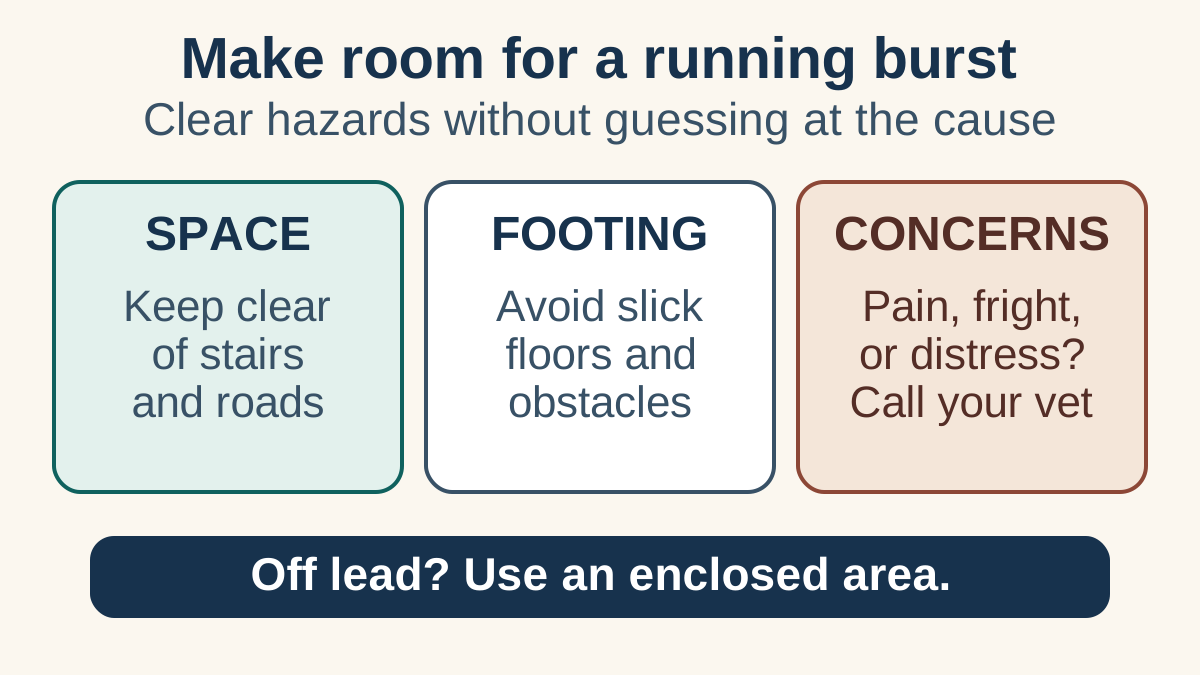
When a burst happens, keep its route clear of stairs, slippery floors, obstacles, and roads. If your dog is off lead, choose an enclosed area. Cornell recommends these hazard precautions.
When to contact a veterinarian
If your dog appears to be in pain, frightened, or distressed during a burst, contact a veterinarian. Cornell lists these as reasons to seek veterinary help.
If thunder is the concern, see our separate guide to a dog scared of thunder for a storm-safety plan.
Research notes
Sources behind this guide
Written and source-checked by Puni Pet Guides Editorial Team · Reviewed Oct 27, 2026
This guide synthesizes the public references below; it does not report hands-on product testing or independent veterinary review.
Review scope: practical context, source traceability, and clear non-diagnostic boundaries. Diagnosis and treatment decisions stay with veterinarians.