
Senior cat care · eating changes
Cat Dropping Food but Still Hungry? Look Beyond Appetite
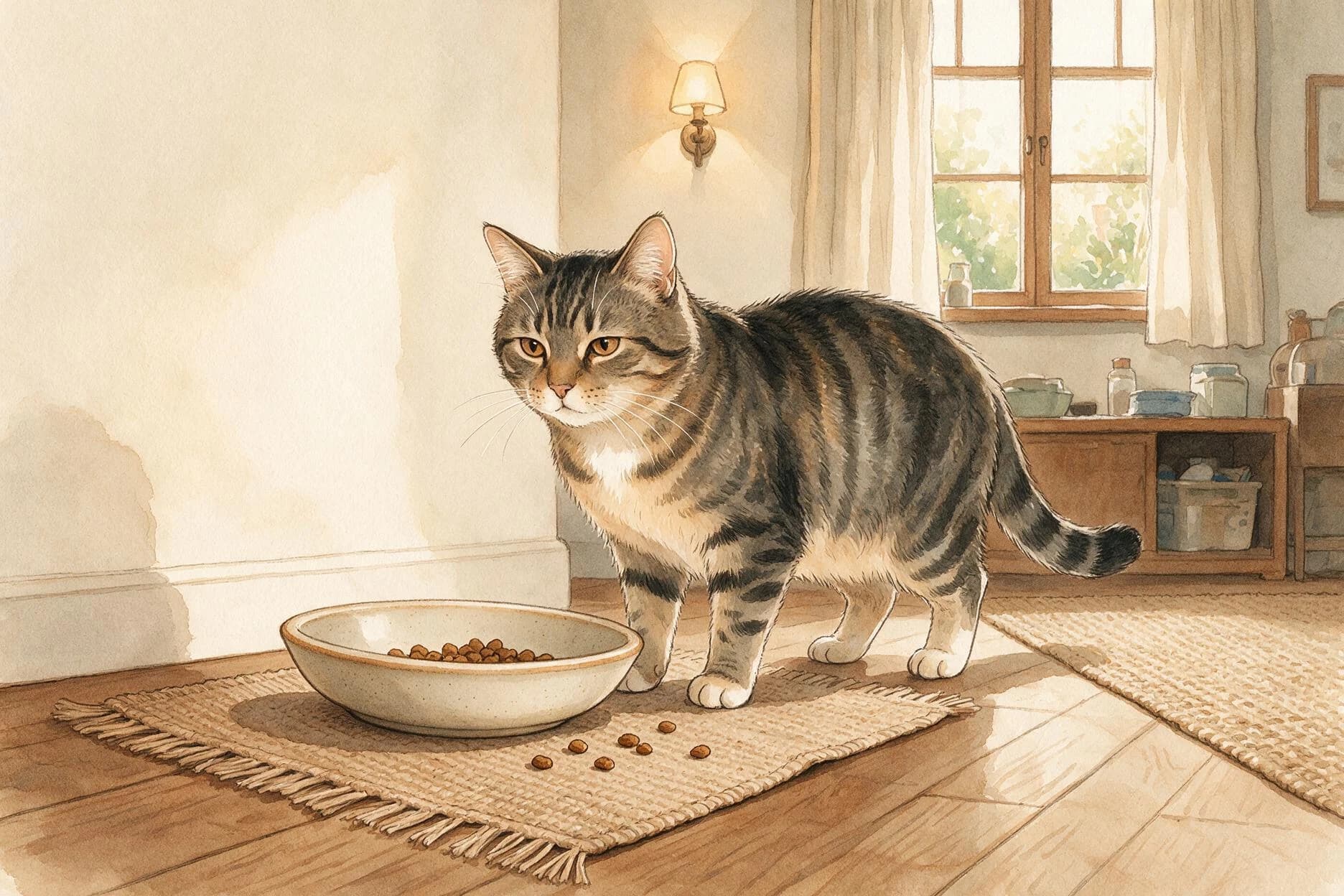
Your older cat comes over for dinner, tries to eat, then leaves pieces beside the bowl. That combination deserves attention even when the interest in food seems unchanged. Wanting a meal and chewing it comfortably are different things. Contact your veterinary clinic about a new or repeated change in how your cat eats; you do not need to identify the painful tooth before asking for an examination.
This guide focuses on food falling from the mouth or noticeably different chewing. If the main change is how much your cat eats, our senior-cat appetite and meal record covers that separate question. The two observations can occur together, but a full bowl inventory cannot tell you what is happening inside the mouth.
Why coming to the bowl is not an all-clear
Cornell's tooth-resorption guidance describes cats that keep showing interest in food while having difficulty eating. Affected cats may tilt the head, favor one side when chewing, swallow pieces without chewing or drop food. Tooth resorption is one possible explanation for these signs, not a diagnosis you can make from a spilled meal.
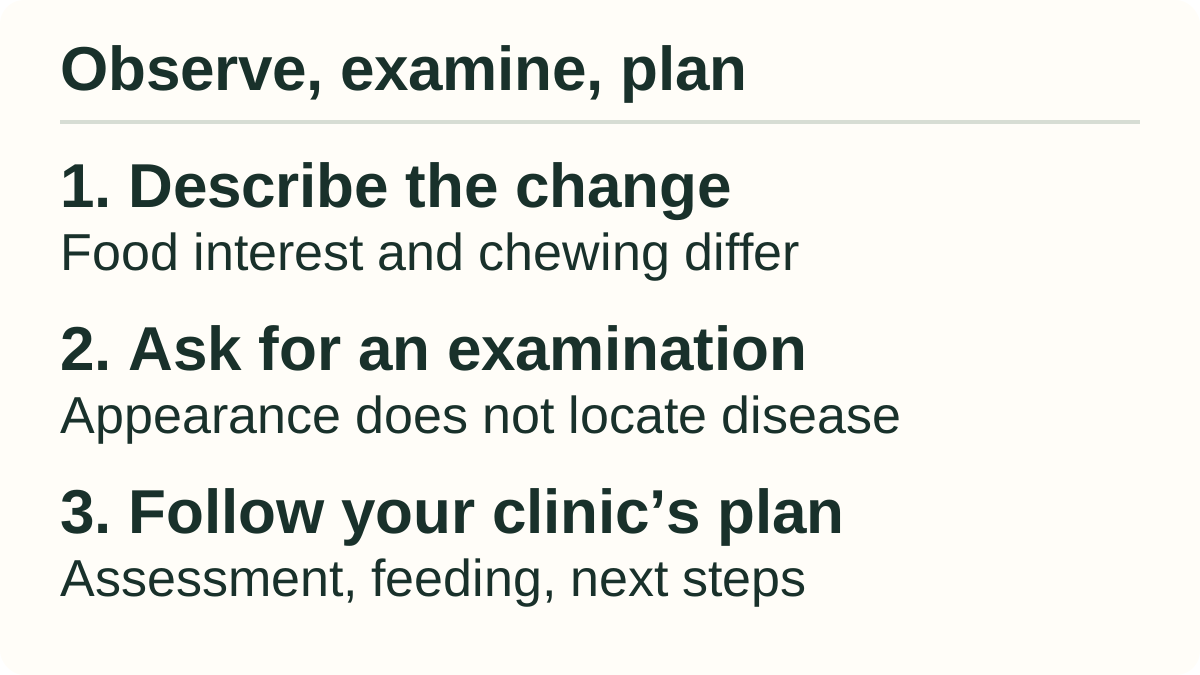
The useful distinction is between noticing an action and explaining its cause. “She approaches the bowl and food falls out while she chews” gives the clinic an observation. “Her left back tooth must be bad” adds a conclusion you have not established. Neither apparent enthusiasm nor a guess about the side of the mouth replaces the examination.
A visible tooth does not tell the whole story
Cornell's overview of feline dental disease covers several conditions, including gingivitis, periodontitis and tooth resorption. Dental disease can make eating painful. These conditions are not interchangeable, and the amount of food on the floor does not distinguish them.
Avoid turning dinner into a home dental investigation. Do not force the mouth open, poke a suspected sore area or keep offering food to reproduce the behavior for a camera. A casual glimpse of the front teeth is not a complete oral assessment. Describe what you already saw and let the veterinary team decide how to examine your cat comfortably and thoroughly.
What the veterinary examination can add
Cornell explains that dental X-rays may be needed to confirm suspected tooth resorption. The important question is not whether you can see an obvious hole; it is what the veterinarian needs to establish the cause and extent of the problem. An appointment can move the discussion from “food is being dropped” toward an assessment and a plan appropriate to that cat.
Ask what the initial examination can show, whether further dental assessment or imaging is indicated, and what preparation the clinic wants. If a procedure is proposed, ask the team to explain its purpose and the plan for your cat. Do not copy fasting instructions, medication changes or preparation rules from another animal's visit. Your clinic should supply the instructions for the appointment it actually schedules.
Give the clinic a clear description
AAHA's dental-care guidance lists dropping food among signs that warrant a veterinary dental evaluation. Mention any other changes you have already noticed, such as drooling, bad breath or difficulty eating. You do not need every listed sign before making contact, and one sign does not establish how severe a problem is.
A simple message might be: “My senior cat still comes for meals, but today I saw pieces fall from her mouth while she was chewing. This is different from her usual eating. How soon should she be examined?” This is an example message, not a reported patient or a clinician's response. Add the actual timing and circumstances you know; leave uncertain details uncertain.
Keep the next step focused on the eating change
Ask the clinic what to do about feeding while waiting and what changes should prompt faster help. If your cat is also eating less, tell the team directly and use the linked meal record if it helps communicate the change. Do not postpone contact just to complete that record.
A different bowl, dental treat or new brushing routine cannot establish why food is falling from the mouth. The next useful step is a veterinary assessment of the change you observed. Keep your description concrete: interest in food, what happens during chewing, and what is different from normal.
Research notes
Sources behind this guide
Written and source-checked by Puni Pet Guides Editorial Team · Reviewed Sep 10, 2026
This guide synthesizes the public references below; it does not report hands-on product testing or independent veterinary review.
Review scope: practical context, source traceability, and clear non-diagnostic boundaries. Diagnosis and treatment decisions stay with veterinarians.