
Everyday dog care · daylight saving time
Daylight Saving Time and Your Dog: Plan the Fall Feeding Shift
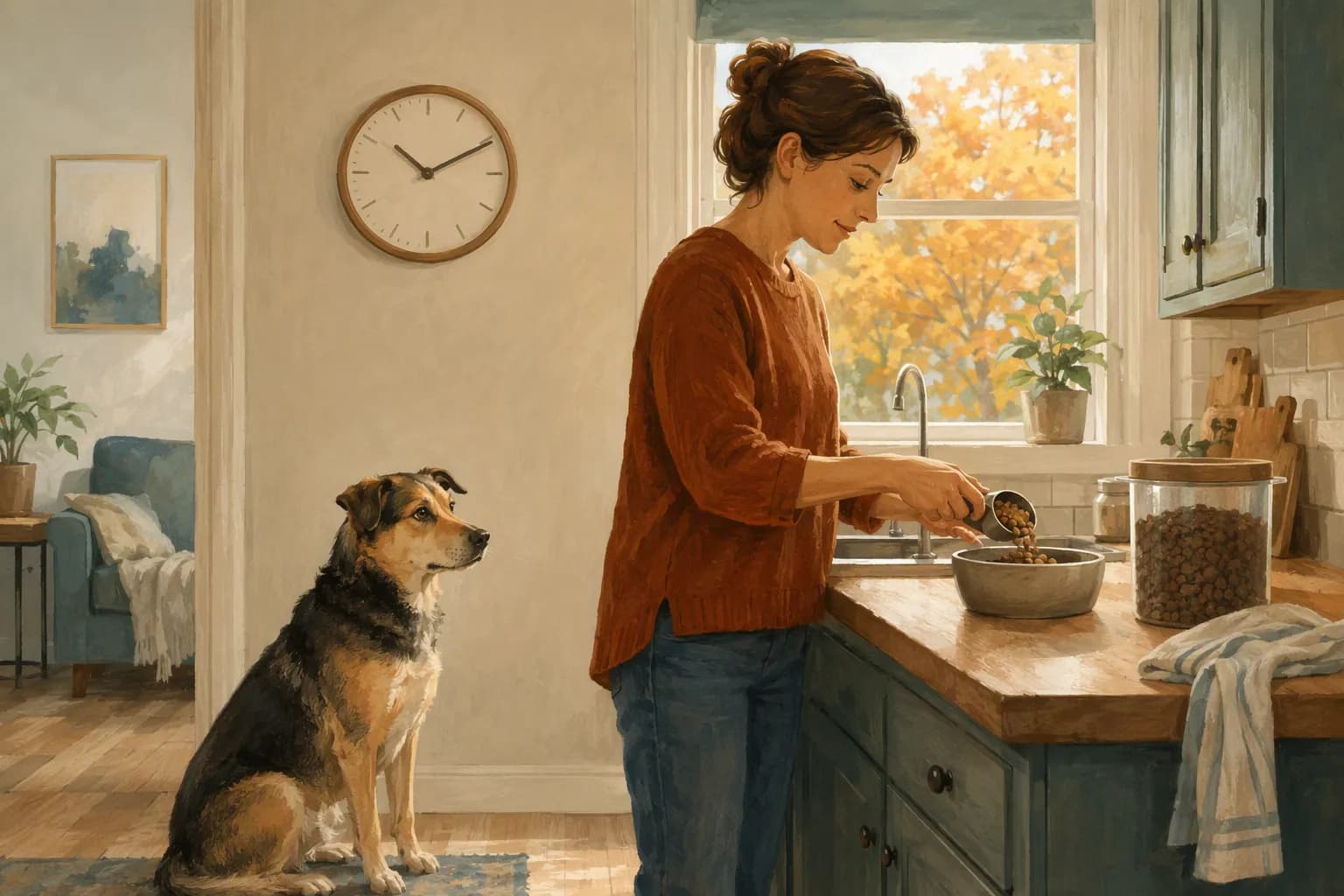
If your dog’s meals and walks follow the clock, shift them gradually later around the fall change instead of forcing an abrupt one-hour jump. In places that observe daylight saving time, U.S. clocks move from 2 a.m. to 1 a.m. local time on November 1, 2026, according to NIST. Some U.S. locations do not change clocks.
Choose a gradual path
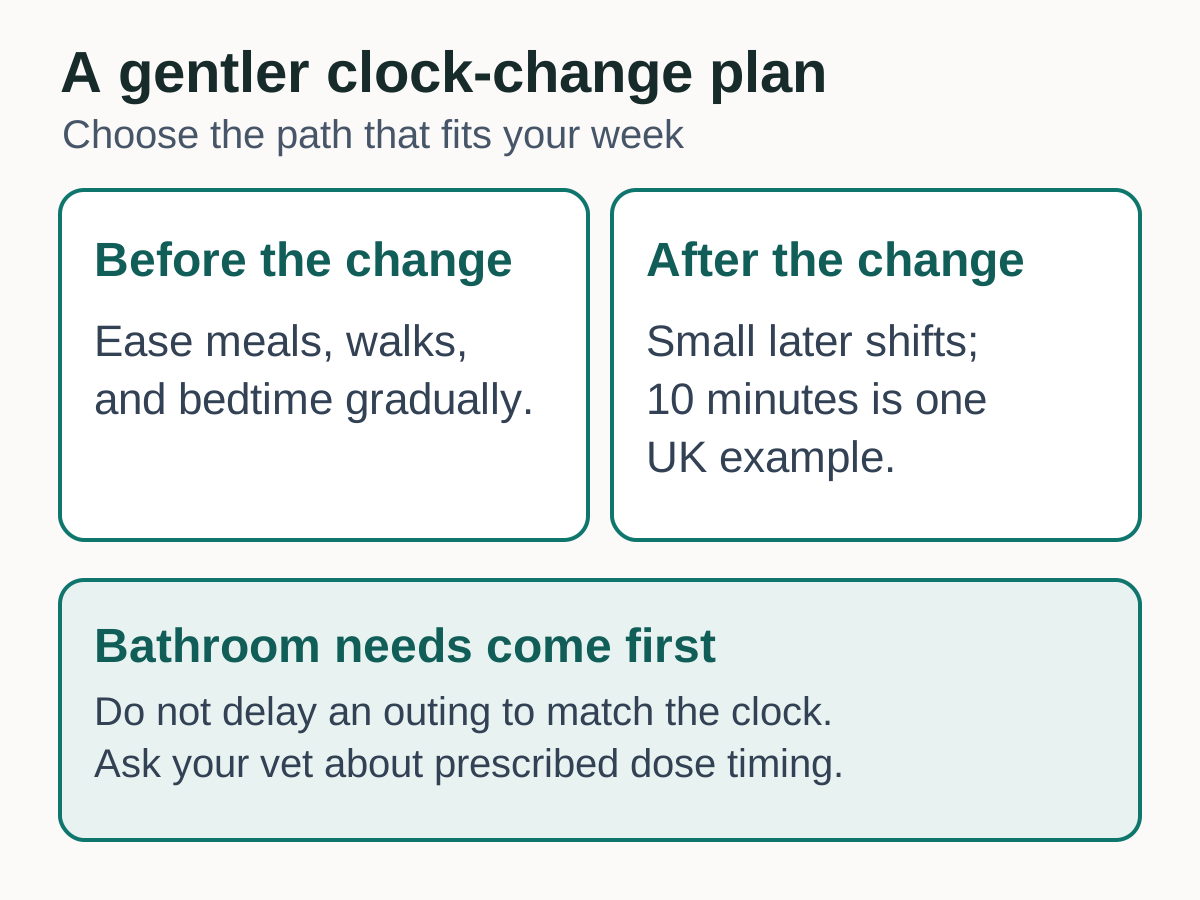
If you have time before November 1, the AKC recommends easing meal, walk, and bedtime routines during the week before a time change. It does not prescribe a required number of minutes per day. Pick a pace that fits your household rather than treating one schedule as right for every dog.
If you start after the clock changes, small later shifts over several days are another option. The UK charity PDSA gives 10 minutes per day as one example for a fall-back routine; that is not a universal rule for U.S. dogs. For example, the moment that was 7 a.m. before the change reads 6 a.m. on the new clock. This arithmetic can help explain why a routine feels early; it is not a required feeding time.
Bathroom breaks come first
Do not make your dog wait for a bathroom break just to match the new clock. Keep the routine flexible while meal and walk times shift.
If a prescribed dose is due near the time change, ask the prescribing veterinarian what to do. Routine guidance does not set medication timing. Do not move, skip, or change a dose based on a daylight-saving schedule.
Choose whether to start a gradual shift before the change or make small adjustments afterward, and keep your dog’s immediate needs first.
Research notes
Sources behind this guide
Written and source-checked by Puni Pet Guides Editorial Team · Reviewed Oct 26, 2026
This guide synthesizes the public references below; it does not report hands-on product testing or independent veterinary review.
Review scope: practical context, source traceability, and clear non-diagnostic boundaries. Diagnosis and treatment decisions stay with veterinarians.