
Senior cat care · clinic preparation
Your Vet Asked for a Senior Cat Urine Sample. What Should You Prepare?
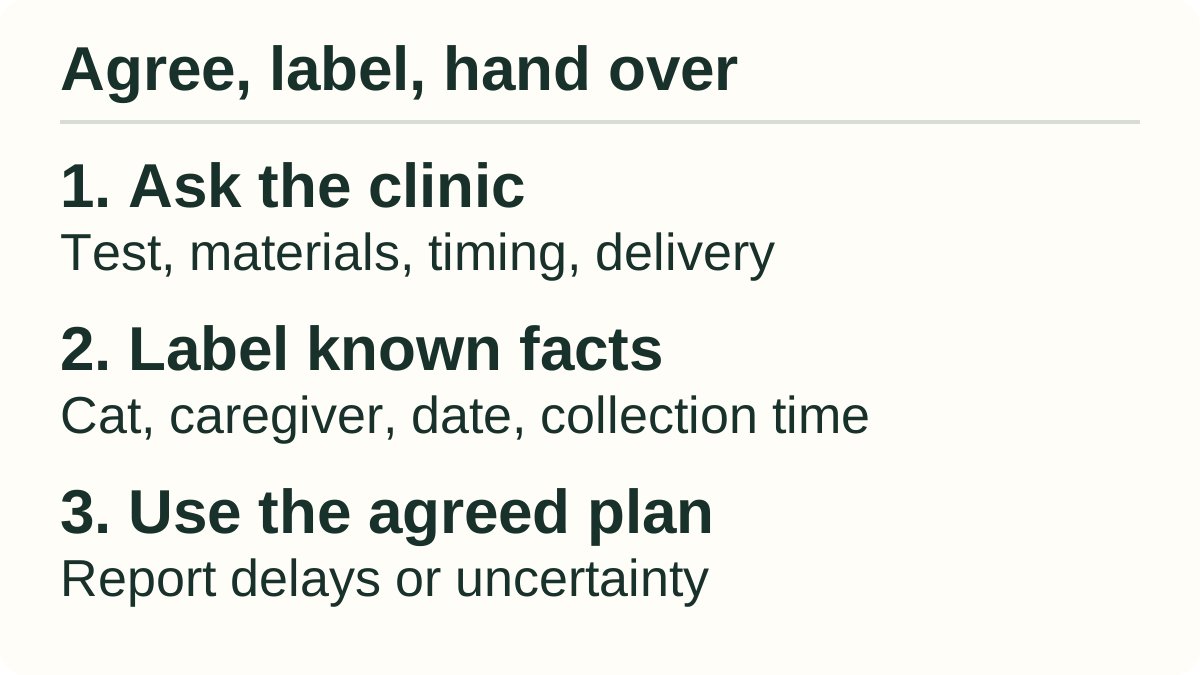
Before changing the litter box, ask your clinic whether a home sample suits the test it has planned. For a senior cat the clinic considers suitable for home collection, agree on the container, collection materials, timing and delivery instructions first. A clean-looking sample is not automatically sterile or suitable for every test.
If your cat repeatedly strains with little, no or uncertain urine, contact an emergency veterinarian immediately. Do not wait for a sample, a completed note or the next appointment. PDSA’s urinary emergency guidance explains why difficulty passing urine needs prompt veterinary attention. The steps below are for a clinic-directed collection from a cat that is otherwise comfortable.
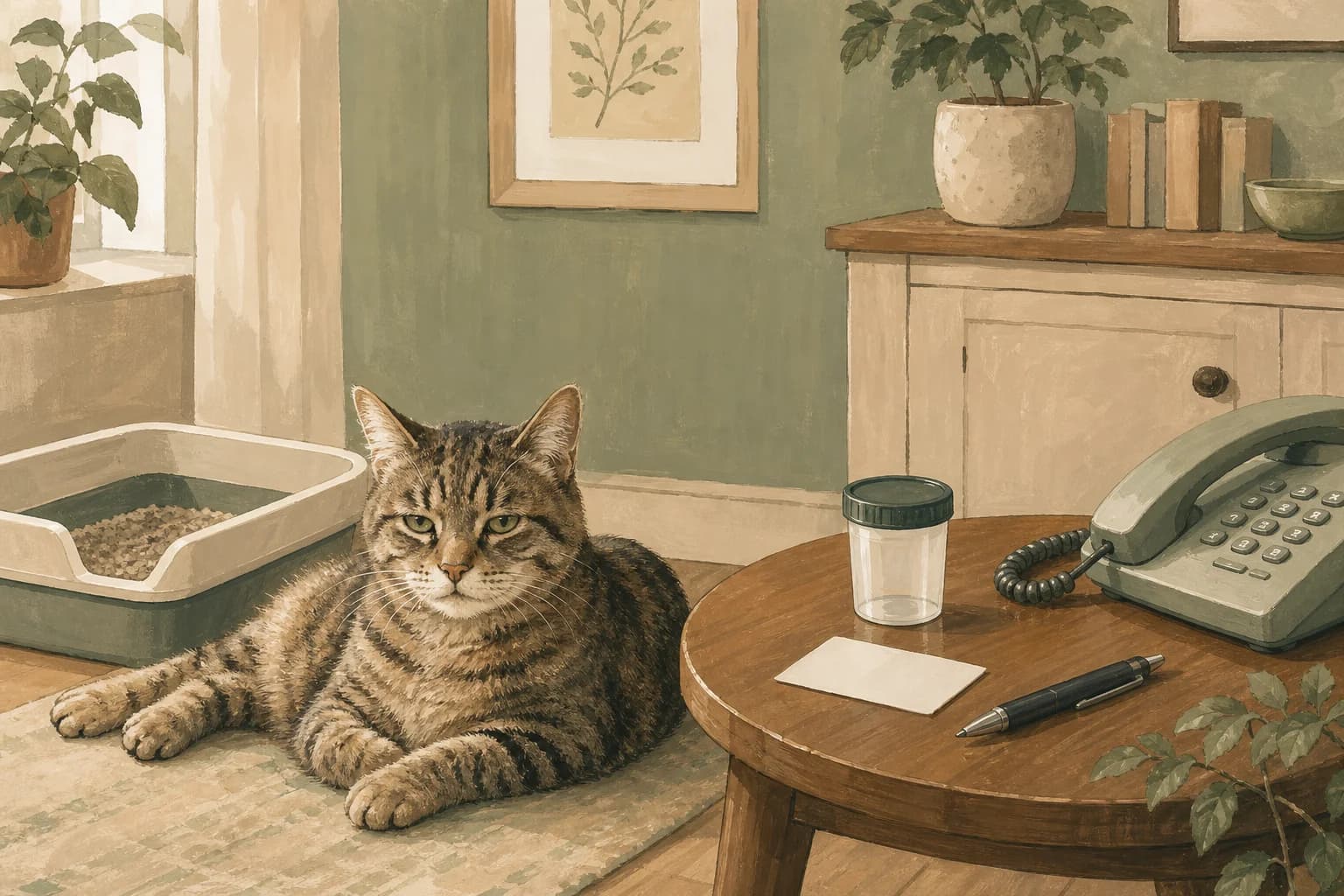
Agree on the collection plan first
“Bring a urine sample” can leave several practical questions unanswered. A short call before starting is more useful than guessing what the receiving team can accept. Write down the clinic’s answers so another caregiver follows the same plan.
- Which test is planned, and is home free-catch acceptable for it? Ask whether the team wants urine passed naturally at home or intends to collect it at the clinic.
- Which container and collection materials should I use? Ask what the clinic supplies, including an approved nonabsorbent substrate and transfer tool. Do not assume an empty household jar is suitable.
- How much is needed, and when should I collect it? Let the clinic set the amount and timing. Ask what to do if you obtain less than requested.
- How should I store and carry it? Confirm the handling instructions, including whether refrigeration is needed if delivery is delayed.
- Where and when should I hand it over? Check the receiving desk and drop-off window, rather than leaving a sample where it might wait unnoticed.
Cornell’s urinalysis submission guidance gives requirements for that laboratory’s containers, volumes and patient identification. Those laboratory rules are not universal instructions for every owner. Your receiving clinic should tell you what applies to your cat’s planned test.
Why the collection method matters
Urinalysis and bacterial culture are not interchangeable requests. Cornell’s urine culture guidance identifies cystocentesis, a veterinary collection method, as providing the most accurate culture results. It also warns that poor sample quality can produce misleading positive results.
That does not mean you should decide which test or procedure your cat needs. Ask the clinic whether it will accept a home sample for the intended purpose. Home free-catch is not automatically equivalent to a sterile collection. Do not attempt needle collection or press on your cat’s bladder.
Prepare the tray without forcing a result
Follow the clinic’s instructions to clean, rinse and fully dry the usual tray; water, cleaning residue and dirt can contaminate a sample. Use the collection substrate the clinic approves and keep the tray in its familiar location. Do not improvise replacement materials without checking.
Let your cat use the tray and leave it voluntarily. Never withhold water, force handling or make the cat stay in the tray. If the new setup causes reluctance or distress, call the practice about another approach. Repeated straining or uncertain urine output belongs on the urgent-care path, not a longer collection attempt.
Label the sample and the uncertainty
If the clinic has approved this method, use its recommended tool to transfer urine from the tray into the agreed container and close it securely. PDSA’s collection guide describes tray collection and labeling; it is UK guidance, so the receiving clinic’s instructions control the details here.
Record your name, your cat’s name, the date and collection time. Deliver it promptly using the agreed handling plan. If you discovered the urine later, distinguish the discovery time from the unknown time it was passed. If another cat may have used the tray, report that uncertainty rather than attaching the wrong cat’s identity.
Call when the attempt does not match the plan
A missed collection, uncertain identity, visible contamination or delayed delivery is something to tell the clinic. Do not strain debris out, combine separate attempts or guess a missing time to make the sample look acceptable. Ask whether to bring what you have, try again under its instructions or arrange clinic collection.
A fictional caregiver message could read: “This is Morgan calling about Sam’s requested sample. I found urine in the collection tray at 9:10, but I did not see when it was passed. Another cat could have entered the room. Should I bring it, or do you want a new collection?” The clinic’s answer is intentionally not supplied here; it depends on the test and the facts of the attempt.
Keep that answer with the original request. If the team wants a visit, our senior cat vet visit checklist helps organize the accompanying records and questions. The aim is a useful handoff, not obtaining a sample at any cost.
Research notes
Sources behind this guide
Written and source-checked by Puni Pet Guides Editorial Team · Reviewed Sep 10, 2026
This guide synthesizes the public references below; it does not report hands-on product testing or independent veterinary review.
Review scope: practical context, source traceability, and clear non-diagnostic boundaries. Diagnosis and treatment decisions stay with veterinarians.