
Dog walks · older owner control and lead setup
Dog Leash for Elderly Owners: What to Check Before a Walk
When you search for a dog leash for elderly owners, start with the walking setup rather than a promise printed on a product page. The handler should be able to hold and release the lead without losing balance, the dog should be learning to walk with slack, and the route should match the control available.
A non-extendable lead is the conservative starting point for an ordinary walk. PDSA's exercise guidance says it does not recommend extendable leads because they can be dangerous for dogs and handlers, especially around busy roads. If the dog pulls hard enough to make you unsteady, changing the lead alone is not a complete fix.
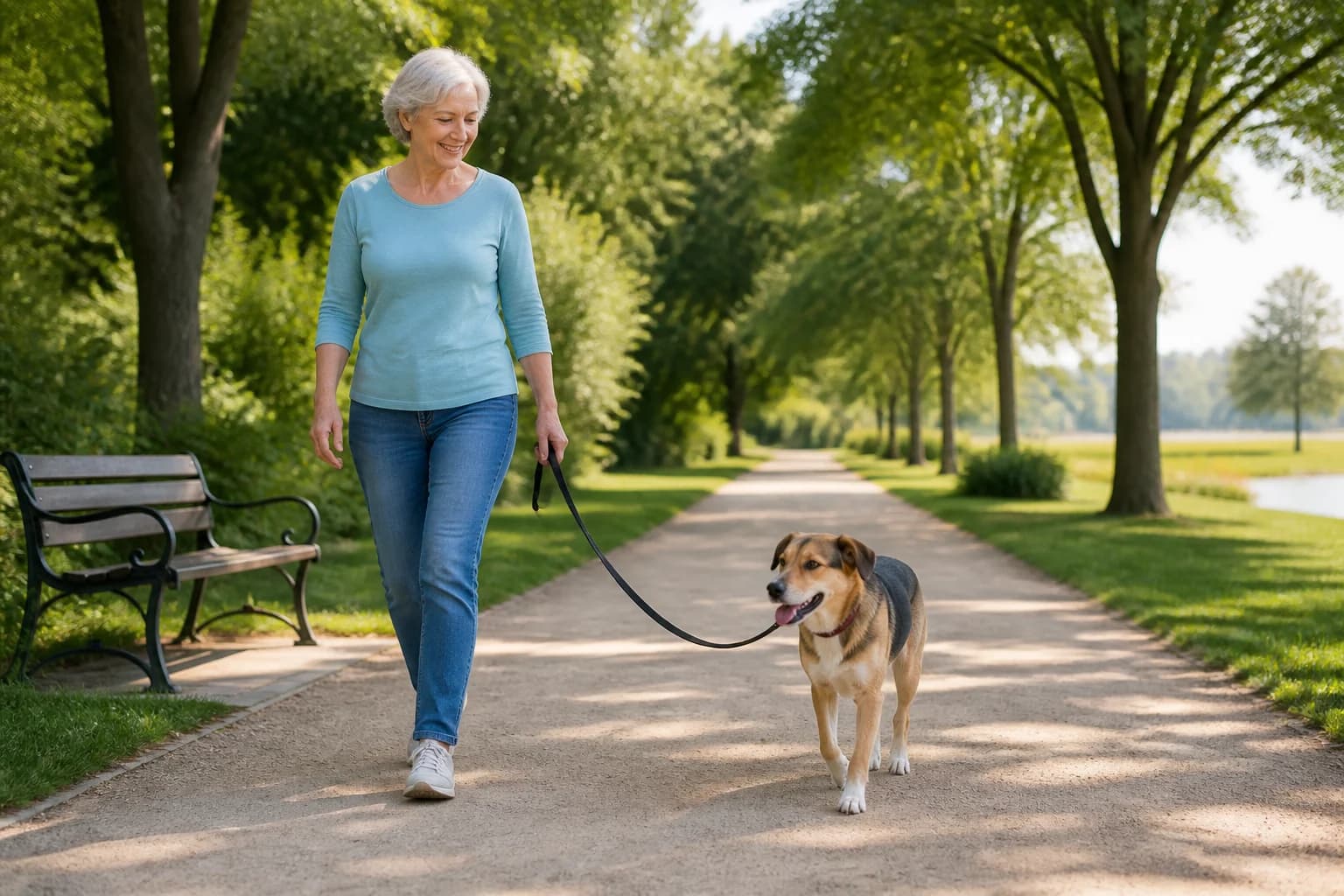
Start with handler control, not a product promise
Before the first outdoor walk, hold the chosen lead in a quiet, familiar place and ask whether you can keep your footing while the dog changes direction. The answer includes the dog's equipment, your walking surface, and whether another person can help. A stronger grip is not a safety guarantee; if you cannot comfortably control the dog, choose a safer walking arrangement or ask a qualified trainer for help.
Dogs Trust notes that pulling can pull a person over. It recommends equipment that is comfortable and safe for the dog, such as a flat harness or collar, and introducing equipment gently. That is a fit and handling principle, not a product ranking. A harness does not make every dog controllable, and this page does not replace support harness guidance for assisted movement.
Check whether the dog can walk with slack
A lead is easier to manage when the dog is not constantly loading it. RSPCA's loose-lead guidance recommends reward-based practice: begin calmly, reward the dog for staying near you, and stop when the lead tightens. Do not jerk the lead back or punish the dog.
Practise in short, regular sessions and add distractions gradually. Dogs Trust gives the same practical boundary: when the dog struggles, slow down and return to an easier stage. A retractable lead may give the dog more distance, but it does not teach slack walking or remove route hazards. PDSA's guidance advises against extendable leads, so do not choose one as the default answer to an owner-control problem.
Check the route before leaving
Use the shortest, clearest route that matches the dog and handler on that day. PDSA's exercise guidance advises keeping dogs on lead near roads, in built-up areas, or around livestock. RSPCA guidance also recommends a lead around livestock and wildlife and a short lead on roads or paths shared with cyclists or horse riders. Local rules vary, so check the rules for the place where you walk.
Look for the points that could turn a calm walk into a sudden pull: a narrow gate, an approaching dog, a road crossing, a steep or slippery section, or a place where the dog cannot see what is coming. If the route requires more control than you can provide, change the route or arrange another walker. Do not wait for a near-fall to prove that the setup is unsuitable.
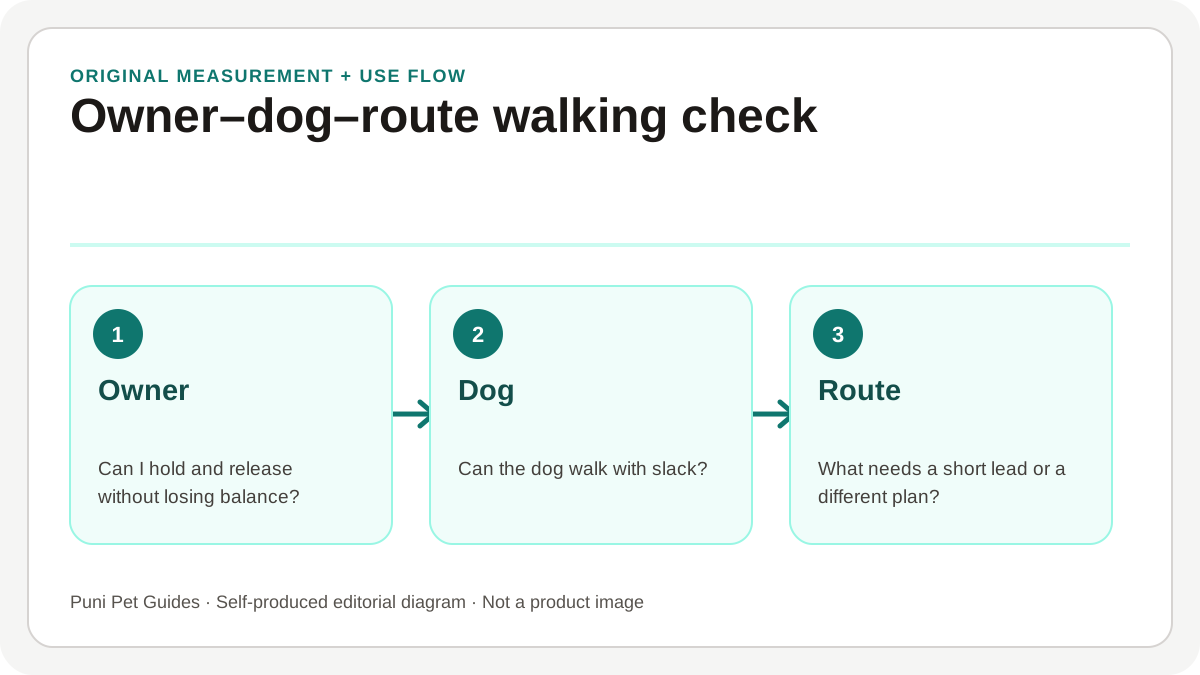
When the dog is older or tiring easily
The lead question and the dog's health question are separate. PDSA's senior-dog guidance says to go at the dog's pace, use a shorter route and rest stops, and stop if the dog is tired or struggling. If mobility is changing how your dog can exercise, ask your veterinarian what activity level is appropriate. A leash cannot explain why a dog is slowing down, stumbling, or suddenly unable to continue.
For a dog that gets tired on walks, see Senior Dog Gets Tired on Walks. For a broader map of mobility problems and possible support categories, use the Senior Dog Mobility Aid Guide. If the real problem is moving a dog between places rather than taking an ordinary walk, read How to Move a Senior Dog Without Carrying.
Stop and change the plan
Stop the walk if you cannot keep your footing, the dog is pulling continuously, or either of you is distressed. Move to a quiet place if you can do so safely, and do not turn a lead struggle into a physical contest. Ask a qualified trainer or behaviour professional for help with persistent pulling.
Ask your veterinarian about a senior dog that is tired, struggling, or showing a new mobility change. The useful lead is the one that fits the handler, the dog's current walking skill, and the route being used that day.
Research notes
Sources behind this guide
Written and source-checked by Puni Pet Guides Editorial Team · Reviewed Oct 5, 2026
This guide synthesizes the public references below; it does not report hands-on product testing or independent veterinary review.
Review scope: practical context, source traceability, and clear non-diagnostic boundaries. Diagnosis and treatment decisions stay with veterinarians.