
Everyday cat care · communication
Why Do Cats Meow? Food, Attention, and Context
Cats can learn that meowing gets a response from people. Why an individual cat meows depends on context, so notice what is happening around them before assigning a meaning.
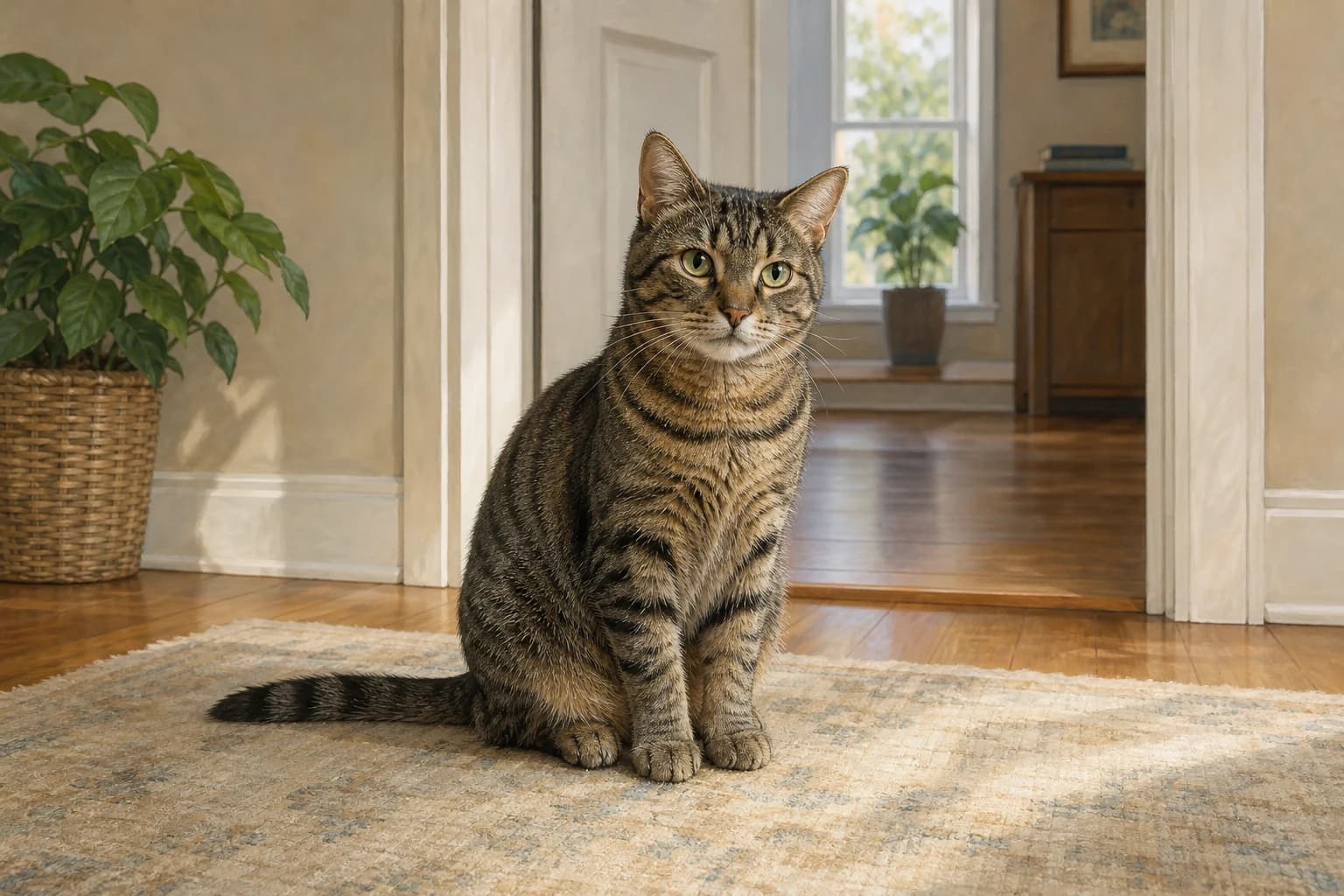
Why cats meow to people
Possible responses include food, attention, or access. Pet cats usually meow to people, while cats rely more on scent and body language with one another. That means “usually,” not “never”: cats may also meow to other cats. Individual cats vary, so no pitch or sound is a universal dictionary. Cats Protection’s communication guide describes this broad communication pattern. The response examples come from Cats Protection’s meowing guide.
Look at the situation around the sound
Notice where your cat is, what was happening before the meow, and other body-language cues together. PDSA’s body-language guidance says to consider the surroundings and multiple cues because one posture can have different contexts. Use that as a way to observe your cat’s situation.
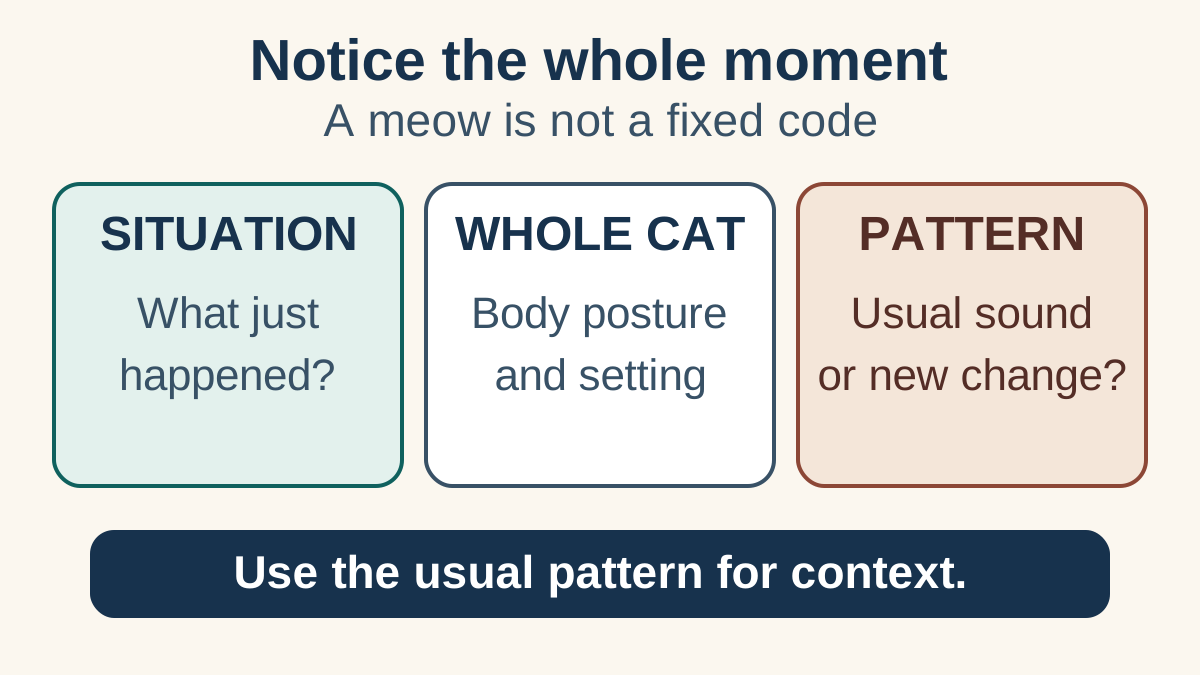
When the usual pattern changes
If the type or frequency of your cat’s meows changes, Cats Protection advises checking with a veterinarian.
Research notes
Sources behind this guide
Written and source-checked by Puni Pet Guides Editorial Team · Reviewed Oct 27, 2026
This guide synthesizes the public references below; it does not report hands-on product testing or independent veterinary review.
Review scope: practical context, source traceability, and clear non-diagnostic boundaries. Diagnosis and treatment decisions stay with veterinarians.