
Senior cat care · stool changes
Senior Cat Diarrhea: What to Notice and Tell Your Vet
A loose stool is an observation, not a diagnosis. Cornell’s Feline Health Center explains that diarrhea can have many causes and advises veterinary examination when signs appear. Contact your clinic for advice suited to your cat; do not wait to finish a record. If diarrhea is severe or bloody, AAHA emergency guidance advises prompt care, especially when other signs are present.
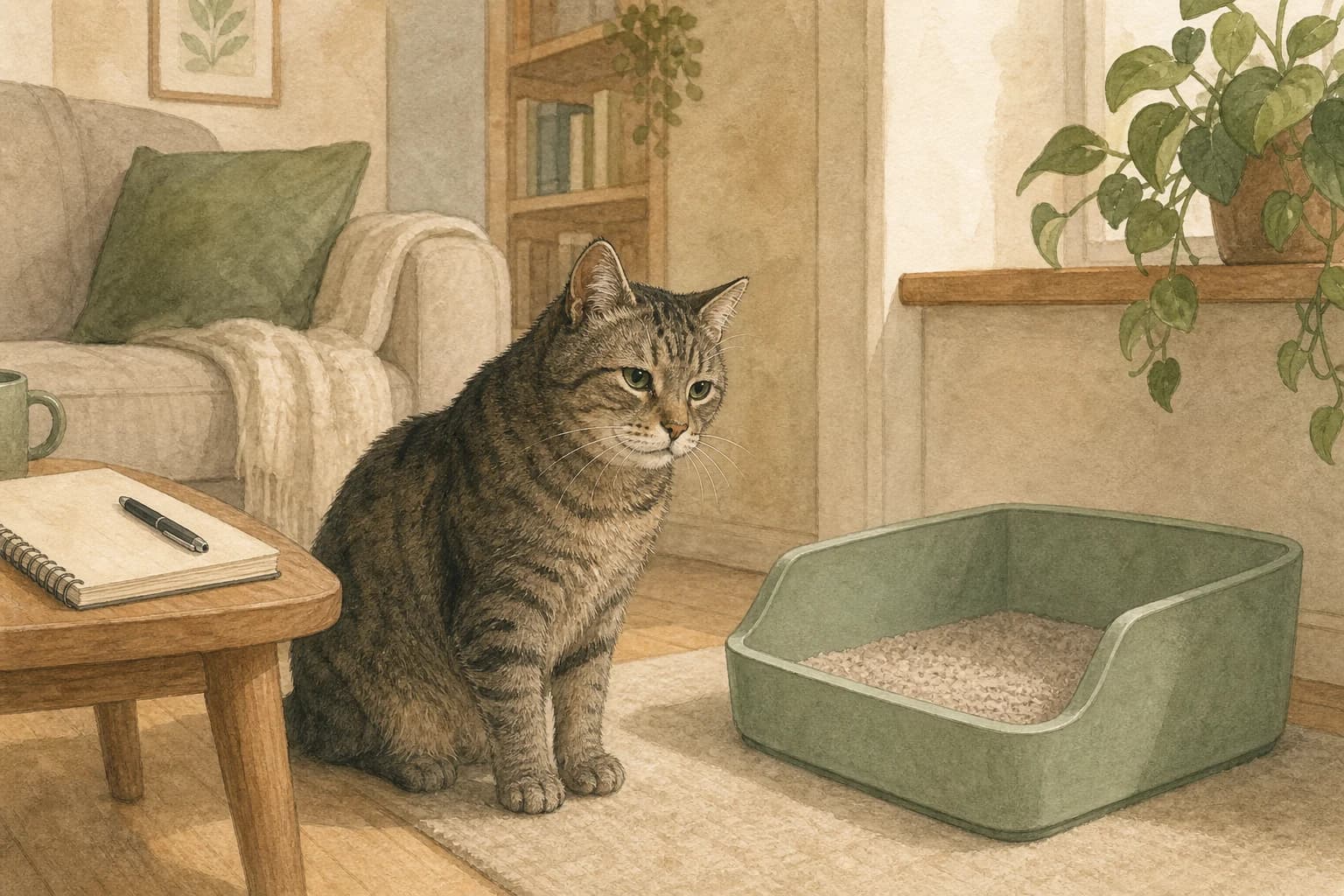
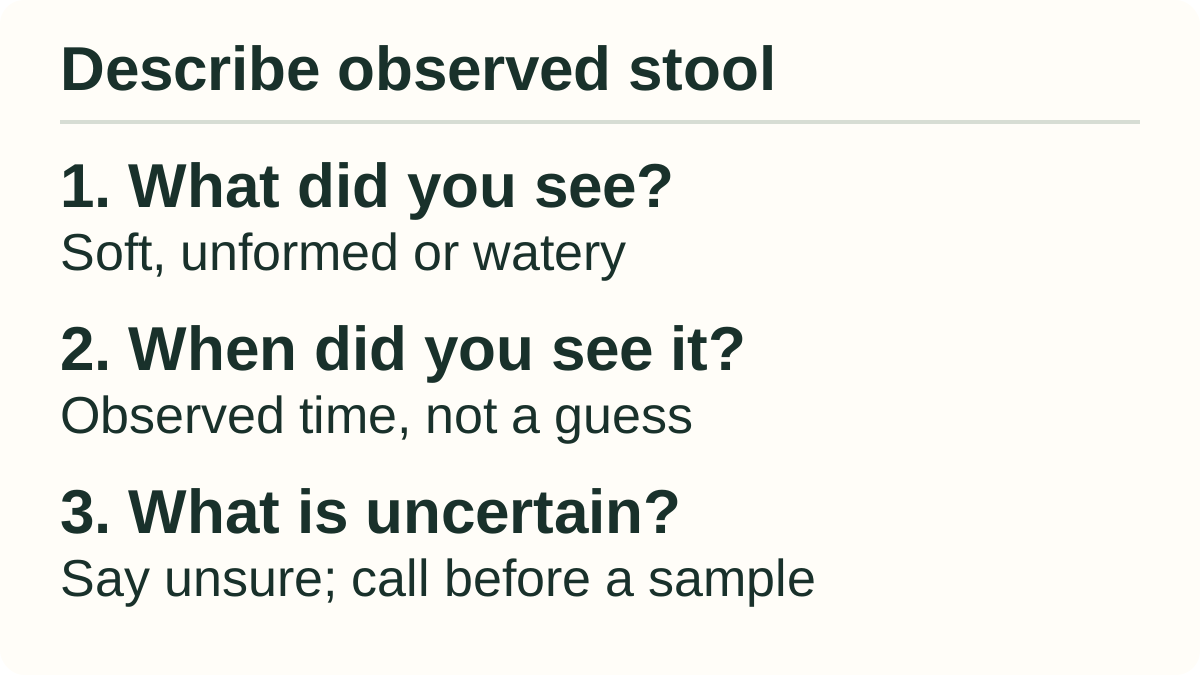
Start with the stool you actually saw
Describe whether the feces were softer than usual but still held some shape, unformed, or watery. Add any visible blood or mucus and a noticeable color change. These words communicate an observation; they do not identify the cause.
Keep “found a loose stool” separate from “watched my cat pass it.” In a shared litter tray, say when you are unsure which cat produced it. Finding three deposits is also different from witnessing three separate bowel movements. Report whichever is true rather than turning an estimate into a precise count.
Turn the observations into a short message
If already known, add a recent food or environment change and keep a current medication list available for the clinic. Leave uncertainty visible; do not turn found deposits into a witnessed count.
For example, this fictional message is more informative than “diarrhea all day”: “I found an unformed stool in the shared tray this morning. At 2 p.m. I watched Milo pass watery stool. I cannot tell whether the earlier stool was his. I noticed no visible blood in the second one.” This example separates observation from uncertainty; it is not a threshold for waiting or a model diagnosis.
Keep litter-box straining on its own track
Repeated straining with little, no or uncertain urine needs urgent veterinary attention. A little liquid in the tray does not establish that the problem is simply diarrhea. Our litter-box straining guide explains this separate warning without asking you to diagnose constipation or a urinary blockage at home.
Tell the clinic about the straining itself, as well as anything you saw pass. Do not let a convenient label such as “loose stool” replace that description.
Ask before changing food or adding a remedy
Cornell notes that diarrhea can have causes within or beyond the digestive tract and that some over-the-counter medicines can harm cats. Choosing a treatment from stool appearance alone misses that uncertainty. Let the veterinary team decide whether feeding changes, medication or testing are appropriate for your cat.
Do not start a human antidiarrheal, supplement or fasting routine from this article. Instructions for a different animal are not an individual plan for an older cat with their own medical history. If the clinic gives feeding advice, clarify what to offer, for how long, and what change should prompt another call. Those are questions for the team, not universal amounts or waiting periods.
Let the clinic guide the sample and the next step
Your vet may ask for a fresh fecal sample. Ask whether they want one and follow their directions for collection and delivery. Calling first matters more than finding a container or waiting for another bowel movement. Keep normal access to drinking water while you obtain advice; it does not replace assessment when the cat is unwell.
For changes in meals or general activity, use the existing senior-cat appetite record instead of building a second whole-cat diary. The contribution of this page is narrower: a clear description of the stool, an honest timeline, and the details your veterinary team needs to choose the next step.
Research notes
Sources behind this guide
Written and source-checked by Puni Pet Guides Editorial Team · Reviewed Oct 5, 2026
This guide synthesizes the public references below; it does not report hands-on product testing or independent veterinary review.
Review scope: practical context, source traceability, and clear non-diagnostic boundaries. Diagnosis and treatment decisions stay with veterinarians.