
Everyday dog care · listening
Why Do Dogs Tilt Their Heads? What the Evidence Shows
Dogs may tilt their heads while listening, but no single explanation is confirmed. One small study linked frequent tilts in a word-learning subgroup with hearing familiar toy names. Read the original Animal Cognition study.
If a head tilt is constant, the PDSA advises contacting a vet even if there are no other signs.
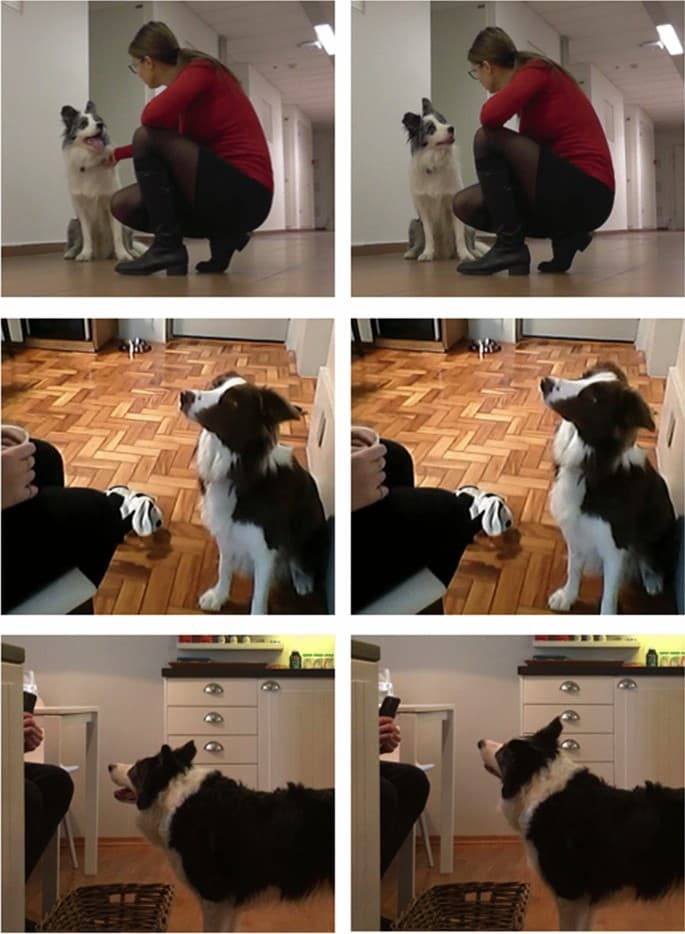
What the toy-name study found
Researchers watched 40 dogs as people asked them to fetch familiar toys by name. The seven-dog word-learning group tilted more often than the other 33 dogs. One of the word learners never tilted. The authors suggested that head tilting may relate to processing meaningful stimuli. This is a possible link from one task, not an explanation for every dog or setting.
What a head tilt can—and cannot—tell you
One movement cannot reveal exactly what a dog heard, understood, or felt. The American Kennel Club’s review says more research is needed. A head tilt is not an intelligence test or a definite translation of a dog’s thoughts.
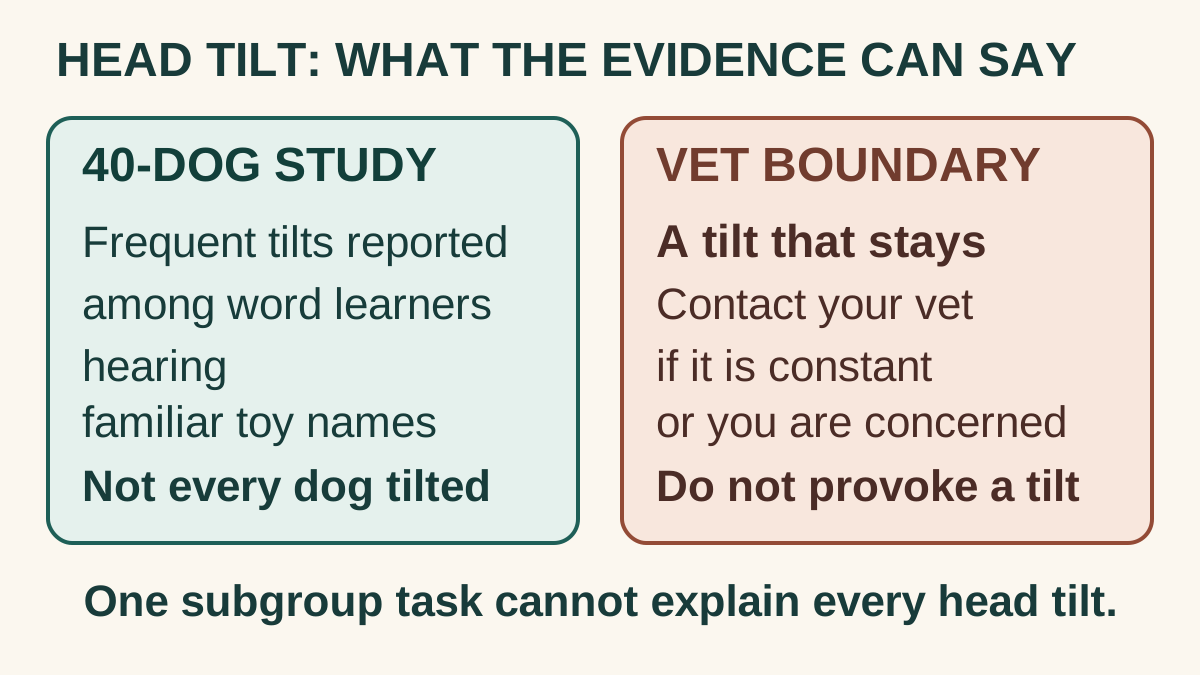
Brief listening tilt versus a constant one
PDSA describes brief tilts while dogs listen to unusual sounds and distinguishes those from a constant tilt. A brief listening response does not explain a head that stays tilted. Do not make noises to provoke a tilt or move your dog’s head to test an explanation. If you are concerned, contact your veterinary practice.
Research notes
Sources behind this guide
Written and source-checked by Puni Pet Guides Editorial Team · Reviewed Oct 26, 2026
This guide synthesizes the public references below; it does not report hands-on product testing or independent veterinary review.
Review scope: practical context, source traceability, and clear non-diagnostic boundaries. Diagnosis and treatment decisions stay with veterinarians.