
Senior cat care · repeated head shaking
Elderly Cat Shaking Their Head? What to Tell Your Vet
If your older cat is shaking their head more than usual, contact your veterinarian for an appointment as soon as you notice the change. PDSA’s head-shaking guidance distinguishes this increase from the occasional shake a cat may normally make.
Certain concurrent symptoms warrant emergency veterinary care rather than a routine visit. PDSA advises emergency contact for a sudden uncontrolled head tremor. PetMD’s veterinary guidance also lists breathing difficulty, seizures, and excessive lethargy with head shaking as examples requiring emergency care. These are not the only reasons a cat may need urgent help. If you are uncertain about how the movement looks or how urgent the situation is, call a veterinary clinic right away and describe what you see.
What You Can See Does Not Identify the Cause
Cornell’s ear-mite guidance describes head shaking and dark debris among possible signs of mites. But those observations do not establish the cause: the Merck Veterinary Manual describes similar signs in ear-canal inflammation involving several different factors.
An examination may include an otoscope to look inside the ear and microscopic testing for mites, bacteria, or yeast. What you can see from outside does not replace that assessment.
Leave ear products and cleaning methods to your veterinarian’s advice. Merck warns that vinegar and hydrogen peroxide can irritate inflamed ear canals; healthy cats generally do not need routine ear cleaning unless advised otherwise. Do not probe the ear or force your cat to let you inspect it.
What to Tell Your Clinic About What You Have Seen
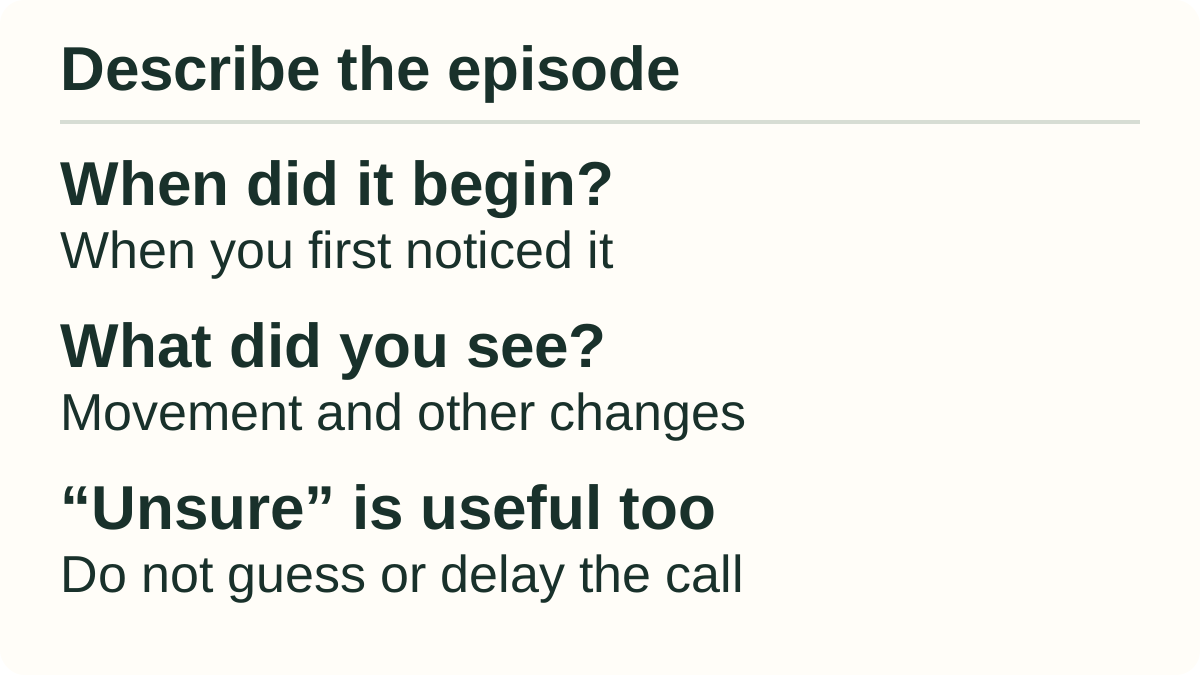
When calling the clinic, your everyday household observations offer helpful context. You do not need to wait for another episode, gather complete notes, or perform any home tests. Simply share what you have already noticed:
- When you first noticed the change and how often you have already seen it.
- How the movement looks, describing what you observe in your own words rather than trying to fit a clinical term.
- Other already-noticed signs, such as ear scratching, face rubbing, odor, discharge, or balance changes.
It is completely fine to say you are unsure rather than guessing. Ask the veterinary team how soon your cat should be seen based on that description.
Separate Health Questions in Senior Cats
If you notice other distinct changes in your older cat, our articles on older cat hearing response and senior cat chewing difficulty explore those separate topics. They are optional reading for those additional questions, not a way to diagnose the head movement.
For a possible seizure, our seizure first-response guide covers immediate space, handling and what to report while contacting the clinic. Do not delay the call to read it.
Research notes
Sources behind this guide
Written and source-checked by Puni Pet Guides Editorial Team · Reviewed Oct 5, 2026
This guide synthesizes the public references below; it does not report hands-on product testing or independent veterinary review.
Review scope: practical context, source traceability, and clear non-diagnostic boundaries. Diagnosis and treatment decisions stay with veterinarians.