Senior dog travel preparation

How to fit a dog car harness before a vet trip

Measure your dog against the exact harness size chart, rehearse the entry while your dog is calm, and follow the maker's vehicle-routing diagram without improvising. Before leaving, confirm normal breathing, comfortable movement, flat straps, and fully closed buckles.

For a senior or mobility-limited dog, fitting is also a handling check. Stop rather than forcing a stiff limb, painful position, or panicked rehearsal. A home check cannot prove how a harness will perform in a collision.

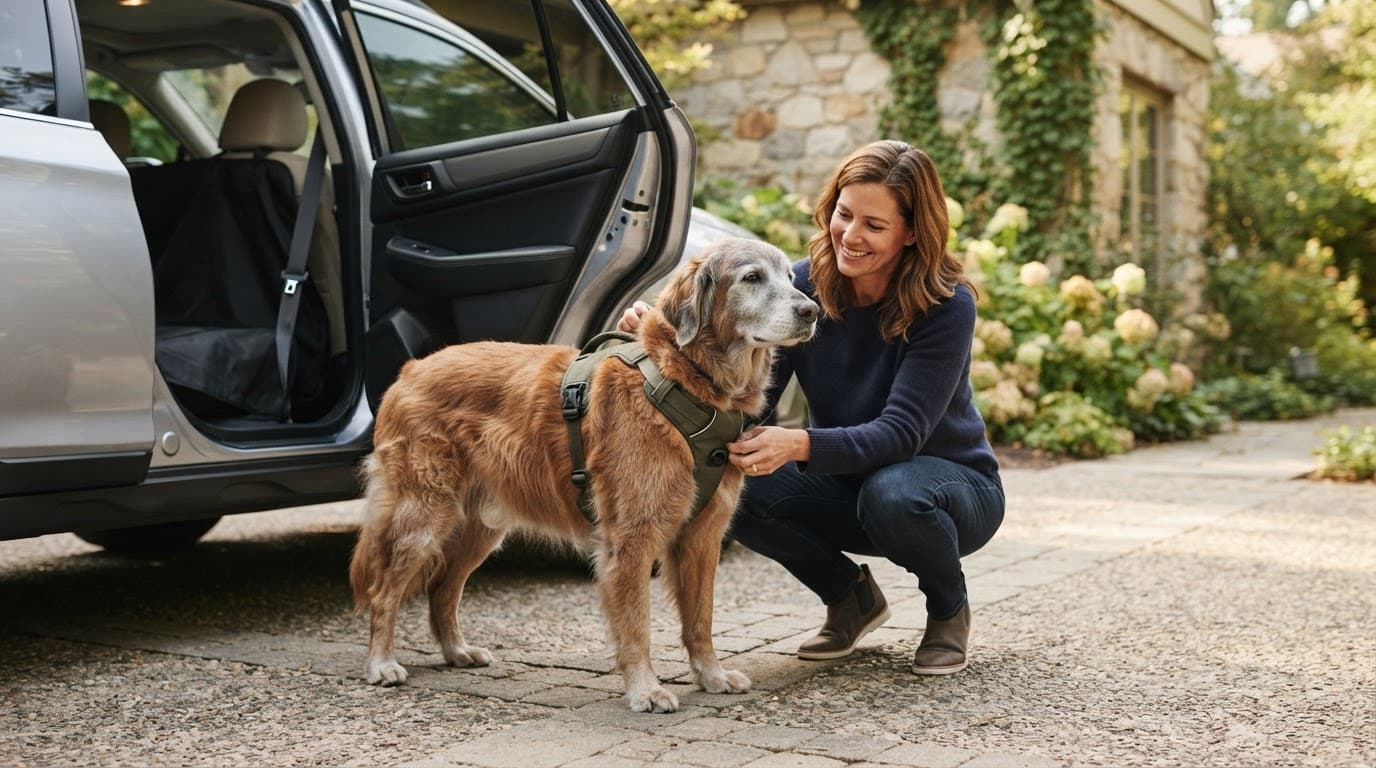
Gray-muzzled older dog standing beside a parked car while a caregiver checks an unbranded chest harness
AI-generated editorial context: a caregiver checks a generic, unbranded harness beside a parked car. This is not a reviewed product photograph, fitting demonstration, or crash test.
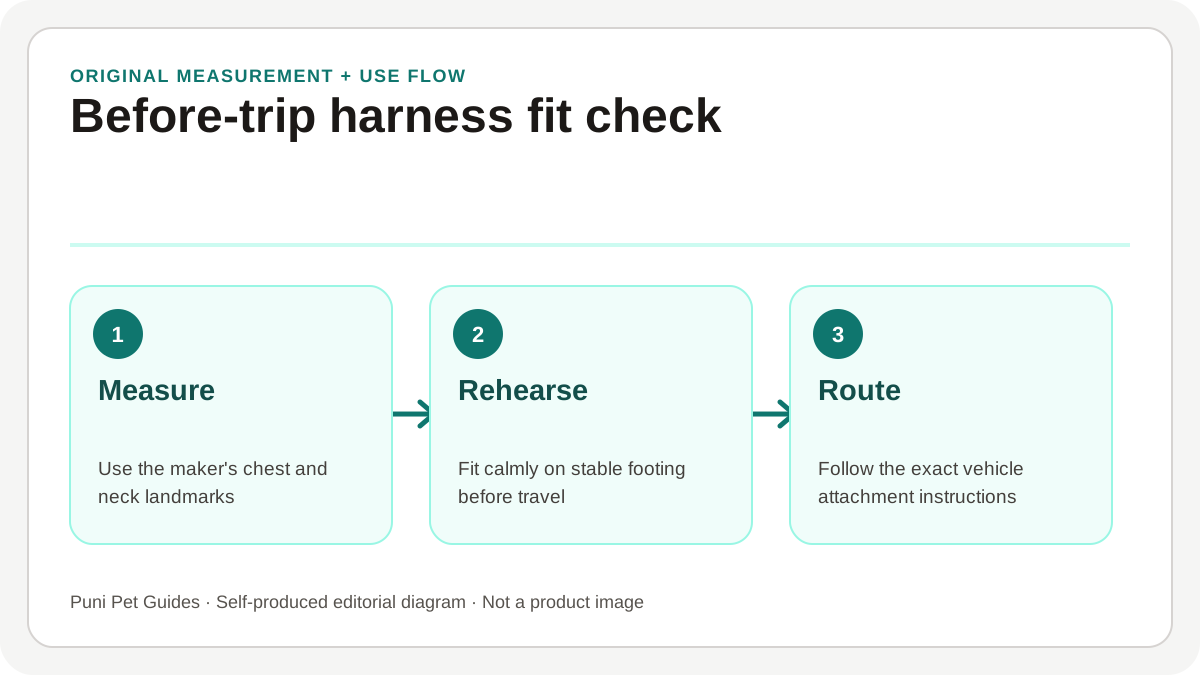
Before-trip harness fit check. Three-step original diagram: Measure, Use the maker's chest and neck landmarks; Rehearse, Fit calmly on stable footing before travel; Route, Follow the exact vehicle attachment instructions.
Original Puni Pet Guides measurement and use-flow diagram. Use the article text for limits and safety context.

Research notes

Sources behind this guide

Written and source-checked by Puni Pet Guides Editorial Team · Reviewed Aug 31, 2026

This guide synthesizes the public references below; it does not report hands-on product testing or independent veterinary review.

Review scope: practical context, source traceability, and clear non-diagnostic boundaries. Diagnosis and treatment decisions stay with veterinarians.

Four-part sequence

Fit first; route second

Keep the body fit and vehicle installation as two separate checks. Passing one does not prove the other. Use the instructions supplied for the exact harness and recheck both whenever the fit is adjusted.

  1. 01

    Measure before the appointment day

    Use the body landmarks and size chart in the exact harness instructions. Record every measurement the maker requests—often the chest and sometimes the neck or body length—while your dog is standing naturally. Weight alone may not describe a broad chest, narrow shoulders, or an in-between body shape.

    Decision check: If measurements land in different size ranges, pause and ask the maker which measurement controls. Do not guess by tightening a larger size or stretching a smaller one.

  2. 02

    Rehearse the entry on stable footing

    Practice when your dog is calm, on a nonslip surface, and before travel becomes urgent. Follow the harness-specific entry method. Keep stiff joints in a comfortable range, let the dog pause, and avoid pulling a sore limb through an opening or lifting by the harness.

    Decision check: Stop if entry causes a pain-like response, sudden weakness, or escalating distress. The goal is an observable fitting session, not completing every step at any cost.

  3. 03

    Settle the straps, then watch the dog move

    Lay each strap flat and position every panel where the maker shows it. Use the maker's clearance rule rather than a generic finger rule. Then watch your dog stand, sit, turn, and lie down if those movements are normally comfortable.

    Decision check: Refit when straps twist, slide toward the throat, crowd the front legs, rub the armpits, or change the dog's normal movement. Breathing should stay easy and unforced.

  4. 04

    Run the fit check while the car is parked

    With the engine off, use only the harness attachment point and vehicle-routing method named in the instructions. Route the seat belt or tether exactly as shown. Never attach a vehicle restraint to a neck collar or improvise a path through an unapproved strap.

    Decision check: Confirm that the dog cannot roam through the cabin, yet can hold the body positions the maker allows without pressure on the neck or restricted breathing. Recheck every buckle before opening a door.

Before opening the driveway gate

Use one departure check

Recheck the complete setup after any strap change. A calm dog and a correctly routed restraint are separate observations; both matter before the vehicle moves.

  • The size follows the current maker chart and every requested body measurement
  • Straps lie flat and stay away from the throat, armpits, and restricted joints
  • Your dog can breathe normally and use the positions allowed by the instructions
  • Every buckle is fully closed and the vehicle route matches the exact diagram
  • The restraint attaches to the harness—not the collar—and limits cabin roaming
  • A leash is ready before any vehicle door opens at the clinic

A clear stop boundary

Do not explain distress from the driveway

Travel signs can have more than one cause. Record what you observed and when it began, then let the veterinary team assess the cause and advise on the trip.

Stop signals

  • A pain-like response, collapse, or sudden inability to stand or move normally
  • Difficulty breathing or a fit that shifts pressure toward the throat
  • Marked panic, frantic escape attempts, or distress that grows during a parked rehearsal
  • Repeated drooling or vomiting during car practice or travel

Bring a factual note to the appointment

Record which fitting step triggered the change, whether the car was moving, how long the response lasted, and whether it stopped when the harness or travel rehearsal ended. Do not use those observations to diagnose pain, anxiety, or motion sickness at home.

Separate access problem

When getting into the car is the hard part

Harness fit does not solve a high door sill, unstable footing, or a difficult step into the vehicle. Handle that route as a separate mobility question before asking the dog to enter for fitting practice.

Questions

Dog car harness fitting FAQs

Use the exact harness instructions for dimensions and routing. These answers cover the before-trip decision boundaries that stay the same.

How tight should a dog car harness be?

Use the clearance and placement rule from that harness's current instructions. A universal finger rule can conflict with a maker's design. The harness should remain in its intended position without twisting, throat pressure, restricted breathing, or changed movement.

Can I attach a dog seat belt to a collar?

No. Use only the harness attachment point and vehicle route shown by the restraint maker. A vehicle restraint should not load the dog's neck collar, and an improvised routing path is not a substitute for the product instructions.

Should I try the harness for the first time on appointment day?

When the trip is planned, measure and rehearse earlier so the dog can experience the entry, fit, and parked-car setup without a departure deadline. Keep the session brief and stop rather than pushing through pain or distress.

When should I call the veterinarian about car-travel distress?

Contact the veterinary team when fitting or travel brings a pain-like response, breathing difficulty, marked panic, repeated drooling, or vomiting. Seek urgent care if the dog appears to be in immediate danger rather than continuing the rehearsal.