
Everyday cat care · behavior
Why Do Cats Hiss? Give Them Space First
A hiss can be a warning that a cat wants distance when frightened, threatened, or uncomfortable. Cats Protection describes it as a signal to leave a cat alone. The sound alone cannot tell you exactly what caused it. Step back, allow a way to retreat, and do not force contact or punish the cat.
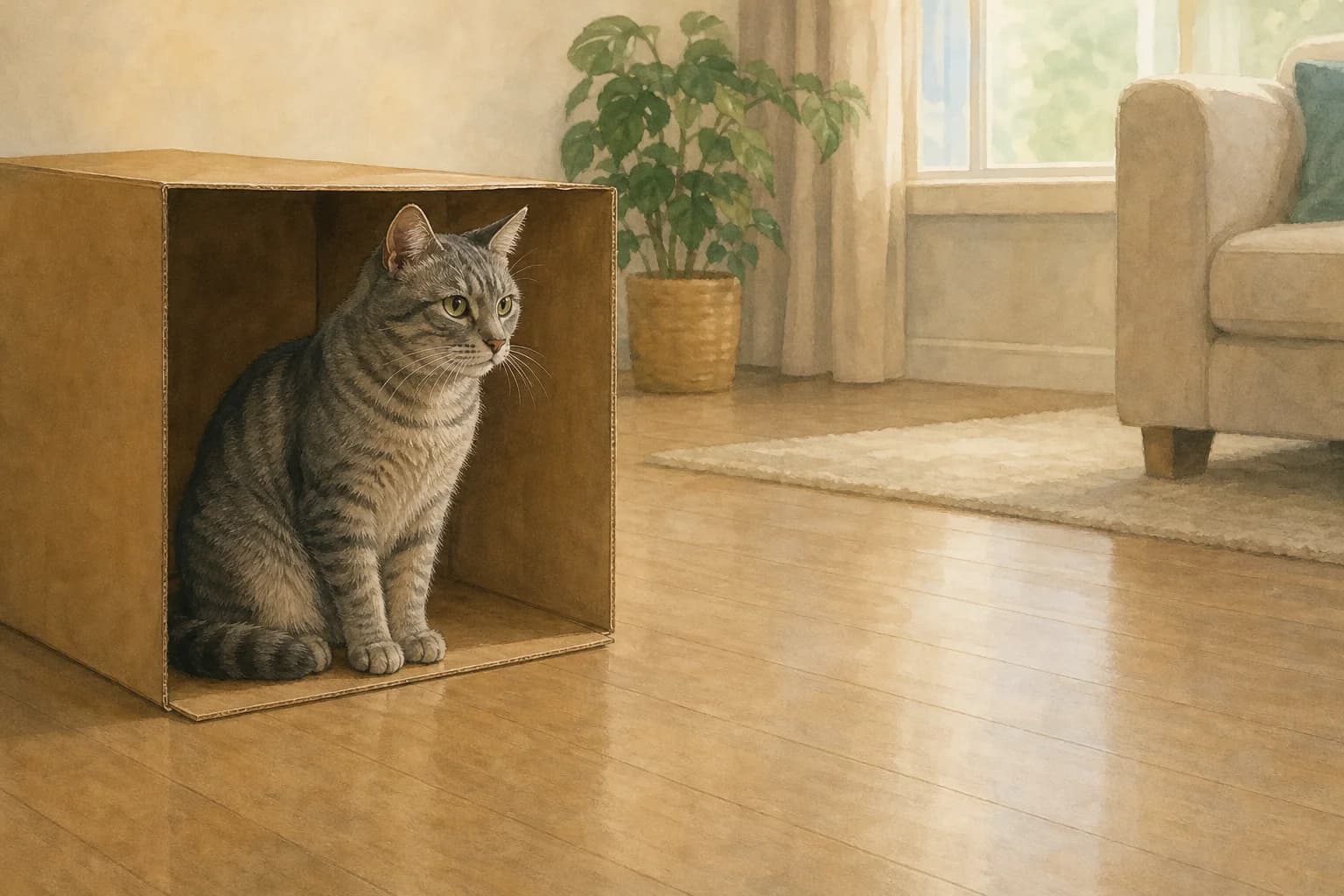
What a hiss can tell you
An unfamiliar person or animal, or uncomfortable touching or being picked up, can be one context for hissing, according to Cats Protection. The ASPCA notes that cat behavior can be complex and discusses hissing within a wider range of responses. Read the situation around a hiss too; the sound by itself does not identify a particular trigger.
Give the cat room and a way out
Move back and let the cat choose where to go. If it heads for a hiding place, do not follow or pull it out; leave the spot undisturbed and let the cat come out in its own time. Cats Protection advises against petting, cuddling, or punishing a cat that is hissing. Do not recreate uncomfortable handling to see if the hiss repeats.
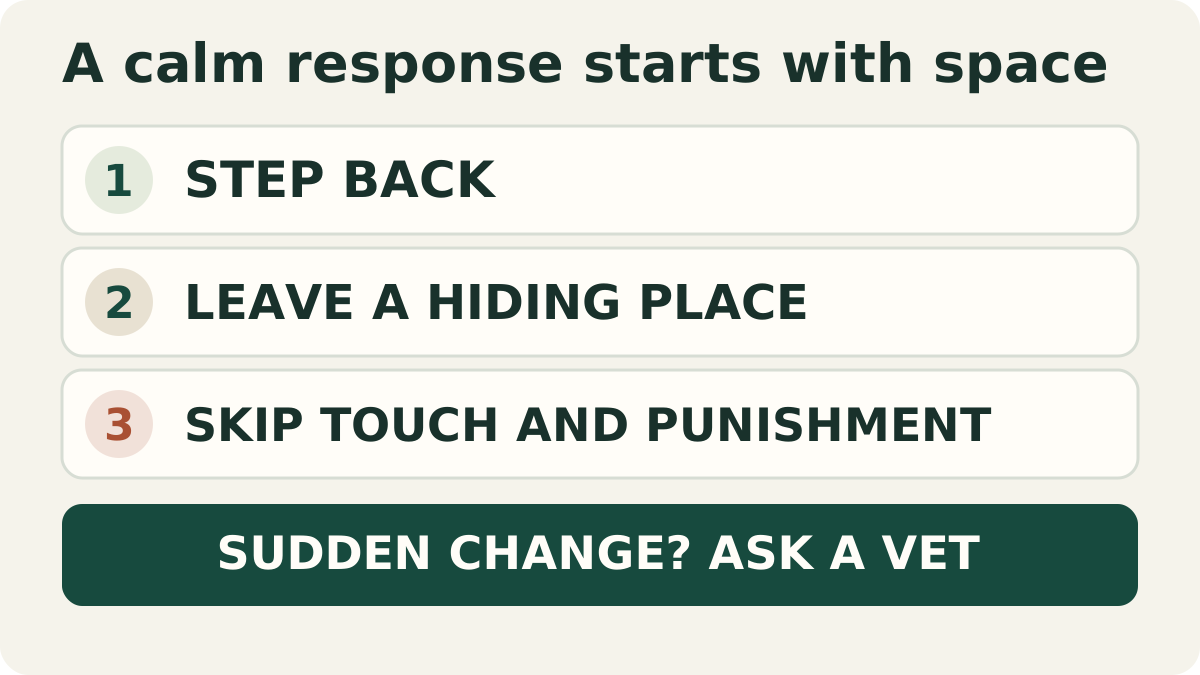
When to check in
PDSA lists hissing among possible signs of fear and says the cause can be hard to know. A hiss alone is not a diagnosis. For a sudden behavior change, PDSA advises a veterinary check.
Research notes
Sources behind this guide
Written and source-checked by Puni Pet Guides Editorial Team · Reviewed Oct 26, 2026
This guide synthesizes the public references below; it does not report hands-on product testing or independent veterinary review.
Review scope: practical context, source traceability, and clear non-diagnostic boundaries. Diagnosis and treatment decisions stay with veterinarians.