
Senior cat care · a new change in leg use
Older Cat Limping? What to Do About a New Change
Your older cat crosses the room with a new uneven step. Is this just age catching up? Contact your veterinary clinic about a new limp; age alone does not explain it.
PDSA advises immediate veterinary contact if the limp began suddenly, your cat cannot put weight on a leg, or they seem to be in severe pain. Any one of these is a reason to call right away. Do not delay the call to make a video or complete notes.
Describe only the leg-use change you have seen
PDSA’s limping guidance notes that stiffness and slowing down can be subtle, and reluctance to jump is one change to mention if you have already noticed it. These observations describe what changed, but do not identify its cause. Cats Protection notes that reduced jumping or grooming can be mistaken for aging; that does not establish what is causing a new uneven step.
While you follow the clinic’s directions, keep your cat quiet indoors and limit jumping, running, and rough play. PetMD advises restricting activity during a limp and cautions that a painful cat may react defensively. Do not bend or squeeze the leg, make your cat walk for a demonstration, or give medication unless your veterinary team directs it.
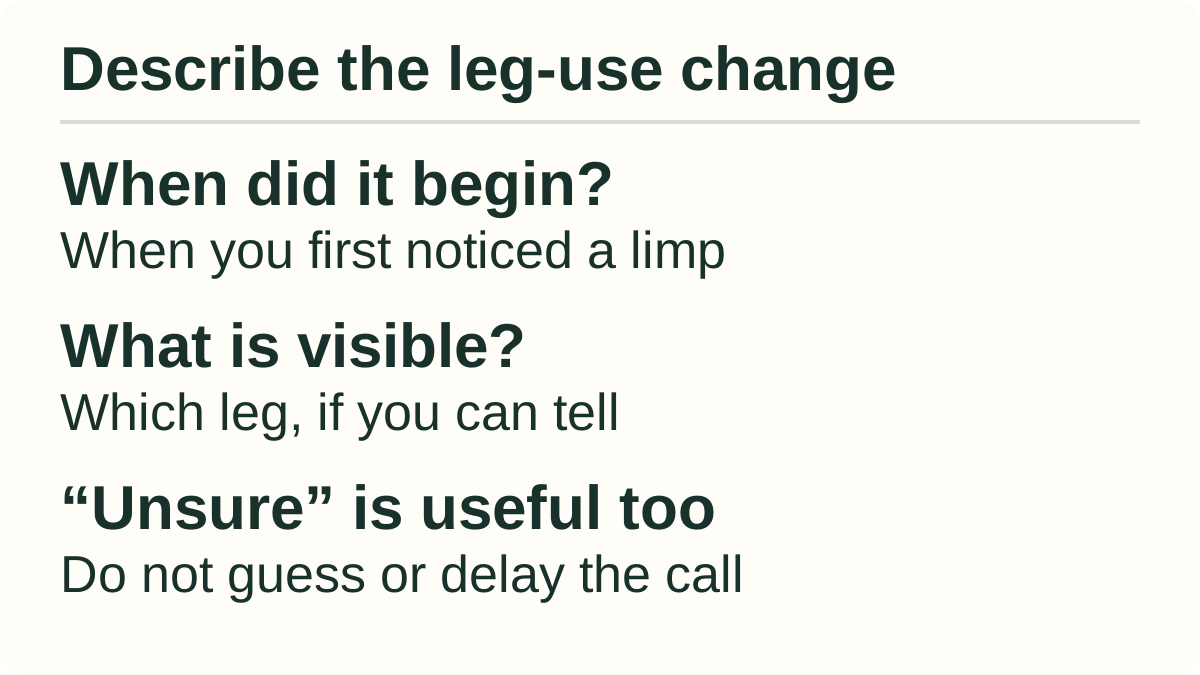
You can tell the clinic: “My older cat has a new uneven step that I first noticed [when]. I have already seen [which leg, if clear] and [what changed about using it]. The change is [still happening / different now / unclear]. How soon should my cat be examined, and where should we go?”
If you cannot tell which leg is affected or whether the change has shifted, say so rather than guessing. Do not delay the call to fill in a note or make your cat walk. After the limp has been assessed, our senior cat home access checklist can help you think through familiar routes to food, water, litter, and rest alongside your vet’s advice.
Research notes
Sources behind this guide
Written and source-checked by Puni Pet Guides Editorial Team · Reviewed Oct 5, 2026
This guide synthesizes the public references below; it does not report hands-on product testing or independent veterinary review.
Review scope: practical context, source traceability, and clear non-diagnostic boundaries. Diagnosis and treatment decisions stay with veterinarians.