Dog walks · after-walk paw cleanup

How to Clean Dog Paws After a Walk: Towel, Wipes, or a Paw Washer?

The cleanup step depends on what you can see and what your dog will comfortably allow. For light, dry dirt, a soft towel or cloth is a low-burden start. When paws are muddy—or may have touched road salt or de-icer—use a warm, damp cloth or rinse, then dry and inspect gently.

Dog wipes and a paw-cleaning cup are optional tools, not requirements for every walk. Pause if your dog resists handling. This guide is routine-care information; it does not diagnose a paw problem or promise that any method removes every chemical.

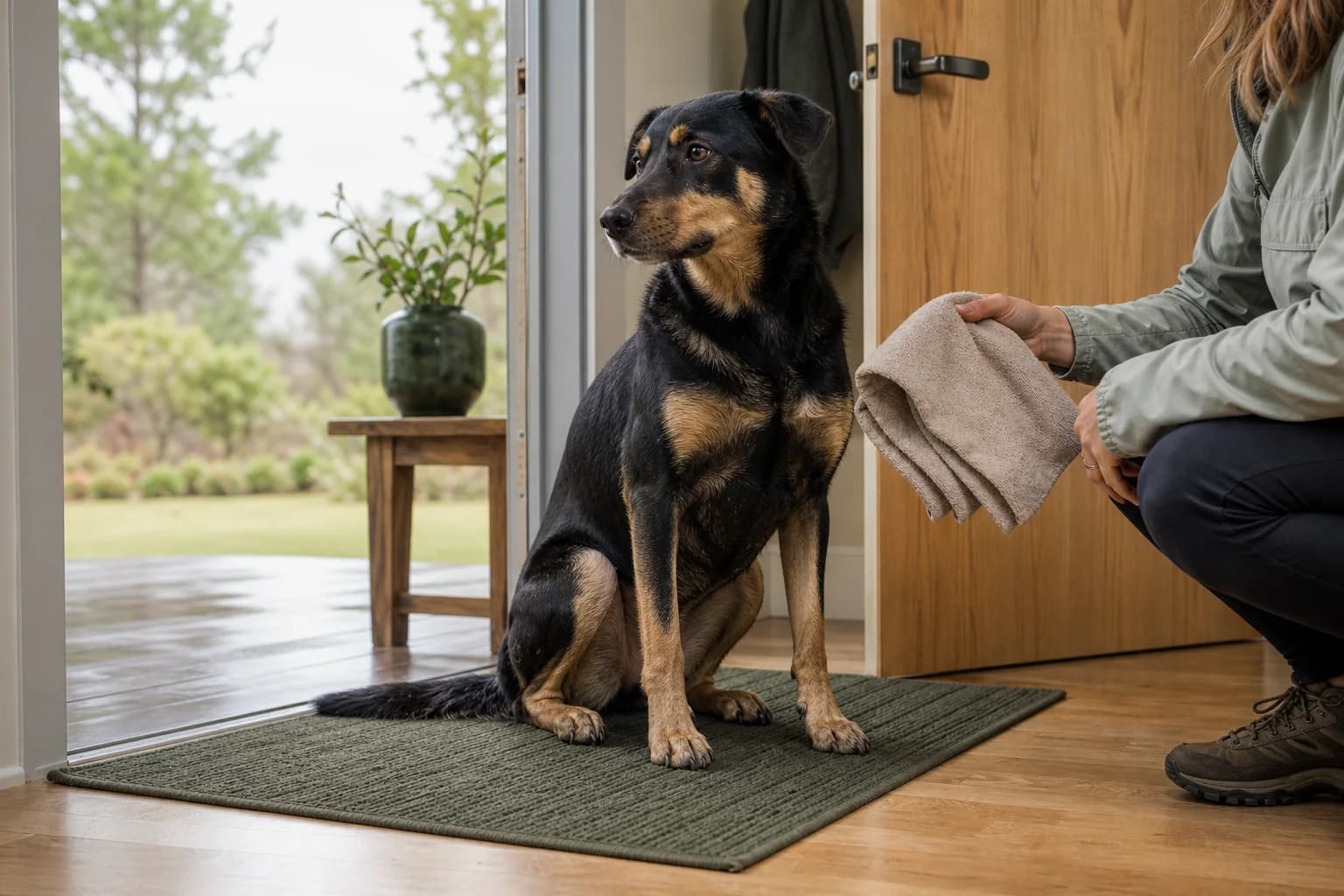
A calm dog sits on an entry mat while a caregiver holds a plain towel nearby
Illustrative entryway scene for a calm cleanup routine. The image is not a product photograph, a test, or evidence that a paw is clean.

Choose the first step by the mess you can see

A useful after-walk routine does not need to turn every paw into a project. Look at the paws under good light, notice whether the dirt is dry or wet, and choose the gentlest step that fits. AAHA's winter-walk guidance calls for wiping feet with a warm damp cloth after winter walks and checking between toes and pads for ice, salt, or debris.

Light, dry dirt or pawprints

Start with the towel or soft cloth already by the door. Wipe the visible dirt without scrubbing, then look between the toes and around the pads. If the paws look clean and your dog is relaxed, there is no need to add another step just because a tool is available.
Mud, grit, or something stuck between the toes

Use a soft cloth with lukewarm water or a gentle rinse. Hill's paw-cleaning guidance describes letting the dog set the pace, gently cleaning between the toes, rinsing thoroughly when washing, and drying with a soft towel. Avoid pulling at stuck debris or forcing a foot into a container.

Possible road salt or de-icer contact

Use warm-water wiping or rinsing, then dry and inspect the paws. A dry towel alone is not the source-supported cleanup for possible residue. ASPCA Poison Control notes that de-icers can irritate paws and can be dangerous if ingested. “Pet-safe” wording is not a guarantee that licking or contact is harmless. Do not wait for a paw washer or wipe to neutralize a chemical.

Wipes or a paw cup: optional steps with different tradeoffs

A dog-labeled wipe may be convenient when its directions match the cleanup. Check the package and use it as directed; a wipe is not a universal substitute for water when salt or de-icer may be involved. Do not use a human cleaning wipe by assumption.

A paw cup is a manual water-filled option for some muddy walks. Dexas's current instructions describe adding water, guiding a paw into the cup, twisting it, and dabbing dry afterward. That is still hands-on cleanup: it is not hands-free, and the maker's description is not an independent test of how well it cleans a particular dog.

Skip the cup if your dog pulls away, cannot stand comfortably, or dislikes having a paw guided into a narrow opening. Offer a calm pause and use a cloth or rinse only if your dog accepts that handling. Never force the paw into a cup to finish faster.

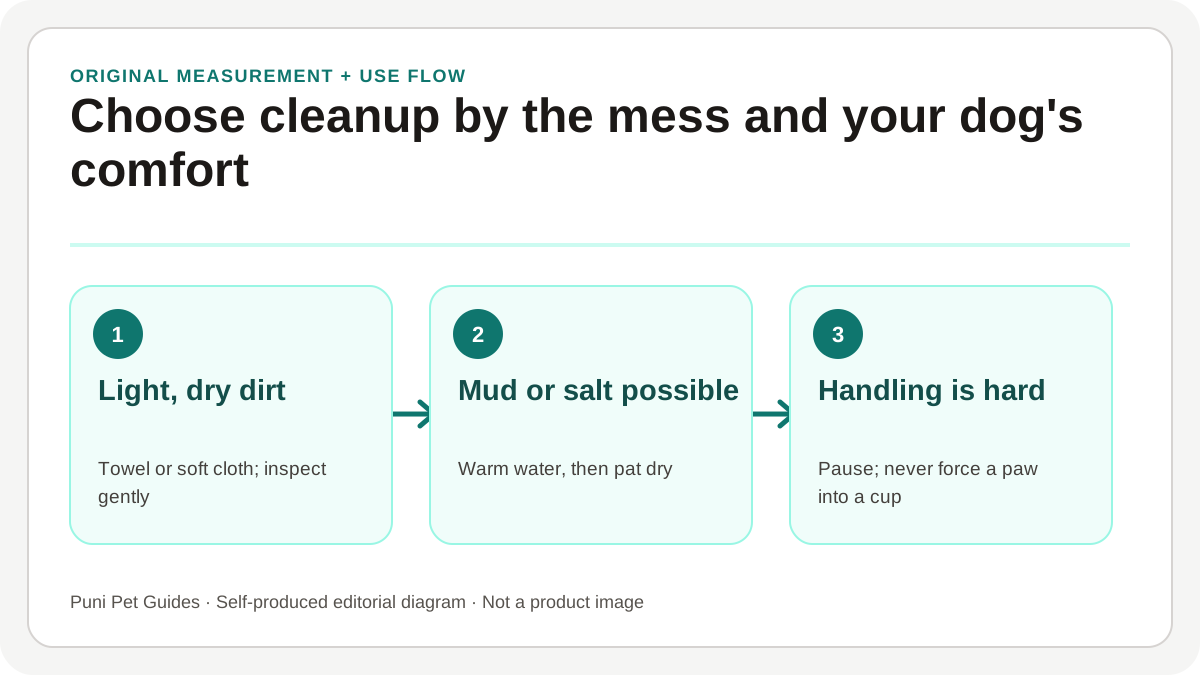
A three-step after-walk dog paw cleanup flow: use a towel for light dry dirt, warm water for mud or possible salt, and pause if the dog resists handling.
Original Puni Pet Guides decision flow. Match cleanup to the visible mess and the dog's comfort; it is not a product test or chemical-removal guarantee.

If you consider a cup, verify the exact opening before relying on it

The sizing information currently shown for the same MudBuster Medium conflicts: Dexas lists a 2.5–3.5-inch paw width, while the Chewy variant listing says up to 2.5 inches. Do not infer a fit from breed, body weight, or the word “Medium.” Measure according to the exact current chart and ask the maker or retailer to resolve the difference before using the cup. If that remains unclear—or handling would be uncomfortable—choose a cloth or rinse instead.

A low-fuss routine to try after the next walk

  1. Keep a towel near the entry and let your dog settle before touching a paw.
  2. Check for visible dirt, mud, salt, or something caught between the toes.
  3. Use a dry towel for light surface dirt; use a warm damp cloth or gentle rinse when mud or possible de-icer contact calls for water.
  4. Pat dry, inspect gently, and stop if your dog resists or seems sore.
  5. Ask a veterinarian about injury or persistent irritation; call promptly if ingestion may have happened.

If paw handling is difficult because your dog slips or struggles to stand, check the whole route as well as the cleanup method. Our senior-dog mobility checklist can help map where the walk ends and where steady footing is needed. For a separate look at the outdoor setup, see what to check before a dog walk.

Dog paw cleanup questions

Is a dry towel enough after every walk?

A towel can be a simple first step for light, dry dirt. If paws may have contacted road salt or de-icer, follow warm-water wiping or rinsing guidance instead of relying on a dry towel alone.

Are dog paw wipes a substitute for rinsing?

Use a wipe only when its dog-specific label and directions fit the job. For possible de-icer residue, warm-water wiping or rinsing is the clearer source-supported choice; no wipe is a chemical-neutralizing guarantee.

Does my dog need a paw washer?

No. It is an optional manual tool for some muddy-walk routines. A cloth or rinse may be simpler, and a paw cup is not a fit if the dog resists having a paw guided into it.

When should I call a veterinarian?

Ask a veterinarian about a sore, injured, or persistently irritated paw. If your dog may have licked or swallowed de-icer, contact a veterinarian or poison-control service promptly rather than waiting to see what a cleaning tool does.

Research notes

Sources behind this guide

Written and source-checked by Puni Pet Guides Editorial Team · Reviewed Oct 5, 2026

This guide synthesizes the public references below; it does not report hands-on product testing or independent veterinary review.

Review scope: practical context, source traceability, and clear non-diagnostic boundaries. Diagnosis and treatment decisions stay with veterinarians.