
Senior cat care · new eye discharge
Older Cat Eye Discharge? Call Before Using Drops
Contact your veterinary team as soon as you notice new eye discharge in an older cat. If the eye is painful or there is a sudden vision change, contact the clinic immediately. Eye problems have multiple possible causes, so the discharge cannot tell you which one is present. Contact the veterinary team promptly rather than using human eye drops, rubbing the eye, or trying to test vision at home.
Record what was visible: when it began, whether it returns, and any other eye change. Do not force the eyelids open or keep handling the eye.
Eye discharge is a sign, not a diagnosis
PDSA's cat-eye guidance describes multiple possible causes and treats discharge, redness or swelling, pain, and a closed eye as reasons to contact a vet promptly. Banfield's senior-pet eye guidance lists discharge, swelling, rubbing, and sudden vision changes as signs for veterinary contact. VCA's cat-illness guidance also places eye abnormalities in the prompt-attention category.
These sources support a contact decision, not a home label. Clear or sticky discharge, one affected eye, or a cat that still eats does not establish that the problem is minor.
| Already observed | Not established by the discharge |
|---|---|
| Discharge, redness, swelling, squinting, rubbing, or a closed eye | “The cause is obvious from the appearance” |
| Cloudiness or a vision change noticed without testing | “One normal-looking moment rules out a serious problem” |
| When the change began and whether it is returning | “Human drops or repeated cleaning will fix or identify it” |
Stop home testing and make the call
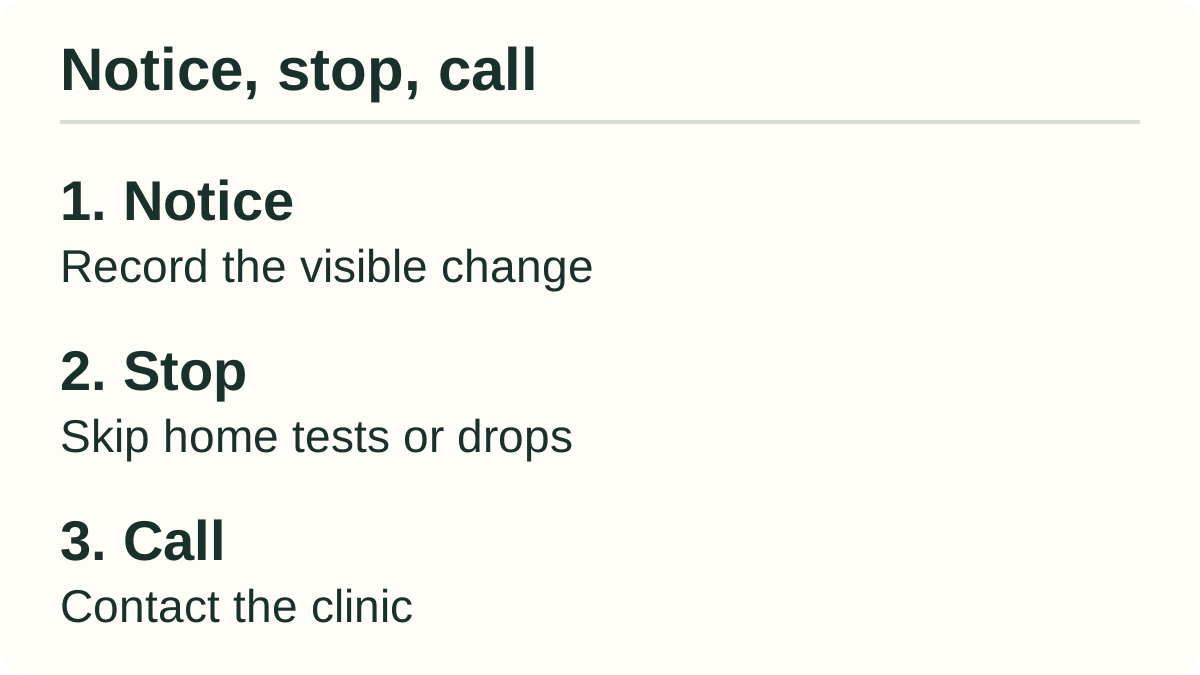
Call about new discharge without waiting for another sign. Report redness, swelling, squinting, rubbing, cloudiness, or a closed eye if already visible. Pain or a sudden vision change warrants immediate contact. You do not need to identify the cause first.
Do not pry the eyelids apart, shine a light, move objects to test sight, or repeat an approach. Do not use human eye drops or another product unless the veterinary team specifically directs it for this cat. Avoid rubbing or pressing the eye.
Give the clinic a factual history
Write down only what you already know:
- when you first noticed the discharge and whether it returns;
- whether the change was visible in one eye or both, if clear without handling;
- what you saw alongside it, such as redness, swelling, squinting, rubbing, cloudiness, pain behavior, or a closed eye;
- any other eye or behavior change you already noticed.
If you can take a photo without moving the cat or approaching the eye, let the clinic decide whether it is useful. Do not delay the call to get a photo.
A factual call can sound like this:
“My older cat has new eye discharge that I first noticed [time]. I can already see [redness, swelling, squinting, rubbing, cloudiness, or a closed eye]. It is [one eye, both eyes, or unclear]. What information should I send, and how should we arrange an examination?”
That gives the clinic visible facts without turning them into a diagnosis.
Keep nearby questions separate
If the main change is missing voice cues rather than eye discharge, see Older Cat Not Responding to Your Voice? Start With a Gentler Approach. For general appointment records, use the senior cat vet-visit checklist.
Sources and review note
Source-checked September 22, 2026. This article summarizes PDSA's Eye Problems in Cats, Banfield's Older Dog and Cat Eye Problems, and VCA's Recognizing the Signs of Illness in Cats. They support professional attention; they do not diagnose or prescribe home treatment here.
Research notes
Sources behind this guide
Written and source-checked by Puni Pet Guides Editorial Team · Reviewed Oct 5, 2026
This guide synthesizes the public references below; it does not report hands-on product testing or independent veterinary review.
Review scope: practical context, source traceability, and clear non-diagnostic boundaries. Diagnosis and treatment decisions stay with veterinarians.