
Dog health · repeated ear signs
Dog Keeps Shaking Head and Scratching Ears? When to Call a Vet
If your dog keeps shaking their head and scratching their ears, contact your veterinary clinic and ask how soon your dog should be seen. Those signs alone cannot identify a cause. If you are unsure whether this can wait for an appointment, ask the clinic when you call.
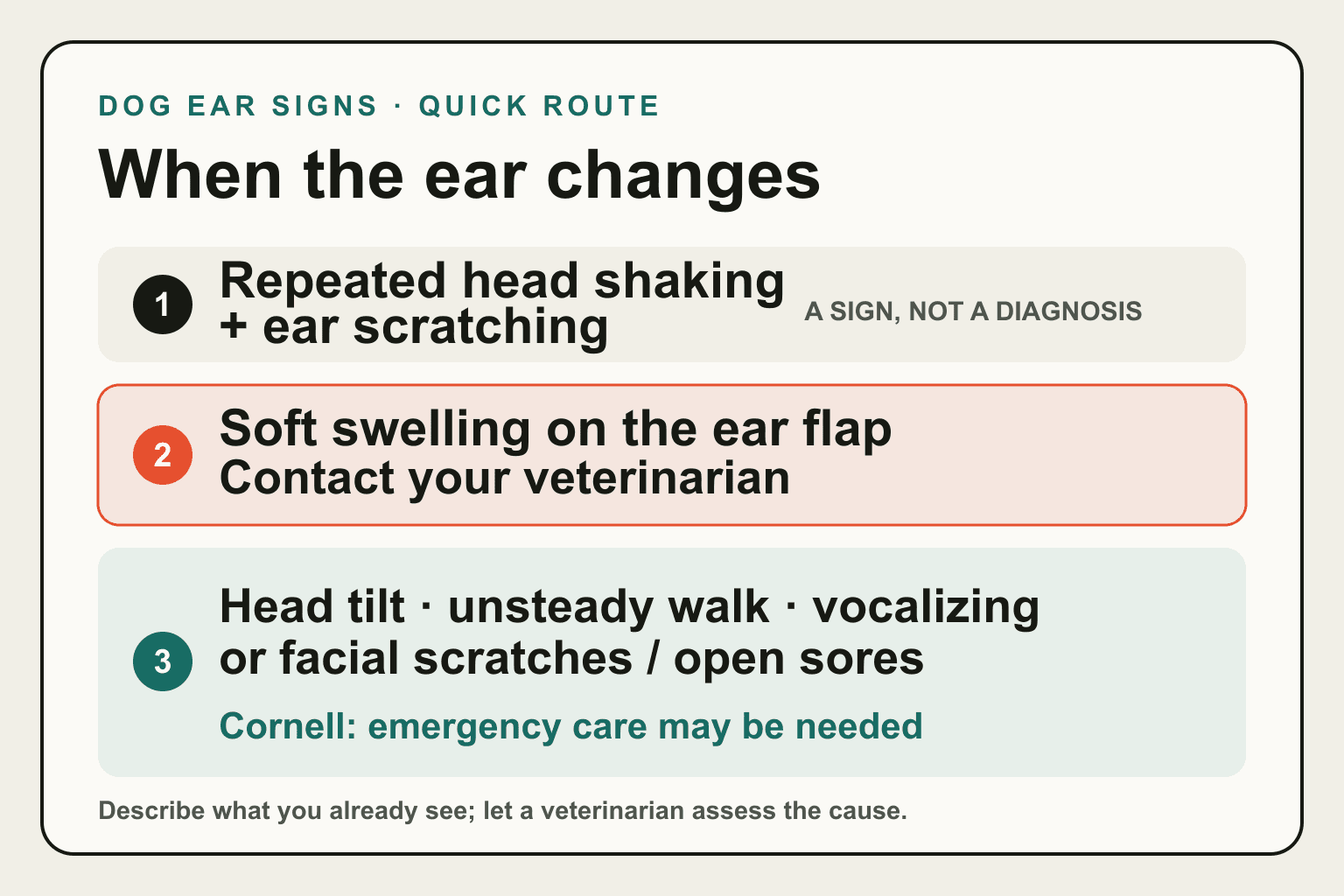
A swelling on the ear flap changes the call
The ear flap is the visible outer part. Cornell’s dog-ear guidance says vigorous shaking or scratching can burst a blood vessel in the flap and advises contacting a veterinarian about soft swelling. If you have already noticed a new swelling, mention it on the call; its appearance alone does not identify the cause.
Cornell says an emergency visit may be needed when an ear problem worsens and the dog develops a head tilt, an unsteady or drunken-looking walk, vocalizing, or facial injury from scratching. If you see one of these severe changes, call an emergency veterinary clinic, report what happened, and ask whether they want you to come in.
What the signs can—and cannot—tell you
Head shaking and ear scratching are observations, not proof of one particular problem. The American Animal Hospital Association lists those signs, along with discharge or odor, among signs associated with ear infection. The MSD Veterinary Manual lists overlapping signs such as redness, swelling, discharge, odor, and scratching, and describes several possible causes. That overlap is why a smell, color, or movement should not be used to label the cause yourself.
When you call, say when you first noticed the repeated shaking and whether it has happened more than once. Report only what you have already seen: one or both ears, visible redness or swelling, odor or discharge, discomfort when scratching, a change in head position or walking, or marks on the face. You do not need a complete log or a clinical term before asking for help. Do not force an ear inspection if your dog resists or seems painful.
The useful question for the clinic is how soon your dog should be examined based on those observations. If the clinic asks you to watch for anything else, follow its directions rather than repeatedly handling the ear.
What a veterinary ear exam may include
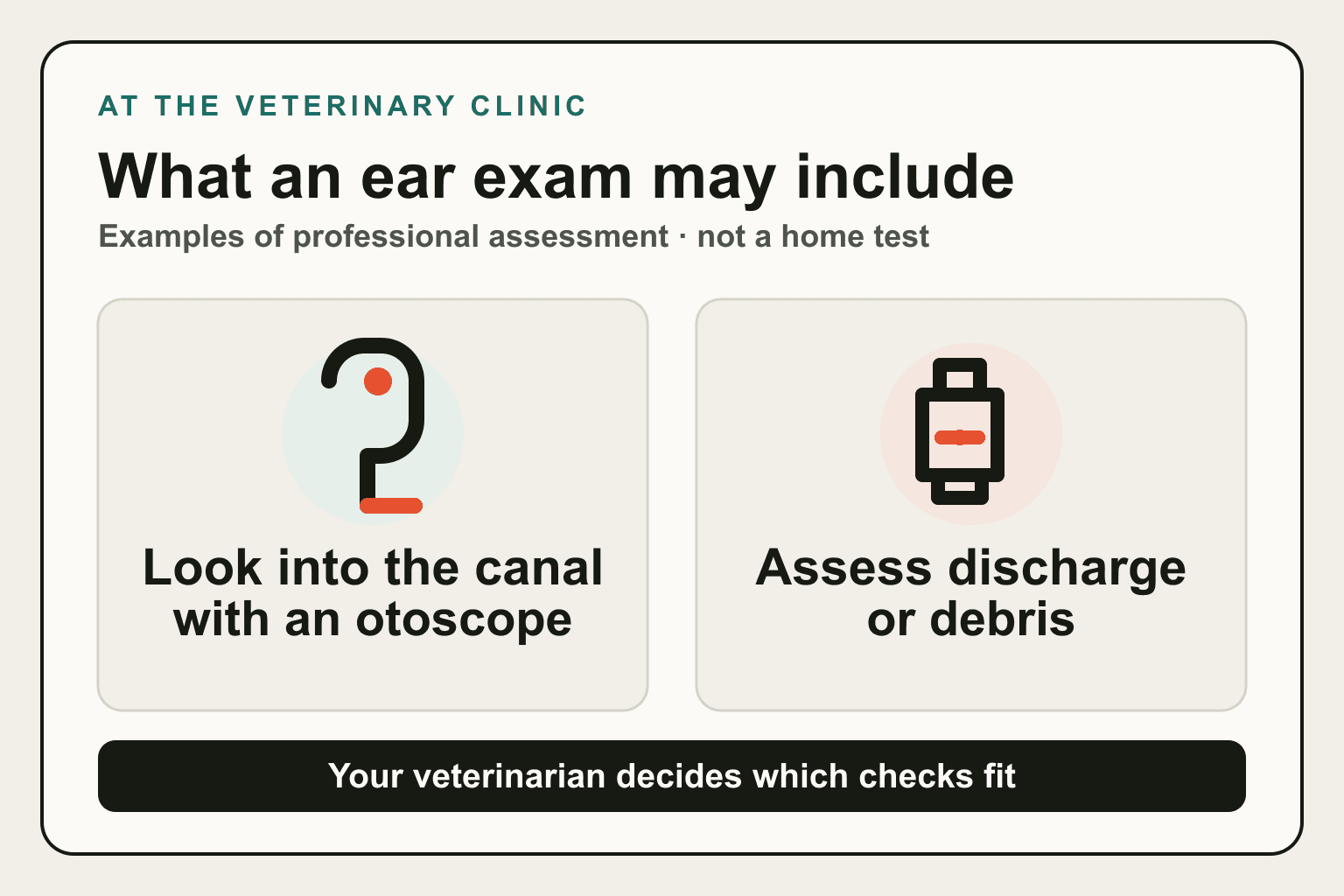
A veterinarian may look into the ear canal with an otoscope and may examine discharge or debris. The MSD Veterinary Manual describes these as possible parts of an ear assessment. Your dog’s exam depends on what the veterinarian finds; the steps below are examples of clinic assessment, not a home test.
Leave cleaning and products to veterinary advice
Do not probe the canal, flush the ear, or use an old cleaner or medication while trying to work out the cause. The MSD Veterinary Manual advises following your veterinarian’s home-cleaning instructions, avoiding irritating home remedies, and not using over-the-counter wax removers unless your veterinarian approves them. It also says not to put cotton swabs into the canal. Ask the clinic before using any ear product, and follow its directions for what to do before the visit.
For Puni Pet Guides’ public editorial boundaries, see About Puni Pet Guides.
Research notes
Sources behind this guide
Written and source-checked by Puni Pet Guides Editorial Team · Reviewed Oct 5, 2026
This guide synthesizes the public references below; it does not report hands-on product testing or independent veterinary review.
Review scope: practical context, source traceability, and clear non-diagnostic boundaries. Diagnosis and treatment decisions stay with veterinarians.