
Dog behavior · thunderstorm safety
Dog Scared of Thunder? Make a Safer Storm Plan
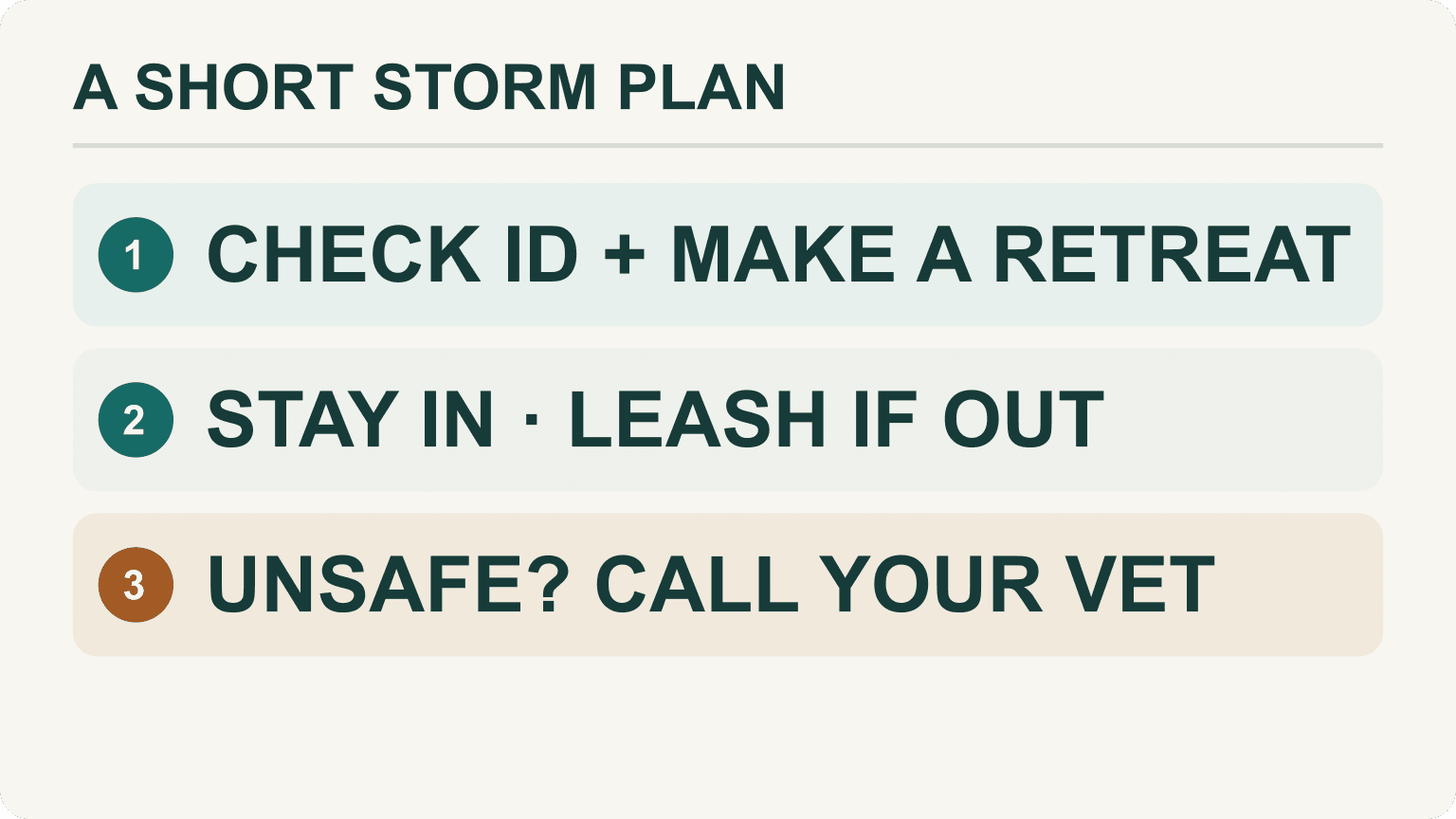
If your dog is scared of thunder, start with safety: keep your dog indoors, make a quiet familiar room available, and reduce the chance of an escape. Before a storm, check that your dog’s collar ID and microchip details are current and plan an outdoor break earlier. If your dog must go outside while thunder is active, use a leash even in a fenced yard.
Do not punish a fearful response. Use a crate only if your dog is already comfortable treating it as a safe place. If the fear feels unmanageable or you cannot keep your dog safe, contact your veterinarian for guidance.
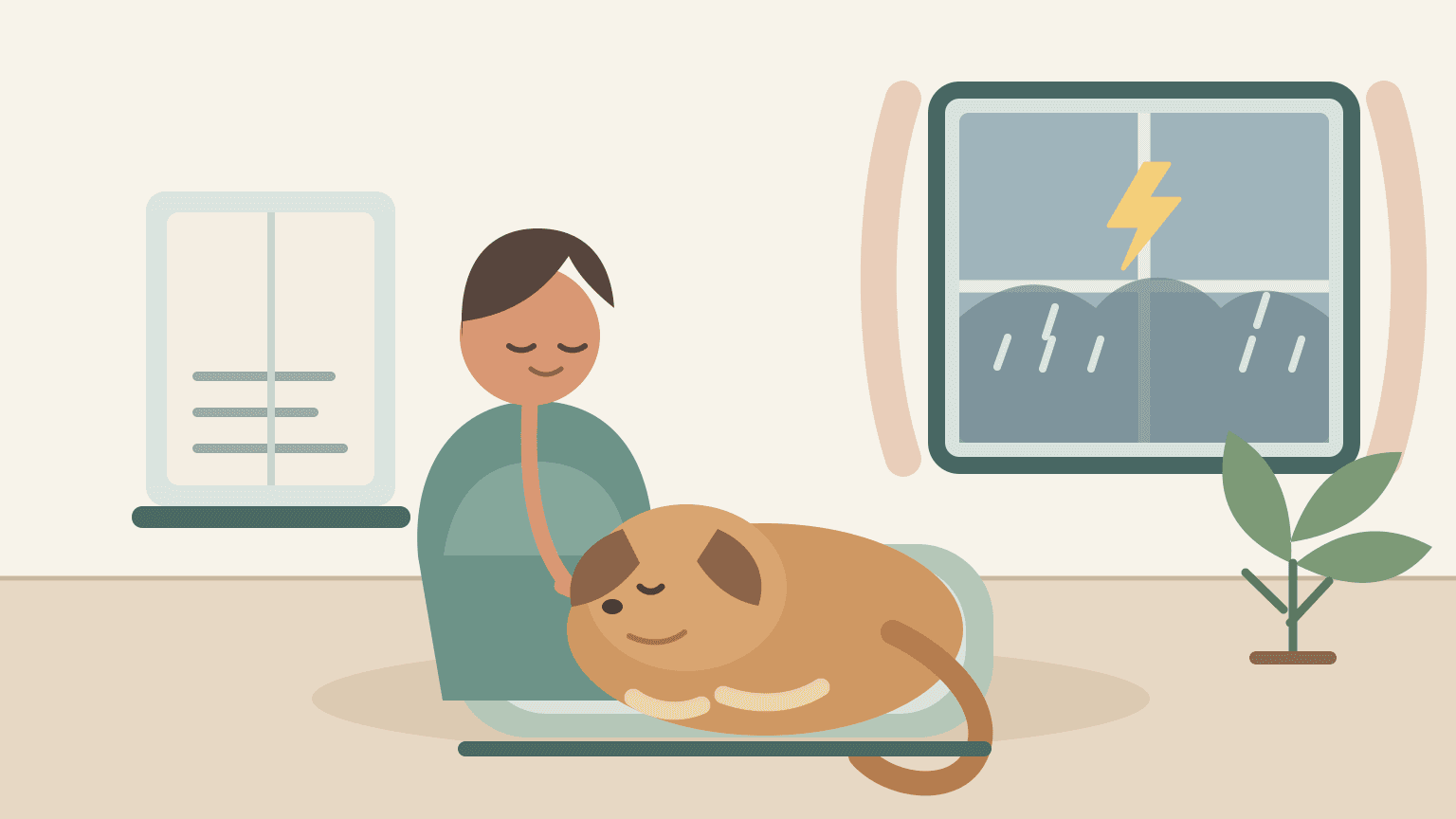
If thunder is already underway, prevent an escape
Stay indoors with your dog if you can. Keep doors and windows closed, and draw curtains if that helps reduce outside noise. A frightened dog may pace, hide, pant, vocalize, dig at a door, or try to escape. These are possible signs of noise-related fear, not a diagnosis.
If an outdoor trip cannot wait, clip on a leash before opening the door, even when the yard is fenced. Cornell’s veterinary guidance specifically recommends a leash for necessary storm-time trips and keeping identification current because frightened dogs may flee.
Prepare a retreat your dog already knows
Before the next storm, choose a quiet room your dog is familiar with, with a bed or blanket already used there. Cornell recommends a place farther from the noise with few or no windows. AAHA also describes a quiet retreat and closing windows, doors, or curtains as practical ways to reduce outside sound.
Keep the route into the room open so your dog can choose the retreat. Do not put a dog into a crate for the storm unless the crate is already a place your dog treats as safe. Soft music or white noise may help mask outside sound; it is not a promise that fear will stop.
When thunder is expected, arrange exercise and a bathroom break before it begins where possible. That can reduce the need to go outside once the storm is active.
When to ask your veterinarian for help
Contact your veterinarian if your dog’s fear feels unmanageable, if escape attempts put your dog at risk, or if you are unsure how to keep your dog safe. AAHA advises discussing fear during thunderstorms or other sounds with a veterinarian, who can assess what guidance fits your pet. This page does not diagnose noise aversion or recommend medication or treatment.
If your question is instead about a new, unexplained nighttime pacing pattern in an older dog—including nights without storms—see our separate guide to senior dog pacing at night.
Research notes
Sources behind this guide
Written and source-checked by Puni Pet Guides Editorial Team · Reviewed Oct 5, 2026
This guide synthesizes the public references below; it does not report hands-on product testing or independent veterinary review.
Review scope: practical context, source traceability, and clear non-diagnostic boundaries. Diagnosis and treatment decisions stay with veterinarians.