
Dog everyday care · Halloween safety
Should You Try a Dog Halloween Costume? Check Fit and Comfort First
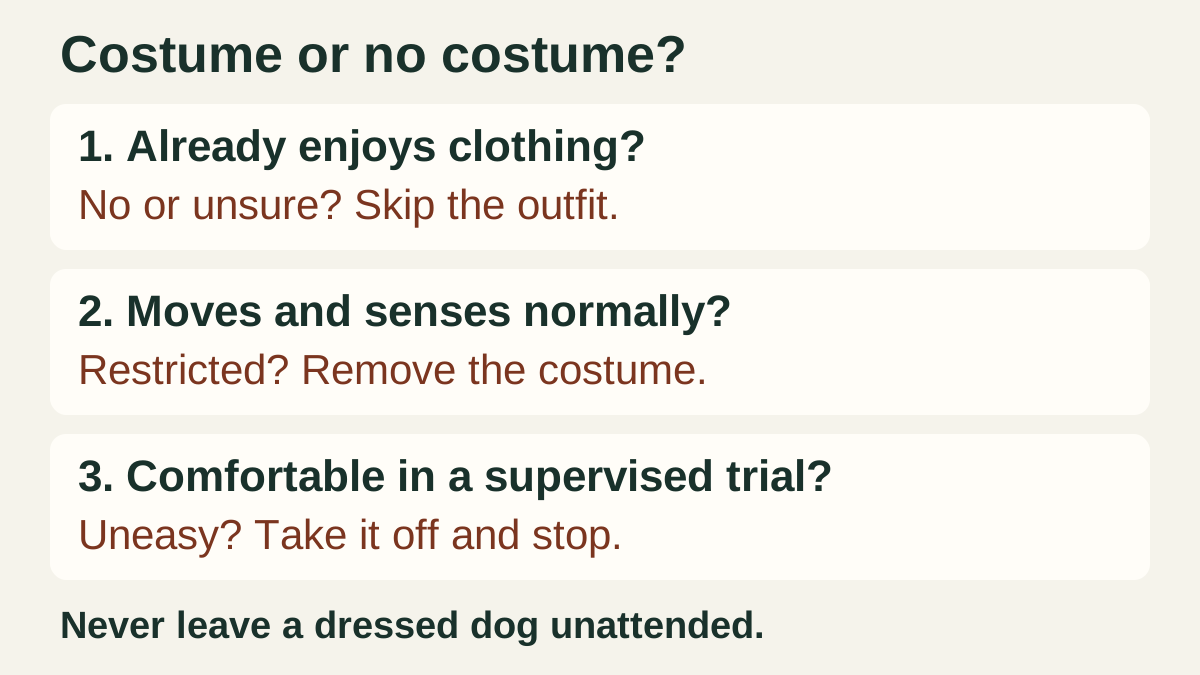
Try a dog Halloween costume only if your dog is already comfortable wearing clothes and you know they enjoy it. If they resist, or the outfit gets in the way of normal movement, sight, breathing, hearing, or barking, skip the costume instead of trying to make them tolerate it.
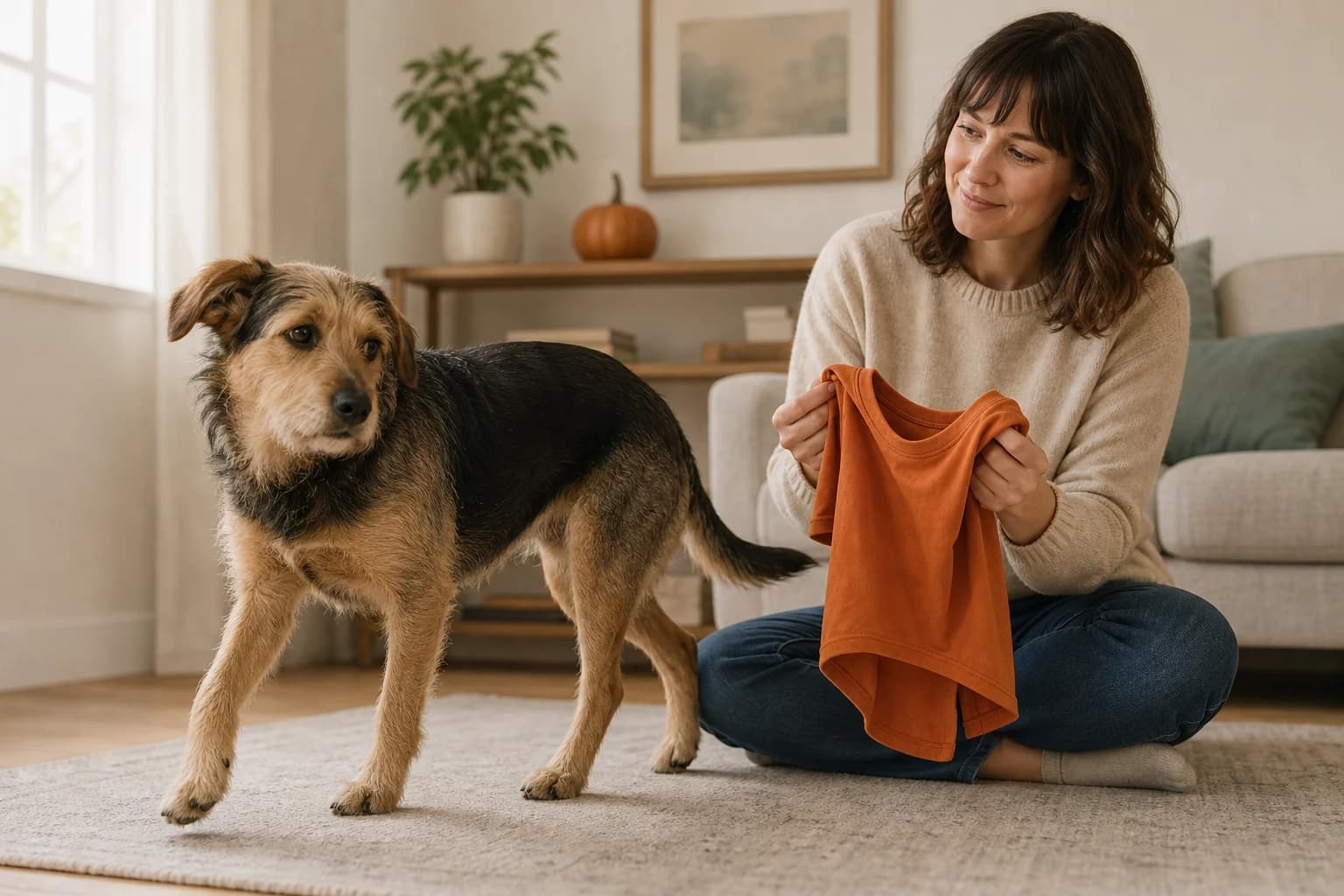
Start with your dog, not the photo
A costume is optional. Some dogs are used to clothes; others are not. Begin with what you know about your dog. If clothing is new to them, or they seem uncomfortable when you bring the outfit out, leave it off. A Halloween picture is not a reason to push through a reaction.
If your dog is willing, try the outfit at a calm time before Halloween night. Watch how they respond while wearing it. Refusing to move, scratching or biting at the costume, lip licking, or yawning may mean they are uncomfortable. Take it off and stop the trial if you notice these behaviors. Do not leave it on and wait for your dog to “get used to it.”
Check fit and freedom
Follow the maker’s size chart and measure your dog as directed. A costume that is too tight can restrict movement. One that is too loose can cause a trip or get caught around your dog. Your dog should be able to move and look around normally, with nothing covering the face or pressing tightly around the neck or chest.
Keep the design simple. Small pieces that dangle or detach can be chewed or swallowed, and bulky accessories can get in the way. Skip masks, hats, and mitten-like pieces that may distract your dog or limit what they can see, hear, or do. Clothing can also irritate skin or trap heat, so consider the fabric and the weather before dressing your dog.
Let the trial make the choice
A calm tryout gives you a chance to check the fit and your dog’s response. Stay with your dog whenever the costume or any accessory is on; never leave them unattended in it. Look at the whole picture: does your dog move, see, hear, breathe, and bark normally, and do they seem at ease? If not, take the outfit off.
If your dog clearly enjoys the costume and can move freely in it, you can use it for the occasion while supervising them. If their comfort is uncertain, choose a less intrusive option only if they accept it, or skip dressing them altogether. If visitors or the doorbell overwhelm your dog, a quiet room away from the door is another option for the evening. If thunder is the noise your dog struggles with, see our separate thunderstorm safety plan.
Your dog’s response decides whether to dress them. If the outfit changes how they move or behave, the photo can wait; let your dog go without it.
Research notes
Sources behind this guide
Written and source-checked by Puni Pet Guides Editorial Team · Reviewed Oct 25, 2026
This guide synthesizes the public references below; it does not report hands-on product testing or independent veterinary review.
Review scope: practical context, source traceability, and clear non-diagnostic boundaries. Diagnosis and treatment decisions stay with veterinarians.