
Everyday cat care · Halloween safety
Are Glow Sticks Safe for Cats? Keep Them Out of Play
No—glow sticks and glow bracelets are not cat toys. Keep them out of reach. If your cat has chewed one, may have swallowed its contents or plastic casing, or got liquid in its eyes, contact your veterinarian or Pet Poison Helpline immediately. The Edmonton Humane Society advises calling a veterinarian after a pet chews a glow stick or ingests its contents or container.
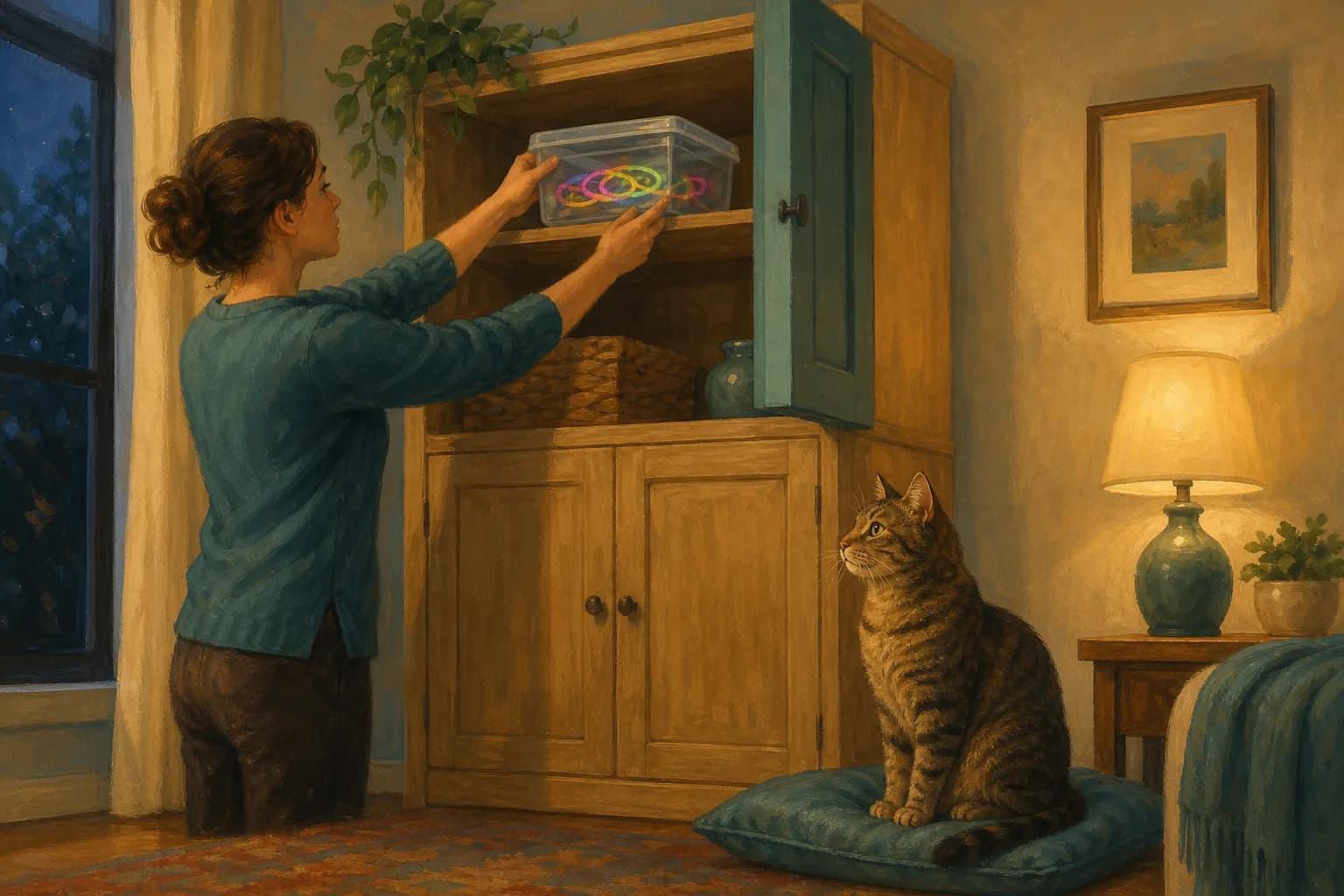
A “non-toxic” label does not make one a cat toy
Glow sticks and glow jewelry are for people to wear or carry, not for cats to bite. The ASPCA warns that cats may puncture glow sticks. The items taste very bitter, and a cat that bites one may drool; a “non-toxic” label does not make one suitable for play. Do not offer one as a toy or leave it where a cat can mouth it.
Put them away before guests arrive
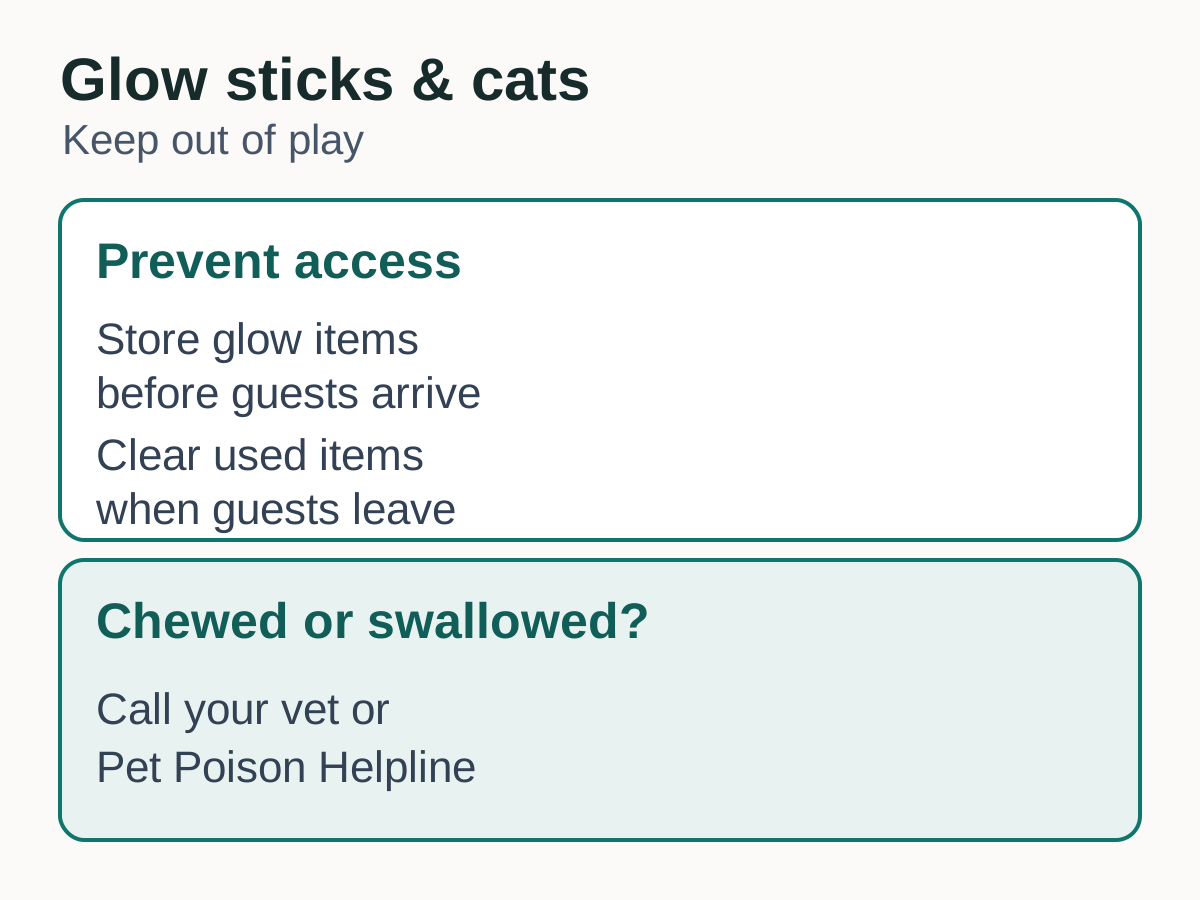
Store unused glow bracelets in a closed cupboard or another place your cat cannot reach; avoid leaving an open package or a bowl of bracelets on a low table. After a gathering, check floors, under chairs, and trash areas for used bracelets or packaging, then clear them before your cat returns to the room. If you find one chewed or think your cat contacted a damaged one, call for professional advice.
If your cat chewed one, get advice
If you find a chewed stick or think your cat may have swallowed the liquid or plastic, call your veterinarian promptly. The Pet Poison Helpline lists frothing or drooling, nausea, retching, and vomiting after oral exposure. Liquid in the eyes may cause redness or pain. If plastic was swallowed, it may create an intestinal blockage. These are possible effects, not a way to diagnose what happened at home. The helpline says risk varies by animal and exposure, so its page cannot replace advice for your cat.
Move remaining pieces out of reach while you call. Tell the veterinarian or poison specialist whether you saw a bite or puncture, missing plastic, or liquid near the eyes; do not guess if you are not sure.
Research notes
Sources behind this guide
Written and source-checked by Puni Pet Guides Editorial Team · Reviewed Oct 26, 2026
This guide synthesizes the public references below; it does not report hands-on product testing or independent veterinary review.
Review scope: practical context, source traceability, and clear non-diagnostic boundaries. Diagnosis and treatment decisions stay with veterinarians.