
Senior dog care · overnight changes
Senior Dog Pacing at Night? What to Note and Tell Your Vet
New pacing or walking around at night is a change worth sharing with your veterinarian. The behavior alone cannot tell you why it is happening. Note what you have already seen, and contact your clinic without waiting for a complete log.
A nighttime pattern needs clinical context
The Cornell University College of Veterinary Medicine describes older dogs waking and walking at night as one possible sleep-and-wake change. The American Animal Hospital Association notes that similar behavior can overlap with other health problems, including pain or organ dysfunction. A veterinarian considers that context during an assessment.
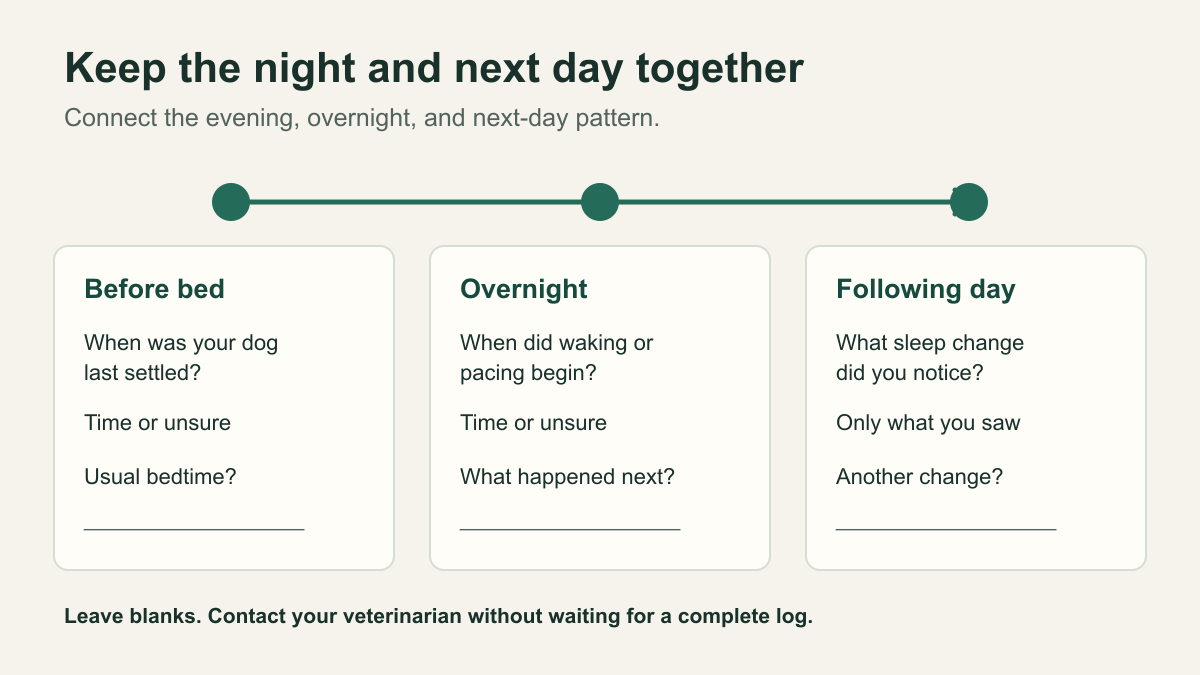
Send the clinic a short, useful account
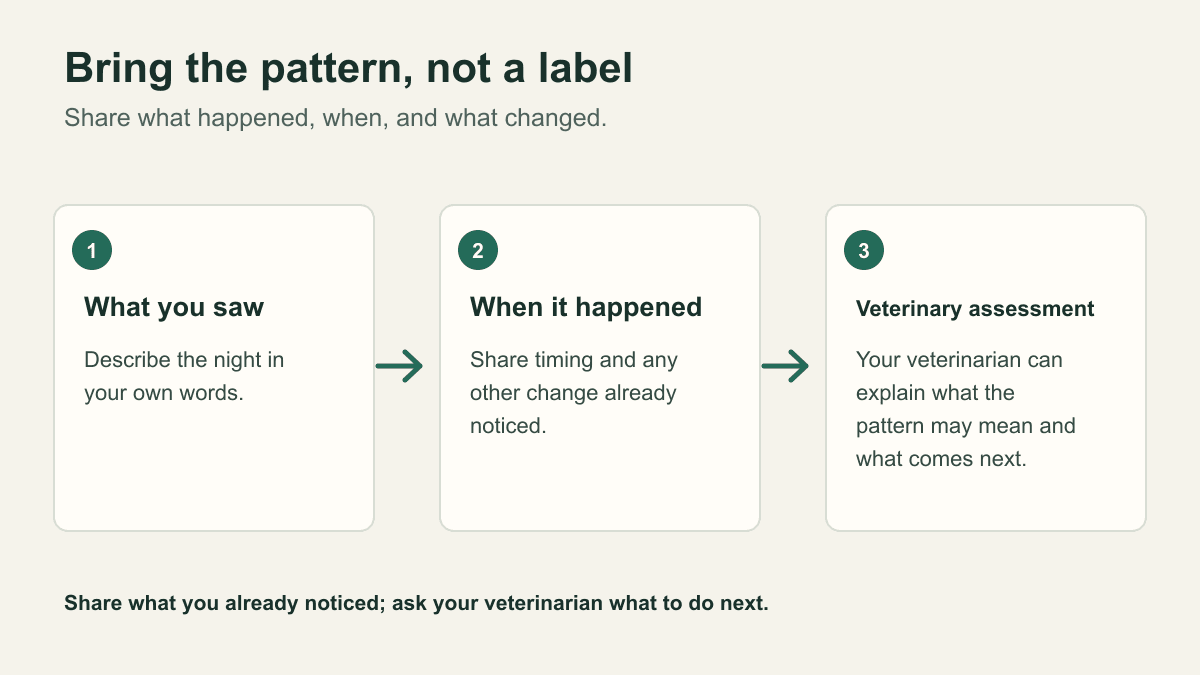
Describe one night you already observed: when your dog settled or woke, what you saw next, and any other change you have already noticed. Keep unknowns blank. You do not have to stay awake, recreate the pacing, or finish a log before calling.
Message starter: “I’m contacting you about a new nighttime change. I first noticed it ___ . On a night I already observed, my dog woke or paced around ___, then ___ (or I’m not sure). A daytime or other change I have already noticed is ___ / none / unsure. What should I do next, and who should I contact if it changes after hours?”
Leave any blank you cannot answer. A new or different pattern is enough reason to contact your veterinary clinic. Do not wait for the note to be complete or for another night to pass before reaching out.
Keep an access problem separate
The AAHA senior-care guidelines explain that nighttime restlessness can overlap with other health concerns, so a pacing note cannot establish the cause. Your clinic can decide what assessment is needed; the message starter is only a handoff, not a home test.
If you have also noticed a distinct slipping or access difficulty on the way from bed to the door, use the guide to a senior dog's nighttime path from bed to door. Keep that household route note separate from the pacing history.
Research notes
Sources behind this guide
Written and source-checked by Puni Pet Guides Editorial Team · Reviewed Oct 5, 2026
This guide synthesizes the public references below; it does not report hands-on product testing or independent veterinary review.
Review scope: practical context, source traceability, and clear non-diagnostic boundaries. Diagnosis and treatment decisions stay with veterinarians.