
Everyday cat care · sleep
Why Do Cats Sleep So Much? Frequent Naps, Familiar Patterns
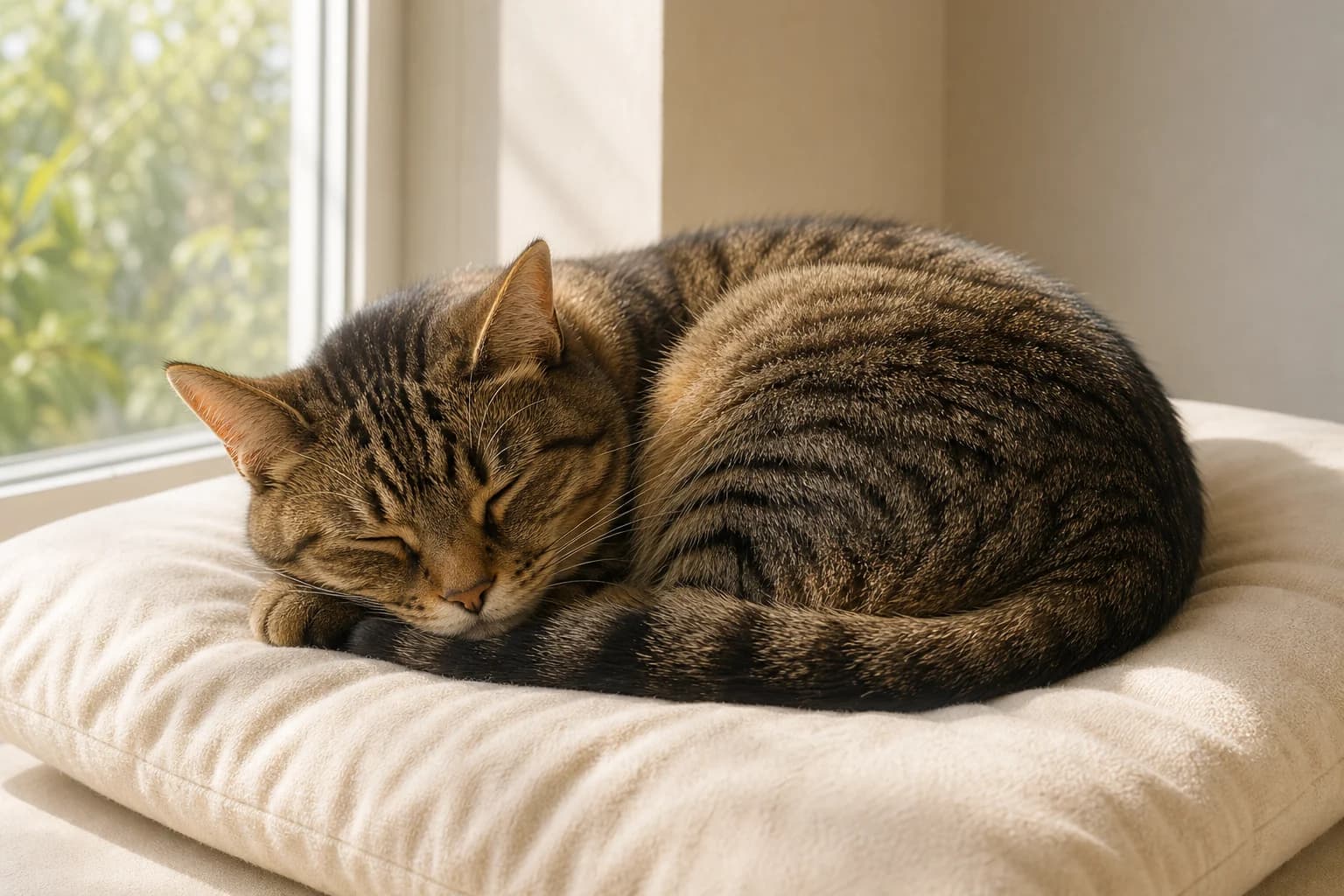
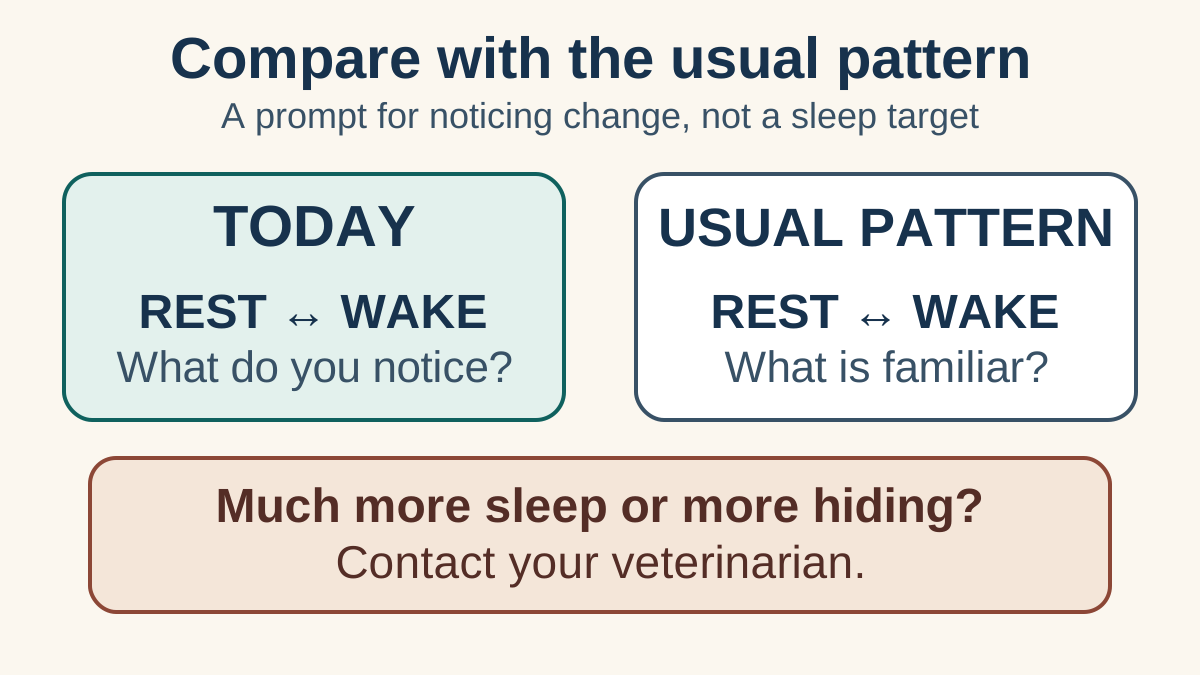
Cats rest to conserve energy for hunting, play, and exploration, and often sleep and wake in repeated bouts through the day and night. Frequent naps are a familiar pattern, as Cats Protection describes. These broad habits cannot tell you why an individual cat is asleep at a particular moment. Compare what you see with your cat’s usual pattern, let it rest, and contact your veterinarian if it sleeps much more than usual or hides more.
Why cats take repeated rests
Domestic cats still have instincts tied to hunting, play, and exploration. Cats Protection explains that rest helps cats conserve energy for those activities, even for a cat that lives indoors.
Rest and wake times vary
The Ohio State University Indoor Pet Initiative describes cats sleeping and waking frequently across both day and night, unlike a human’s routine. A cat’s rest can be spread across the day rather than gathered into one long night stretch.
Activity may overlap with evening
UF Health notes activity around dusk and dawn, with frequent rests between active periods. A cat’s busier times may not match yours.
Let sleeping cats rest
Cats Protection advises against disturbing a cat’s sleep or keeping it awake to change its night routine. Let your cat rest rather than trying to shift its routine by keeping it up.
When to check with a veterinarian
Use your cat’s usual pattern as a reference. Cats Protection and UF Health say a marked increase in sleep can warrant veterinary advice; Cats Protection also names increased hiding. These changes do not diagnose a condition. If you notice one, contact your veterinarian and describe what changed and when it began.
Research notes
Sources behind this guide
Written and source-checked by Puni Pet Guides Editorial Team · Reviewed Oct 27, 2026
This guide synthesizes the public references below; it does not report hands-on product testing or independent veterinary review.
Review scope: practical context, source traceability, and clear non-diagnostic boundaries. Diagnosis and treatment decisions stay with veterinarians.