
Everyday cat care · senses
Why Do Cats Have Whiskers? What Those Sensitive Hairs Do
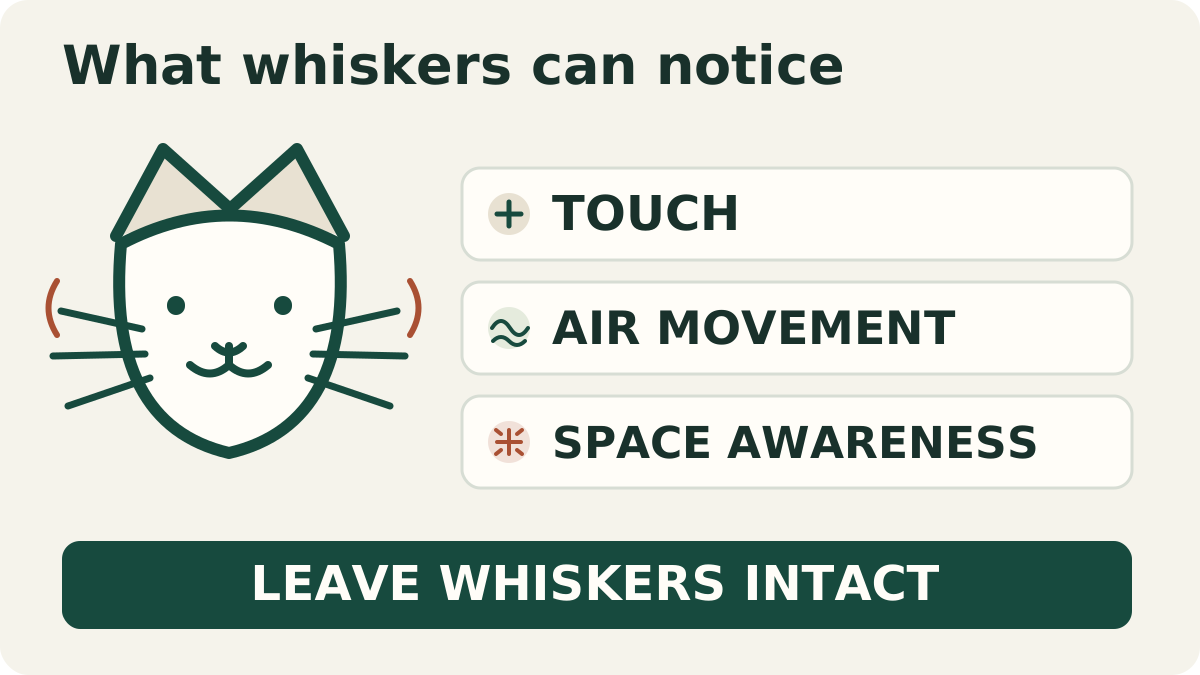
A cat’s whiskers are sensitive sensory hairs that collect close-up information through touch, nearby air movement, and vibration. Nerve endings at their bases help carry those signals, which can support awareness of nearby objects and space. Whiskers are functional, not decorative, and should be left intact.
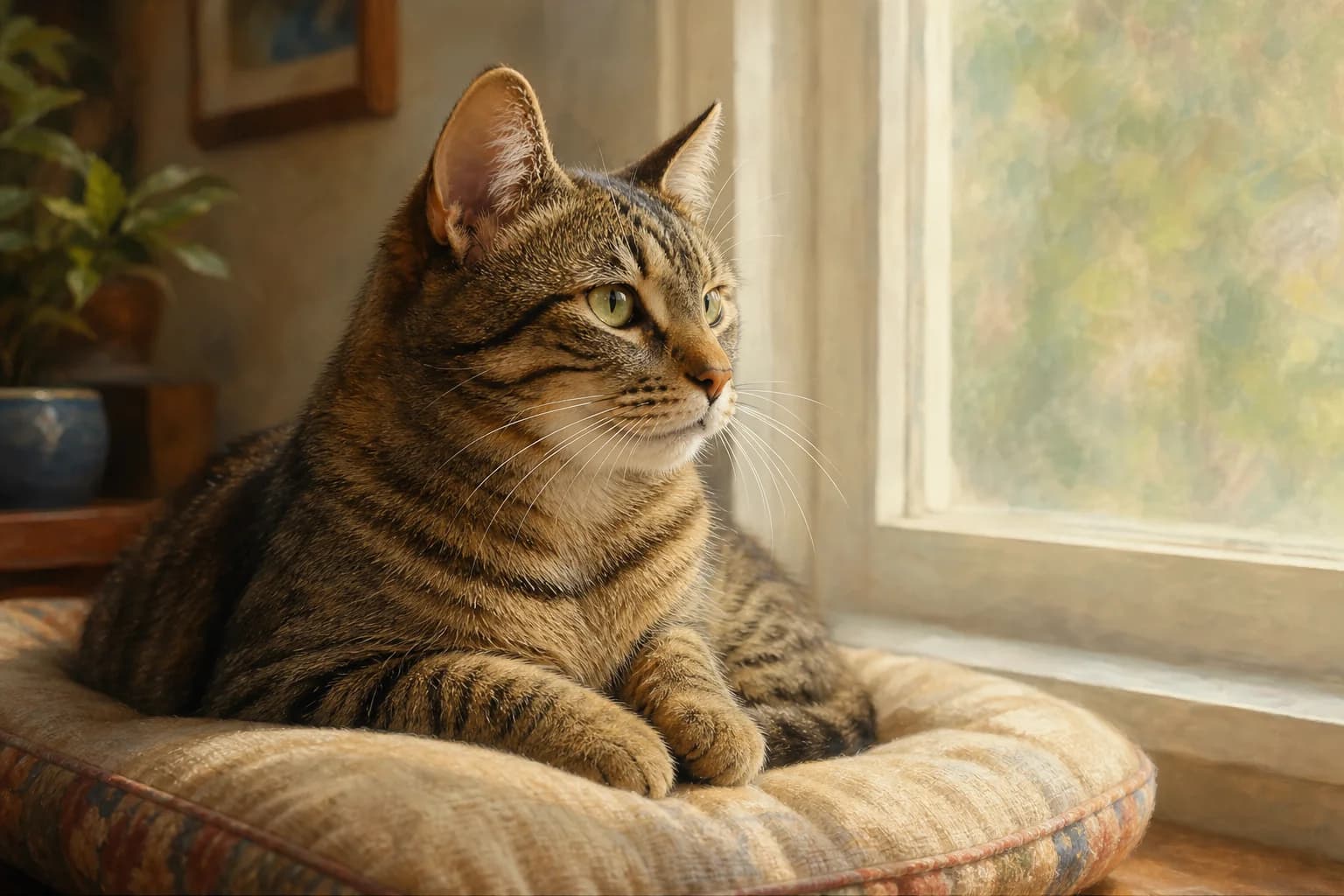
How whiskers gather close-up information
Cats Protection describes whiskers as sensory tools that send messages through the nervous system and help cats notice nearby objects or movement. The University of Melbourne explains that nerve endings at the embedded base respond to touch and changes in nearby air, supporting spatial awareness around obstacles. At close range, contact or a small shift in air can provide information about nearby obstacles. The sources do not specify an exact distance a cat can sense.
A useful cue, not a mood test
Whiskers can also pick up vibrations and help with prey detection, according to the RSPCA. The University of Melbourne gives possible mood examples, but that does not make whisker position a universal code. As a cautious reading, consider it alongside the rest of the cat’s body language.
Leave whiskers intact
Cats Protection advises never to trim, pluck, or cut a cat’s whiskers. Leave them intact.
Research notes
Sources behind this guide
Written and source-checked by Puni Pet Guides Editorial Team · Reviewed Oct 26, 2026
This guide synthesizes the public references below; it does not report hands-on product testing or independent veterinary review.
Review scope: practical context, source traceability, and clear non-diagnostic boundaries. Diagnosis and treatment decisions stay with veterinarians.