
Senior cat care · changing routines
Senior Cat Hiding More Than Usual: How to Respond
Your cat usually comes into the room at breakfast. Today they stay behind the sofa, and you wonder whether to call them out or leave them alone. If hiding has increased or changed, contact your veterinary team. You can keep a safe retreat available while asking for advice.
Cats Protection explains that hiding can be normal, but hiding more than usual deserves a veterinary check. The useful comparison is your own cat’s familiar pattern. A hiding place alone cannot tell you the cause.
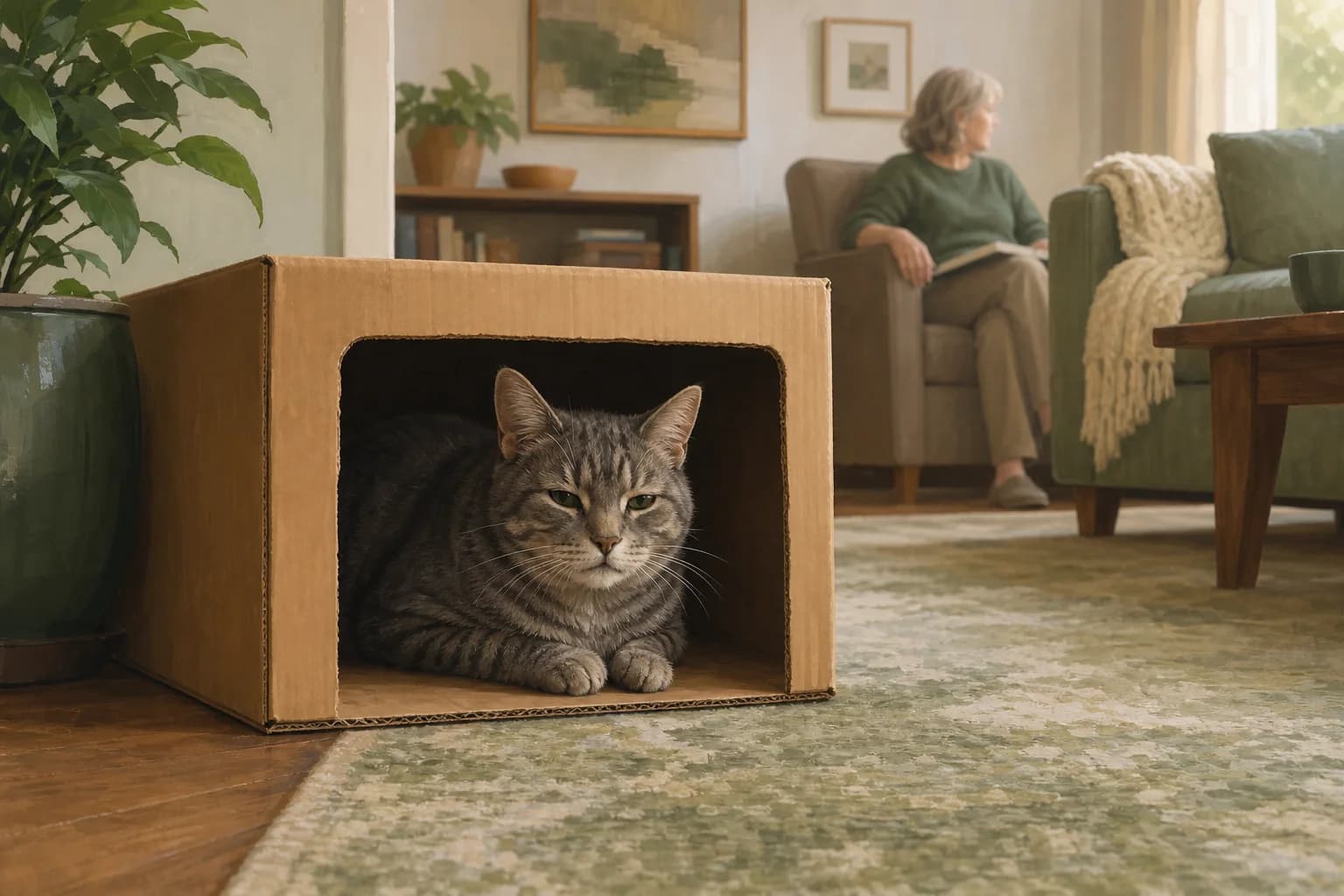
Notice what changed about the hiding
Think about an ordinary moment when you would usually see your cat. Are they missing a familiar greeting, choosing a different place, or staying tucked away when they would normally come out? Describe that change when you call. You do not need to keep watching until you can fill every gap in the story.
A visitor, loud noise or rearranged room may be relevant context. Tell the clinic about it without deciding that it explains everything. Cornell’s senior-cat guidance advises contacting a veterinarian about behavioral changes and cautions against attributing them simply to age.
Give a safe retreat some space
Cats Protection advises leaving a hiding cat in peace rather than coaxing them out, which can increase anxiety. For a safe, freely accessible hiding place, stop repeated calls and give the entrance room. Ask family members to avoid reaching inside or gathering around to check for a response.
Keep the distinction between hiding voluntarily and being trapped. If your cat is stuck or the location is dangerous, seek help appropriate to the situation. When a veterinary visit is needed and you cannot safely get your cat into the carrier, describe the location and ask the clinic how to proceed. A quiet retreat should not become a reason to delay needed care.
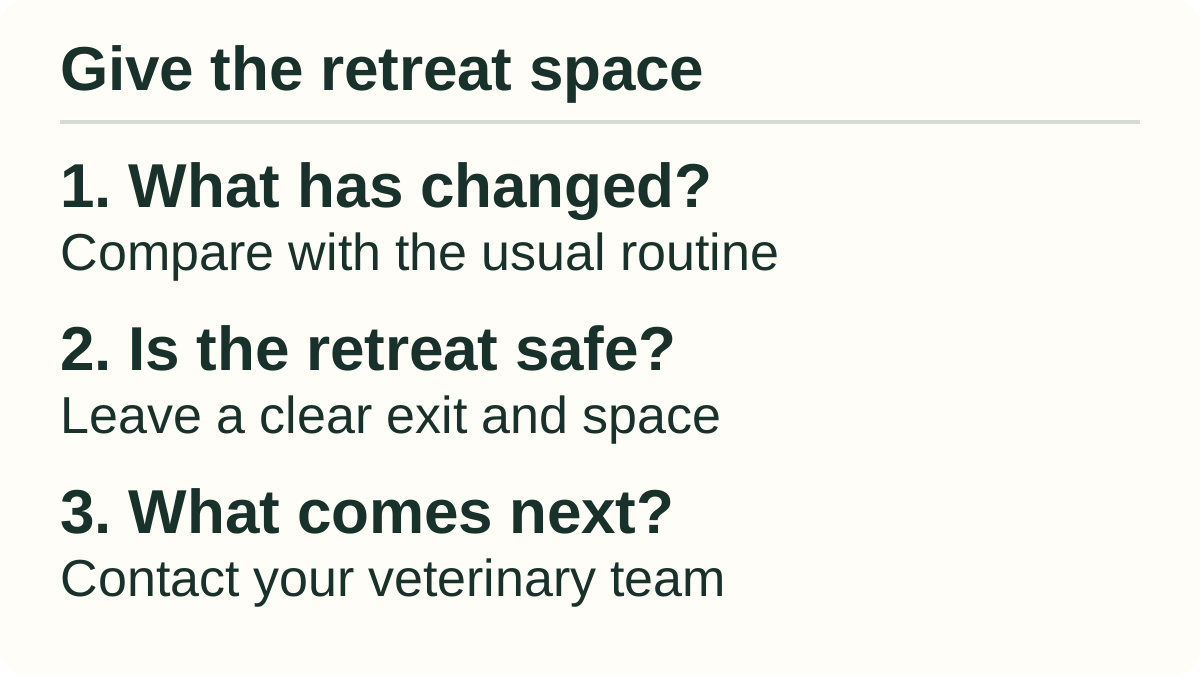
Keep familiar access available
Before adding a new hide or moving furniture, consider whether your cat can comfortably reach the space they already use. Cornell notes that older cats with mobility difficulties may struggle to reach resources that require climbing or jumping. A high perch is therefore not a universal answer for an older cat.
Keep familiar necessities accessible without crowding the retreat. Avoid turning the entrance into a feeding lure or a busy observation station. Our home-access checklist covers the separate question of routes between resting places, food, water and litter.
If another person helps with care, tell them where the cat normally rests and what has changed. The sitter handover guide helps keep that information and clinic contacts together. Agree who will make the call so the concern does not get lost between caregivers.
Contact the clinic with what you know
For breathing problems, straining in the litter box or lack of urination, seek veterinary attention immediately. Ask about safe transport; do not delay to finish a note or rearrange the room.
A fictional wording example: “She usually joins us at breakfast, but this morning she stayed behind the sofa. I have not seen her come out for her usual greeting. I have also noticed ___ / none / unsure. What should we do next, and how should we prepare to bring her in?” Adapt the words to the facts you know. The clinic can guide the next step while you keep the surroundings calm.
Research notes
Sources behind this guide
Written and source-checked by Puni Pet Guides Editorial Team · Reviewed Oct 5, 2026
This guide synthesizes the public references below; it does not report hands-on product testing or independent veterinary review.
Review scope: practical context, source traceability, and clear non-diagnostic boundaries. Diagnosis and treatment decisions stay with veterinarians.