
Senior cat care · a change in drooling
Senior Cat Drooling: When to Observe and When to Call a Vet
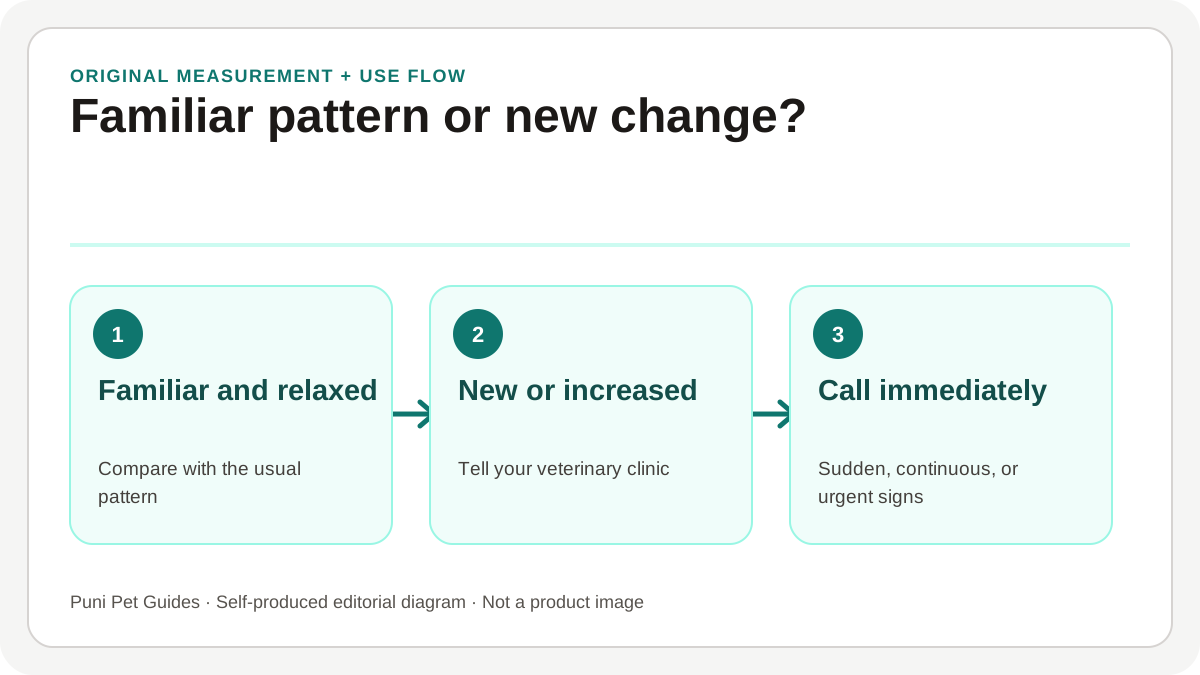
Some cats drool when they are relaxed, content, and purring. If that is a familiar pattern for your cat, it can be normal. The important question is whether drooling outside meals is still that same relaxed pattern or a new, increased, or persistent change. Contact your veterinarian if it is more than usual. PDSA's drooling guidance distinguishes familiar relaxed drooling from a new or increased pattern. It does not set a universal amount or duration that is safe for every cat.
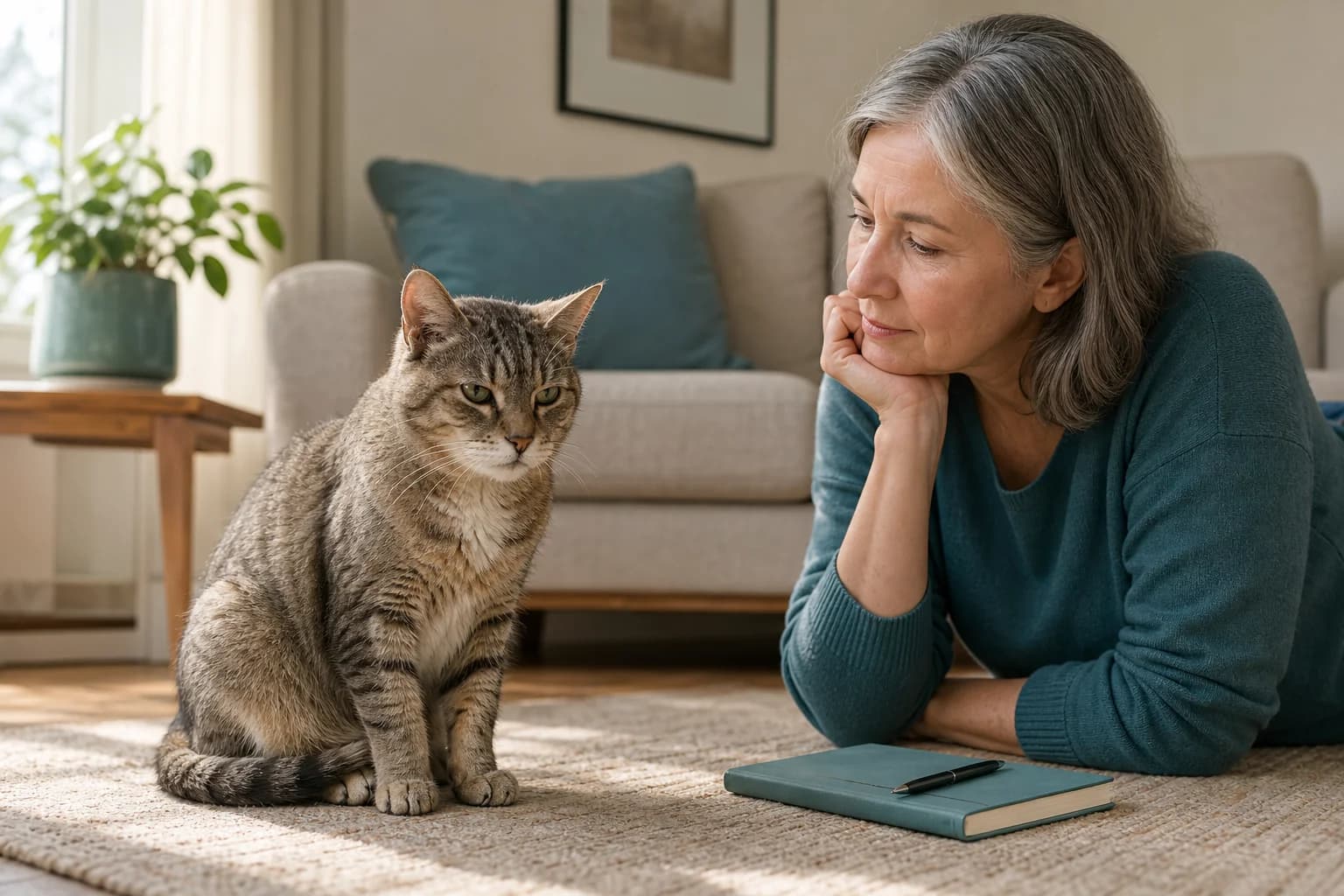
Compare it with your cat's usual pattern
PDSA notes that some cats drool when happy, relaxed, and purring. Compare with a pattern you have already seen: the same calm setting, or a different time or situation? If your cat has usually drooled while purring but is now drooling at another time, describe those episodes separately. If you do not know what is usual, say so.
Drooling outside a meal does not, by itself, tell you why it is happening. Describe what changed and let your veterinarian assess what it means; one observation cannot identify a cause.
What to note without trying to diagnose
If you notice a change, write down what you already observed. A short, accurate timeline is more useful than a guess about the cause:
- When it began: the first time you noticed it and whether you have seen it again.
- What was happening: purring or resting, waking up, eating, grooming, travel, or another situation you already know. Do not try to recreate an episode.
- What happened next: whether the drooling stopped or continued, if you already know. There is no universal amount or duration that can be judged safely from a description alone.
- What else you noticed: bad breath, saliva that appears blood-tinged, pawing at the mouth, difficulty eating or swallowing, food falling while chewing, vomiting, diarrhea, lethargy, distress, or signs of pain.
- Possible exposure: if you already know your cat may have contacted a toxin or poison, note what and when. Do not wait to complete a log before calling.
The Merck Veterinary Manual's overview of mouth disorders in cats lists drooling, bad breath, and sometimes blood-tinged saliva among signs that can occur with inflammation of the mouth or tongue. Pain may also make a cat paw at the mouth or resist an attempted exam. Those signs do not prove the cause, and drooling can have explanations beyond mouth disease.
These are observations, not a home examination. You do not need to force your cat's mouth open or decide which condition is responsible before contacting the clinic. Keep the note brief; it should help you explain what you saw, not delay a call while you collect more examples.
Keep related eating changes separate
If you also notice food dropping or a change in chewing, use the focused guide on a senior cat dropping food while still interested in eating. If bad breath is the main additional change, see the senior-cat bad-breath guide. Keep each observed change separate when you contact the clinic.
Keep the call simple
You can tell the clinic: “My senior cat has drooled more than usual since [time]. I usually notice drool during [familiar situation], but now I'm seeing it [new situation]. I've also noticed [only the signs I have actually seen]. How soon should my cat be assessed?” Leave anything uncertain as uncertain. Do not delay a call to collect more examples or make the description sound complete.
For help organizing notes, records, and questions for an appointment, see the Senior Cat Vet Visit Checklist. The template is ready to use with what you know; do not wait to make it complete.
Research notes
Sources behind this guide
Written and source-checked by Puni Pet Guides Editorial Team · Reviewed Oct 5, 2026
This guide synthesizes the public references below; it does not report hands-on product testing or independent veterinary review.
Review scope: practical context, source traceability, and clear non-diagnostic boundaries. Diagnosis and treatment decisions stay with veterinarians.