
Senior cat care · describing a change
Older Cat Throwing Up Undigested Food? Describe What Happened
Undigested food coming back up does not prove that your older cat simply ate too quickly. The physical appearance of the food alone does not reveal why it returned or where along the digestive tract the episode originated. For an older cat, contact your veterinarian about new changes in physical condition or behavior, because aging itself is not a disease (Cornell Feline Health Center: Senior Cats).
Seek immediate emergency veterinary care if your cat shows difficulty breathing, unresponsiveness, or extreme weakness (AAHA). If you observe repeated episodes, blood, lower appetite, weakness, or changes in thirst or urination, arrange prompt clinic evaluation (Cornell Feline Health Center: Vomiting).
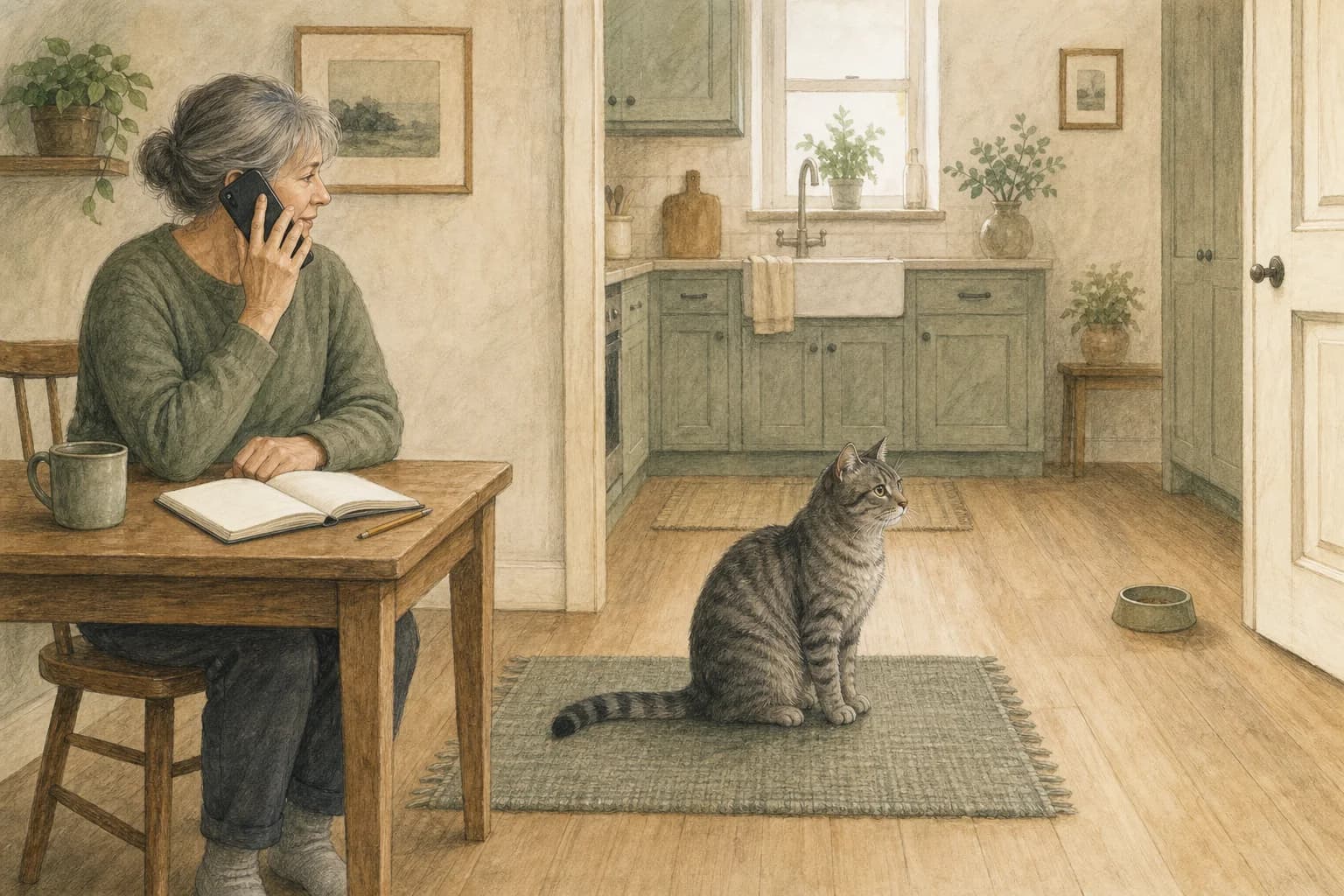
What Undigested Food Can and Cannot Tell You
It helps to first distinguish swallowed food from food that never made it down. If food is dropping out of your cat's mouth while chewing, that is a separate observation covered in our chewing guide.
When swallowed food reappears intact, its appearance alone does not identify a specific condition or guarantee that the issue is mild. The food could have been brought up from the stomach or returned directly from the esophagus. Assessing the cause calls for a veterinarian's physical examination alongside an owner history and any directed diagnostic tests the clinic recommends for your cat.
Active Effort Versus Passive Return
When speaking with your veterinary team, describing how the food came back up gives the clinic useful information. The Merck Veterinary Manual distinguishes between vomiting and regurgitation. Vomiting is an active, forceful expulsion of stomach contents that can follow nausea, salivation, repeated swallowing, and visible retching or abdominal contractions. Passive regurgitation occurs without that abdominal effort; undigested food or fluid returns from the esophagus, sometimes in a tubular shape.
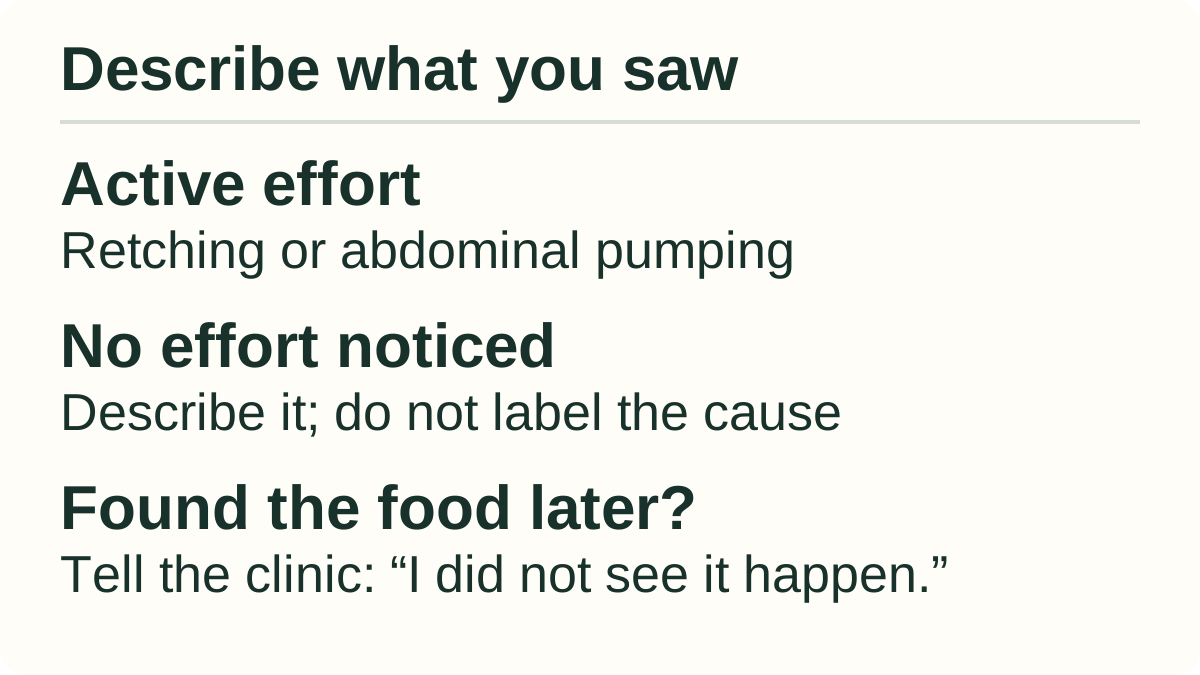
These distinctions are useful observations to describe to your veterinarian, not a diagnostic test for home use. The absence of observed abdominal effort does not prove that an event was regurgitation. If you discovered the food later without seeing it happen, tell the clinic the event was unwitnessed. Do not recreate the event for a video or delay contacting the clinic while waiting to film it.
Practical Observations to Share with the Clinic
Focus on sharing factual details rather than trying to assign a cause:
- Whether the event was directly witnessed, including whether you saw retching or abdominal effort.
- Roughly when the food was swallowed and the approximate time the episode occurred.
- The frequency of episodes you have actually observed over recent days or weeks.
- Other changes in behavior, including shifts in daily food intake or litter box habits (our senior cat meal tracking guide covers how to log broader appetite patterns).
Next Steps with Your Clinic
Call your veterinary clinic to discuss what you observed and determine how quickly your cat should be seen. When you call, ask the staff directly: "Based on what happened and my cat's age, how soon should they be examined, and what feeding instructions should I follow for them until the visit?"
Research notes
Sources behind this guide
Written and source-checked by Puni Pet Guides Editorial Team · Reviewed Sep 11, 2026
This guide synthesizes the public references below; it does not report hands-on product testing or independent veterinary review.
Review scope: practical context, source traceability, and clear non-diagnostic boundaries. Diagnosis and treatment decisions stay with veterinarians.