
Everyday dog care · food checks
Can Dogs Eat Turkey? Check the Meat Before Sharing
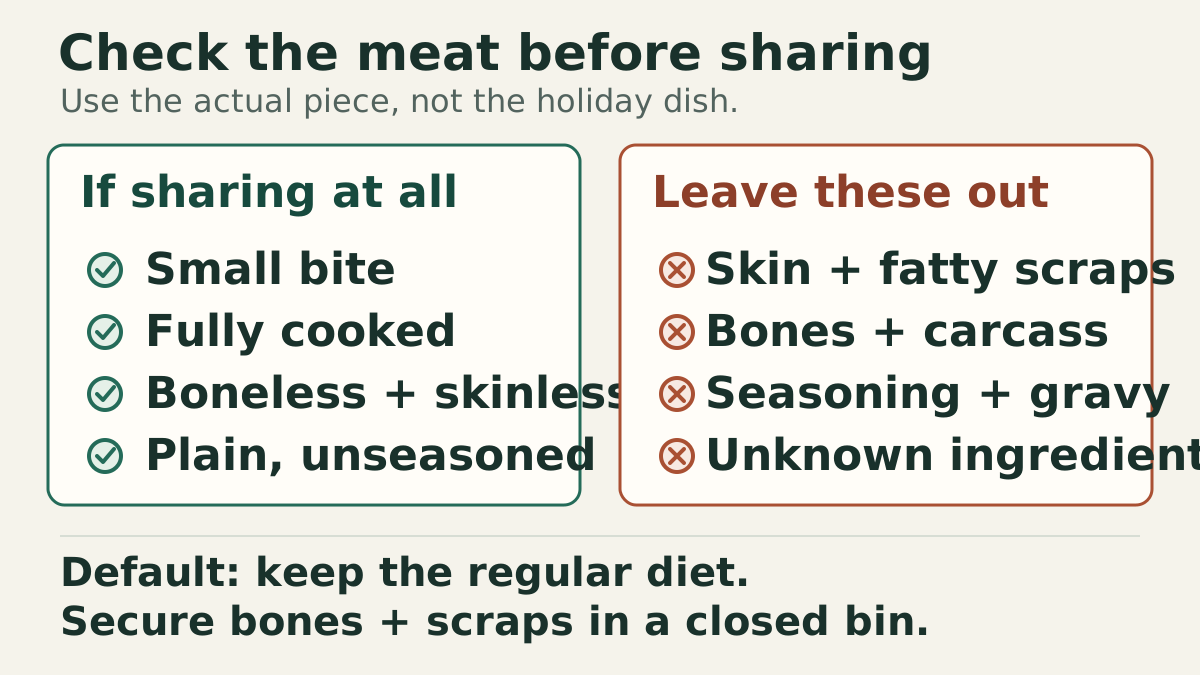
If you share any, choose a small bite of fully cooked, plain, boneless, skinless turkey meat. Keep your dog’s usual food as the default; sharing is optional. These sources do not set an individual serving amount or guarantee turkey will suit every dog.
Check the meat before sharing
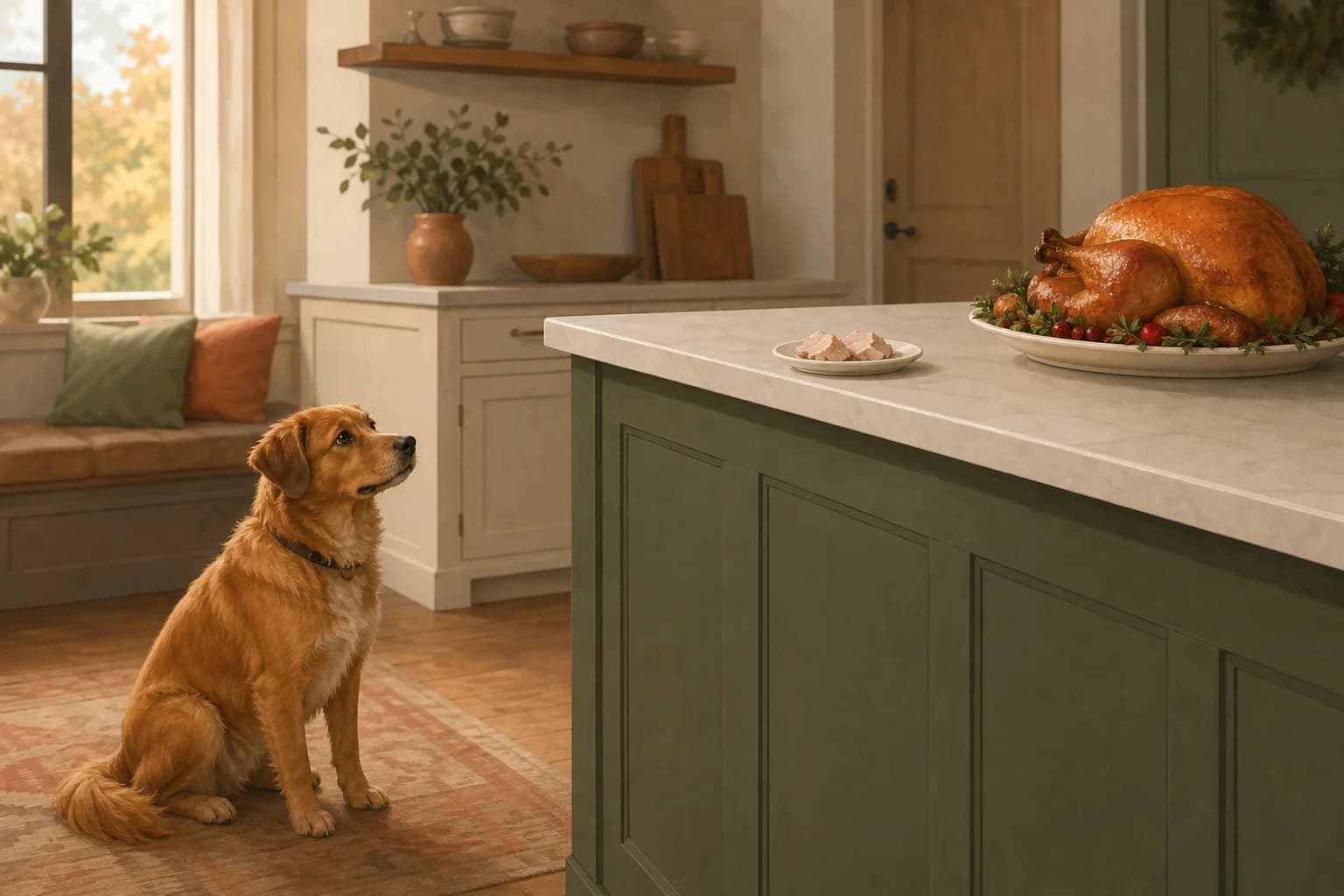
Start with the piece, not the holiday meal. The ASPCA says shared turkey should be fully cooked and boneless. The American Kennel Club (AKC) also describes plain, unseasoned meat, while the U.S. Food and Drug Administration (FDA) cautions against turkey skin and high-fat scraps. Check the piece itself: if it is seasoned, has skin or fat, contains bones, or you cannot tell what was added, leave it out.
Keep the meal plain and bones secured
Skip gravy and sauces too. The ASPCA page includes a separate gravy suggestion, but AKC lists gravy among foods to avoid. This guide takes the more cautious route and leaves gravy off the plate. The ASPCA also warns about onion and garlic in holiday foods, so skip seasoned meat and stuffing.
The FDA says turkey bones and a carcass can be hazardous and recommends putting bones and scraps in a trash bin pets cannot reach. Keep the platter and leftovers out of your dog’s reach.
Turkey meat is only an optional small share, not a replacement for regular food. If you cannot check how it was cooked or what was added, keep it off your dog’s plate.
Research notes
Sources behind this guide
Written and source-checked by Puni Pet Guides Editorial Team · Reviewed Oct 26, 2026
This guide synthesizes the public references below; it does not report hands-on product testing or independent veterinary review.
Review scope: practical context, source traceability, and clear non-diagnostic boundaries. Diagnosis and treatment decisions stay with veterinarians.