
Senior cat care · sudden balance change
Older Cat Losing Balance? Call Before Assuming Vestibular Disease
If your older cat suddenly loses balance, call your veterinarian now. A balance change can involve the vestibular system, but the sign alone cannot identify its cause. Cornell's vestibular syndrome guidance advises immediate veterinary consultation because similar signs can sometimes be serious.
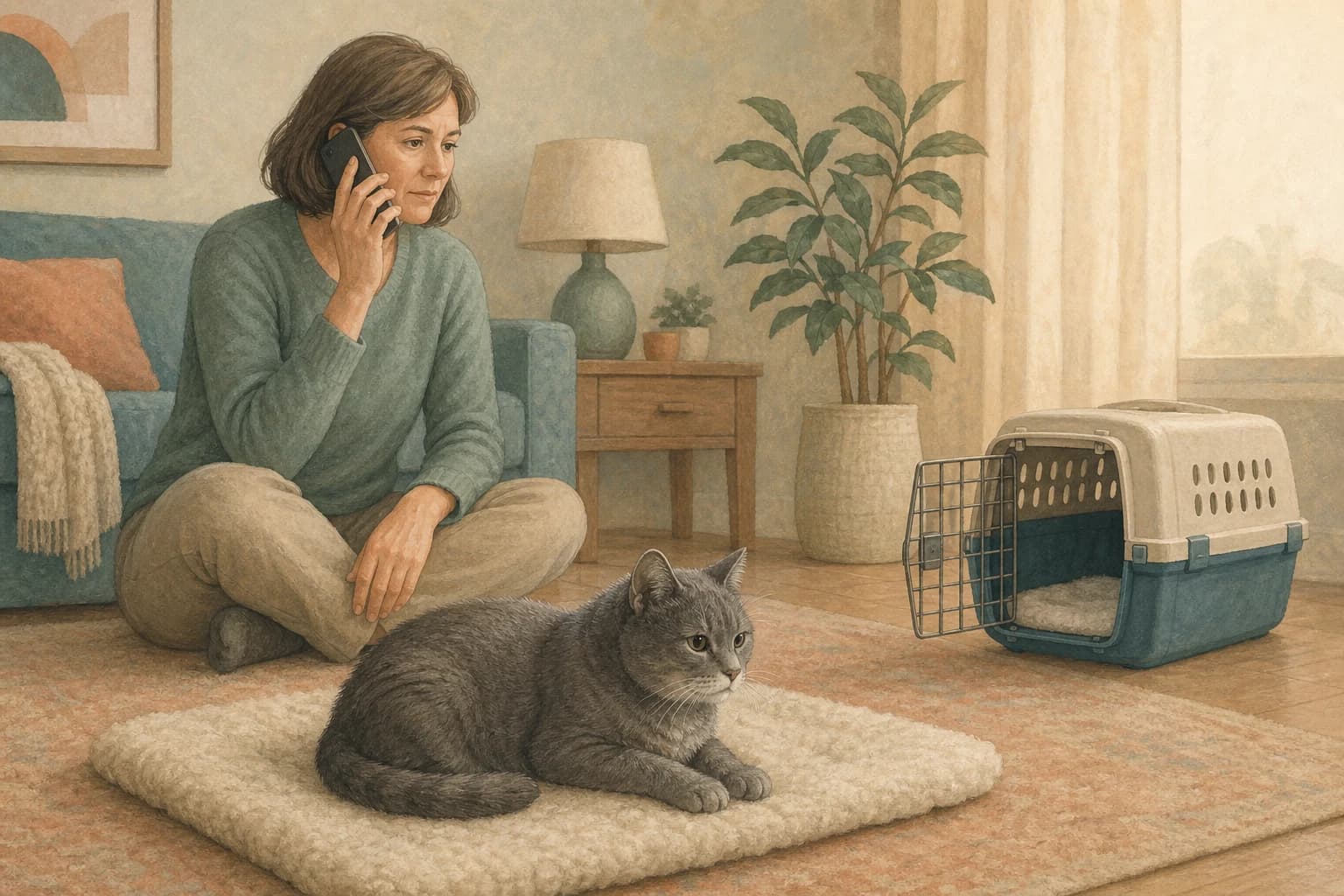
Call the veterinary clinic now
Use this page to describe what you have already seen. Do not delay the call to complete notes or try to test your cat at home. If your regular clinic cannot assess your cat, ask which veterinary service should handle the sudden change.
What the sign tells you—and what it does not
Balance depends on a vestibular system that includes pathways connected with the inner ear and brain. VCA's overview of feline vestibular disease explains that professional history and examination are needed to investigate the problem. A head tilt, unsteady movement, or unusual eye movement can be useful information to report, but it does not identify the cause by itself.
| Already observed | Not established by that sign |
|---|---|
| Your cat suddenly leans, falls, or walks unsteadily | “It is definitely vestibular disease” |
| A head tilt or unusual eye movement noticed without testing | “The cause is harmless” |
| When the change began and whether it is continuing or changed | “A diagnosis can be made from the timing alone” |
Record only facts that are already visible. Do not move your cat to reproduce the problem, inspect the ear canal, test eye movements, or turn a home check into a diagnosis.
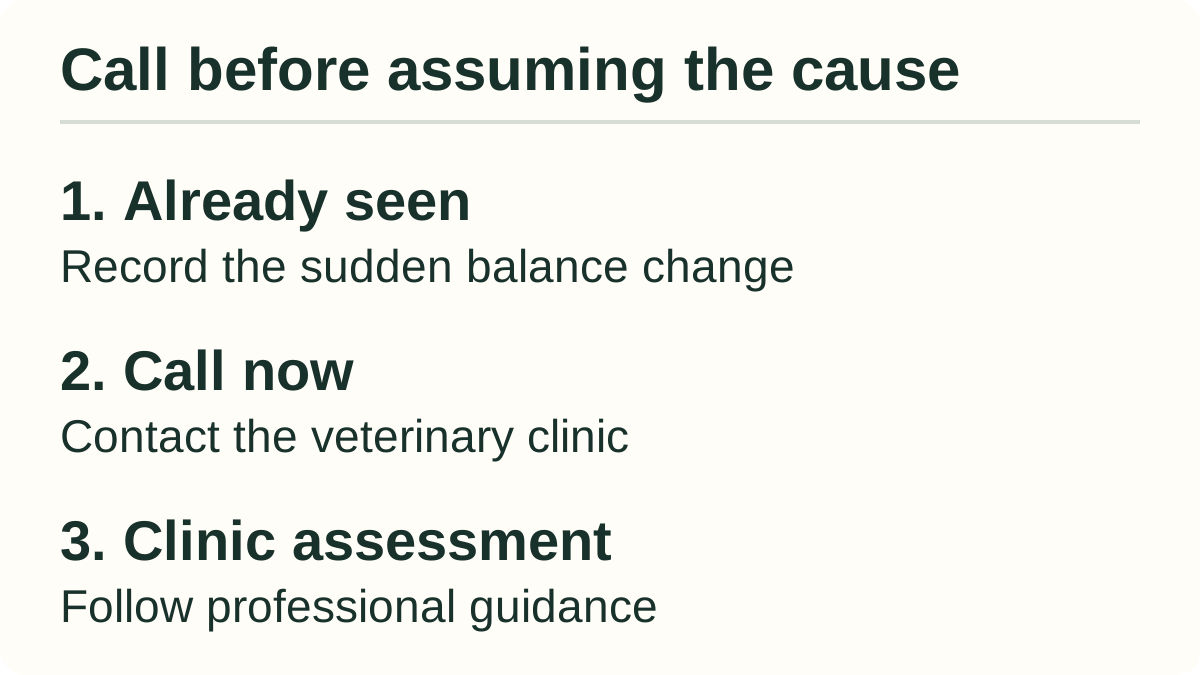
A short call template
“My older cat suddenly started losing balance. I first noticed it at [time or part of day]. I have already seen [brief observable change], and it is [still happening or changed]. I have not tried to test or treat it. Where should we go for assessment now?”
Add a head tilt or unusual eye movement only if you noticed it without trying to provoke it. The useful information is the change you saw, when it began, and whether it is continuing—not a theory about why it happened. Follow the clinic's directions for assessment and transport.
Leave the cause to the clinic
Similar balance signs can have more than one explanation. Do not give medication, change feeding, probe the ears, or perform a gait or eye examination based on this page. Diagnosis and treatment decisions belong with a veterinarian.
For a separate observation, see Elderly Cat Shaking Their Head? What to Tell Your Vet. After the immediate call, the Senior Cat Vet Visit Checklist can help organize an appointment; it is not a reason to postpone contacting the clinic.
Research notes
Sources behind this guide
Written and source-checked by Puni Pet Guides Editorial Team · Reviewed Sep 22, 2026
This guide synthesizes the public references below; it does not report hands-on product testing or independent veterinary review.
Review scope: practical context, source traceability, and clear non-diagnostic boundaries. Diagnosis and treatment decisions stay with veterinarians.