
Everyday dog care · food labels
Can Dogs Eat Pumpkin? Check the Label Before Sharing
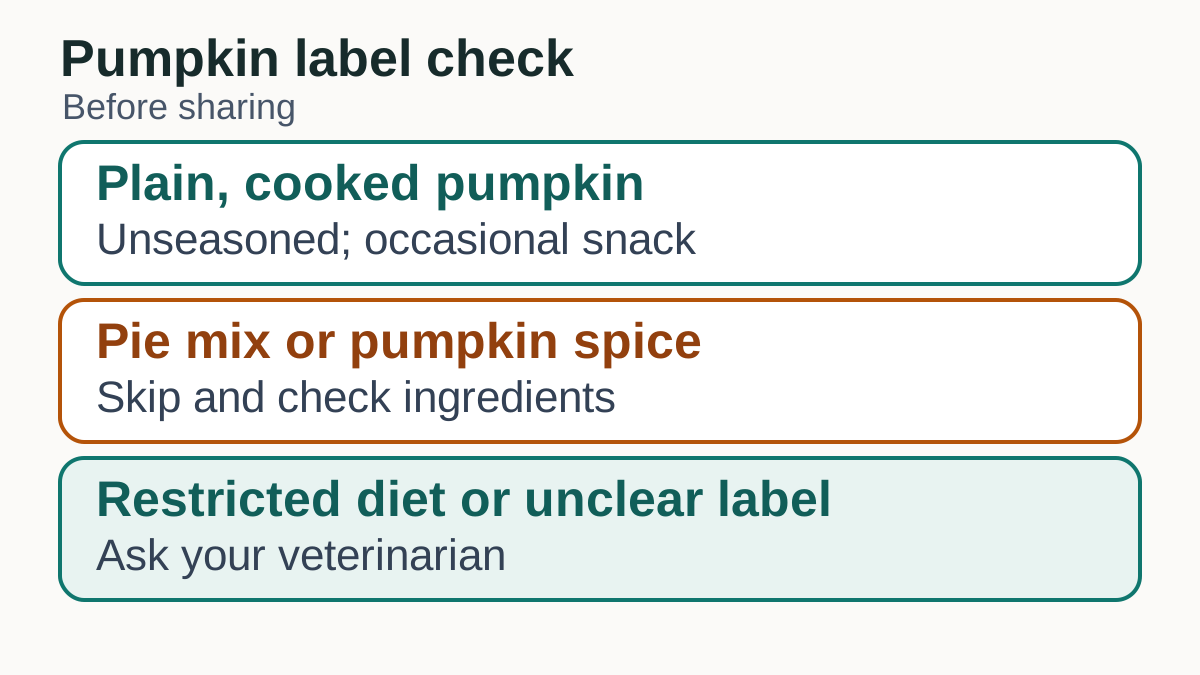
For many dogs, plain cooked pumpkin or 100% pumpkin purée can be an occasional snack—but it is not right for every dog or diet. Check the full ingredient list before sharing. Skip pumpkin pie, sweetened pie filling, and pumpkin-spice desserts; products with “pumpkin” in the name are not all the same.

Start with plain pumpkin
The ASPCA lists cooked or canned pumpkin as a snack option and advises leaving cooked vegetables unseasoned. The AKC advises against pumpkin-spice foods, pumpkin pie, and canned pie mix. Pure pumpkin is a different food from a prepared dessert or pie mix.
Read the package, not just its front label. LIBBY’S says its 100% Pure Pumpkin has nothing added, while its Easy Pumpkin Pie Mix contains pumpkin, spices, and sugar. That describes those LIBBY’S products; it does not tell you what another brand’s filling contains. If you cannot tell whether a product is plain pumpkin, skip it rather than guessing.
Keep it an occasional snack
Pumpkin should not replace your dog’s regular food. The ASPCA notes that pets should get most of their nutrition from their usual diet, and that too much or unfamiliar food can upset digestion. If your dog has food restrictions, or you are unsure whether a product fits its diet, check with your veterinarian before sharing.
If your dog may have eaten a toxic ingredient, contact your veterinarian immediately, as the ASPCA advises.
Research notes
Sources behind this guide
Written and source-checked by Puni Pet Guides Editorial Team · Reviewed Oct 26, 2026
This guide synthesizes the public references below; it does not report hands-on product testing or independent veterinary review.
Review scope: practical context, source traceability, and clear non-diagnostic boundaries. Diagnosis and treatment decisions stay with veterinarians.