
Everyday cat care · body language
Why Do Cats Wag Their Tails? Read the Whole Cat
Cats use their tails as part of body language. A slow side-to-side swish may happen while a cat is deciding or preparing to pounce, according to Cats Protection’s cat-tail guide. Read it with the whole cat.
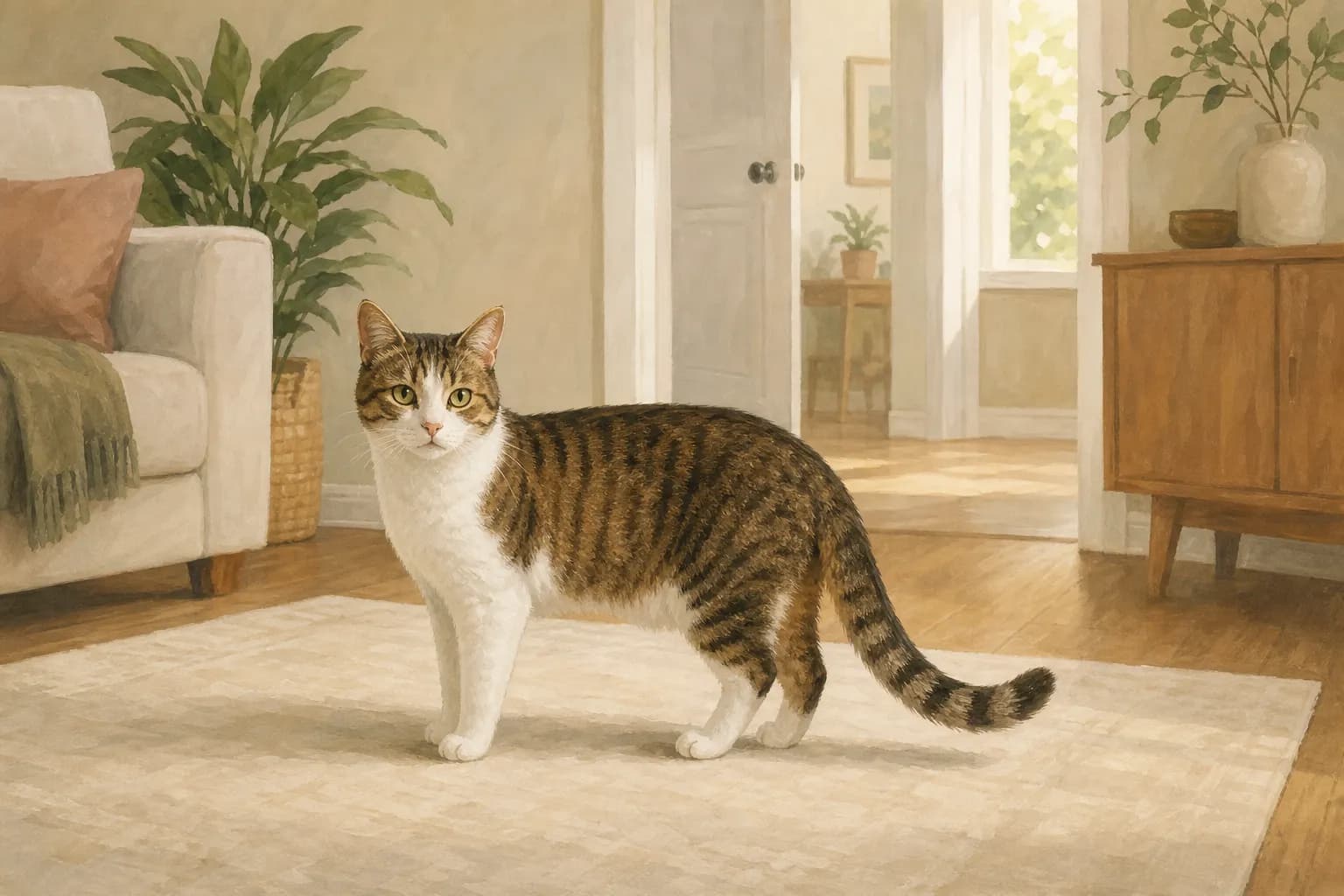
Look beyond the tail
PDSA’s tail-language guidance recommends considering ears, eyes, posture, and surroundings together. If unsure, give space and time.
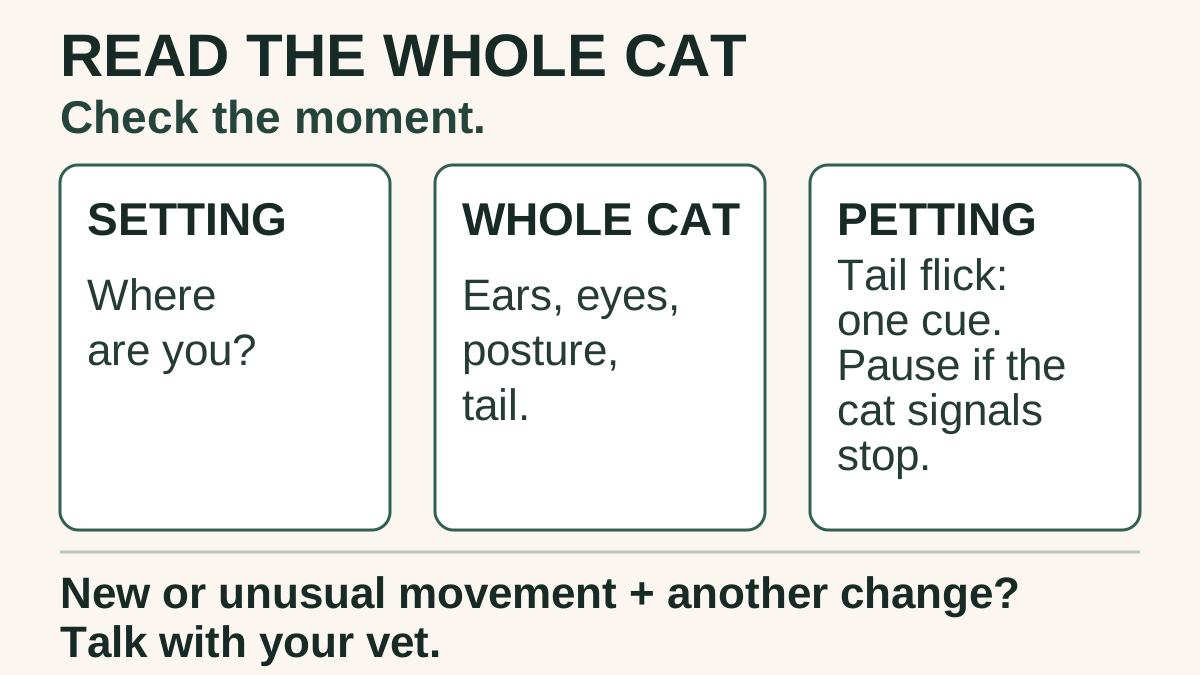
During petting, notice signals together
In a petting moment, a tail twitch or flip can be one sign alongside restlessness, a head turning toward your hand, or a change in ear position. The ASPCA’s petting guidance treats those as context-specific cues. If the wider interaction suggests your cat wants you to stop, pause the petting; one tail flick alone is not a universal stop signal.
When to discuss a change
PDSA advises talking with a veterinarian when new or unusual tail movement comes with another change, such as hiding or eating less.
Research notes
Sources behind this guide
Written and source-checked by Puni Pet Guides Editorial Team · Reviewed Oct 27, 2026
This guide synthesizes the public references below; it does not report hands-on product testing or independent veterinary review.
Review scope: practical context, source traceability, and clear non-diagnostic boundaries. Diagnosis and treatment decisions stay with veterinarians.