
How Long Should a Cat Stay in One Room After Moving?
Start with one quiet room for the first few days. Open the next room when your cat seems relaxed in the first one. Some cats need more time. Both Cats Protection’s moving guide and Battersea’s advice recommend beginning with a settling room and expanding access gradually.
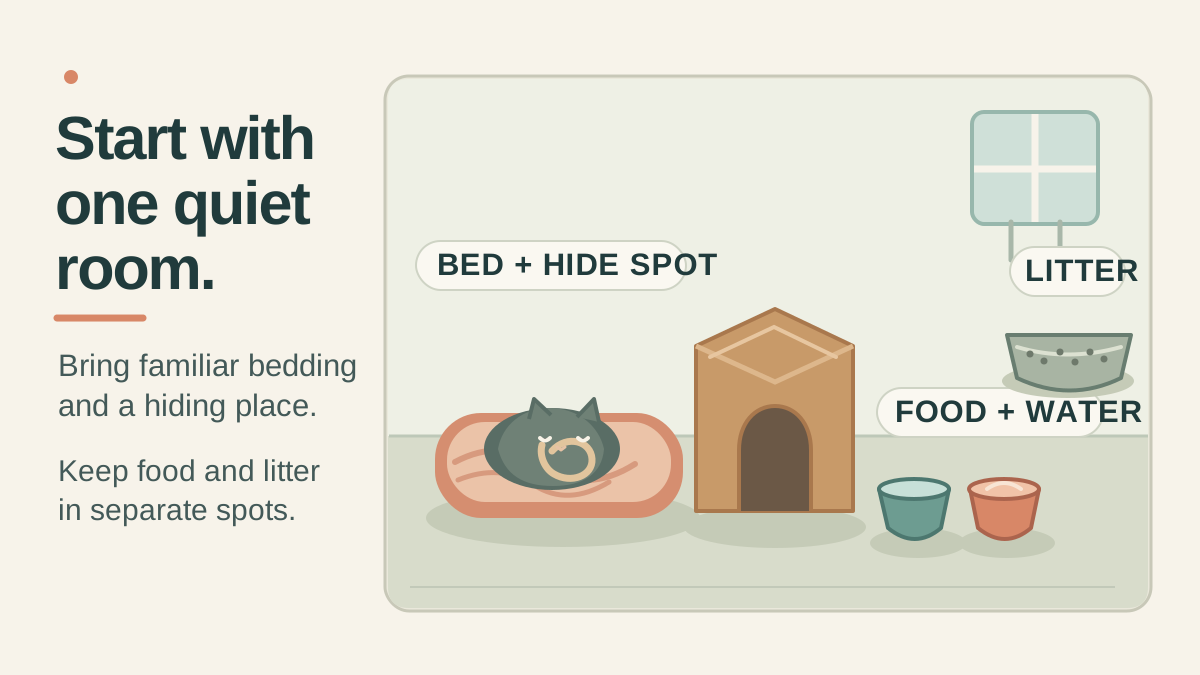
Set up the starter room
Choose a quiet room and give your cat a familiar bed or blanket, litter box, food and water, toys, and a place to hide. Secure the windows, tuck away electrical cords, and remove pest traps and toxic plants. The ASPCA’s moving advice has a checklist for the new home.
When to open the next room
Signs that your cat may be ready include relaxed body language, greeting you when you enter, and choosing to come out. If your cat stays hidden or seems unsettled, hold off and give them more time.
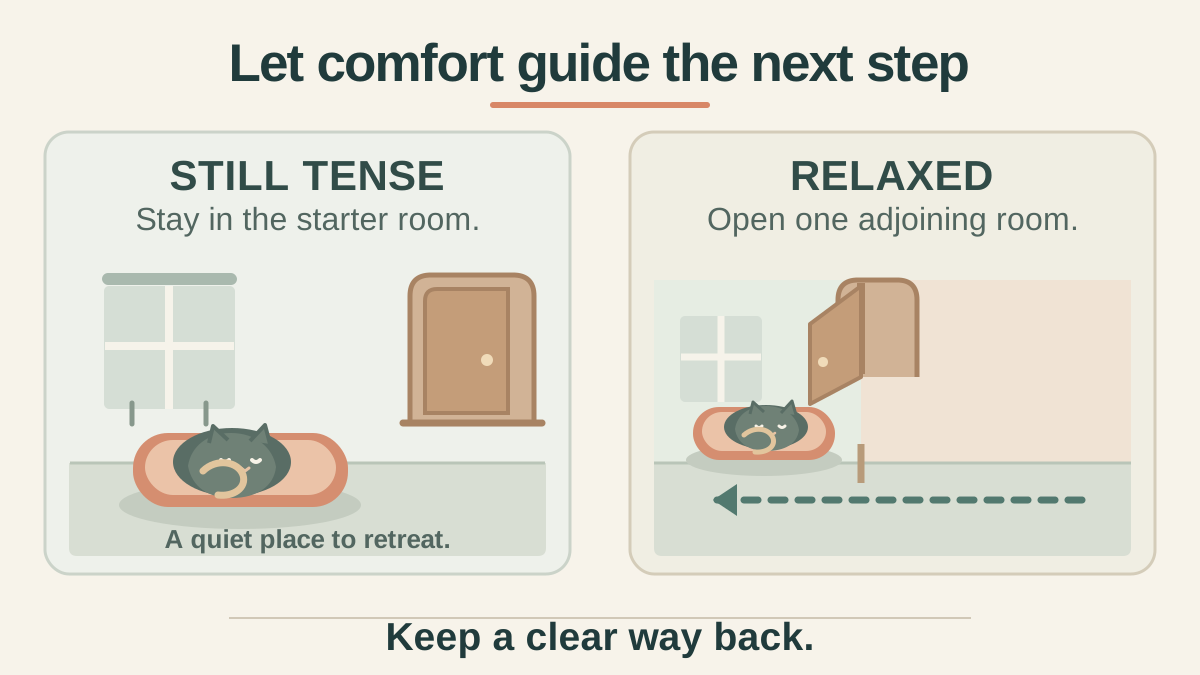
When you try, open one room at a time and let your cat decide whether to cross the doorway. Keep the starter room open so it remains an easy way back. Before you open the door, shut exterior doors and windows and close off the rooms you’re saving for later. If they retreat, try again later.
If your cat is hiding much more than expected, their appetite has changed and has not returned to normal, or another change concerns you, talk with your vet, as Battersea recommends. If your older cat is hiding more than usual in a settled home, see our guide to senior cat hiding more than usual.
Before adding an ID collar to your cat’s new-home routine, our indoor-cat collar guide explains breakaway closures, fit checks and microchip records.
Research notes
Sources behind this guide
Written and source-checked by Puni Pet Guides Editorial Team · Reviewed Nov 8, 2026
This guide synthesizes the public references below; it does not report hands-on product testing or independent veterinary review.
Review scope: practical context, source traceability, and clear non-diagnostic boundaries. Diagnosis and treatment decisions stay with veterinarians.