
Does an Indoor Cat Need a Breakaway Collar?
If your indoor cat wears a collar, choose a cat-specific quick-release (breakaway) collar. A collar tag is visible identification; a microchip is a separate form of ID that must be read with a scanner and is not GPS.
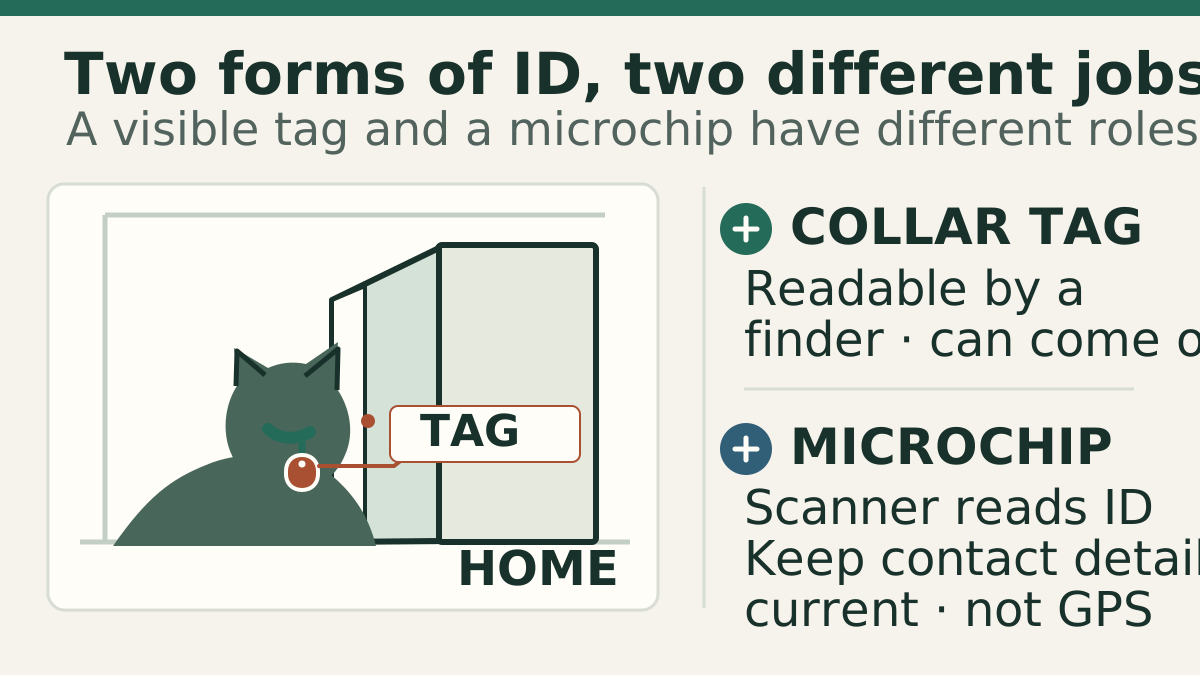
The choice depends on whether you want a collar
American Humane recommends an ID collar even for indoor-only cats in case they slip outside. Cats Protection treats collar use as optional and prioritizes microchipping because collars can come off. If you choose a collar, look for a cat-specific quick-release closure rather than an elastic-only band.
| Your choice | What the guidance says |
|---|---|
| No collar | Check that your cat is microchipped and that its registered contact details are current. |
| Collar for visible ID | Choose a cat-specific quick-release or snap-opening style. The closure is designed to open if caught, but the sources do not promise it will release in every situation. |
| Checking the fit | Cats Protection suggests fitting two fingers comfortably beneath the collar, then checking again after a few minutes. |
| Tags or other add-ons | Cats Protection warns that bells and discs can catch and cautions against loose stitching and adornments. Replace a damaged collar promptly. |
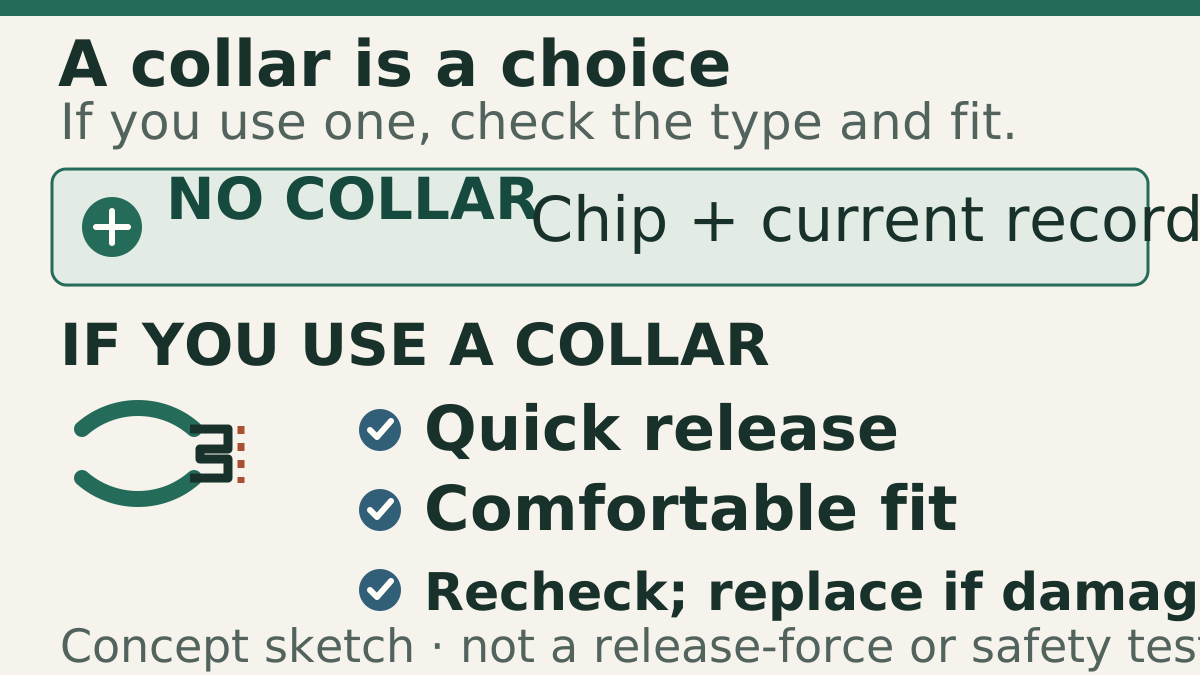
Keep the microchip record current
American Humane describes a microchip as a unique ID number that a scanner can read and match to owner information in a database. Update that record when your contact details change. A chip does not show a finder where your cat is; it is not a tracking device. A visible tag and a microchip serve different roles.
When to pause
If your cat struggles or remains distressed, pause rather than forcing the collar on. If a collar gets caught or you see an injury, contact a veterinarian for help instead of trying to diagnose it from a fit guide.
Research note: Checked November 14, 2026. This is a comparison of published guidance, not a hands-on collar test or an assessment of an individual cat. American Humane’s page is a U.S. source dated August 25, 2016; Cats Protection is a U.K. source.
Research notes
Sources behind this guide
Written and source-checked by Puni Pet Guides Editorial Team · Reviewed Nov 14, 2026
This guide synthesizes the public references below; it does not report hands-on product testing or independent veterinary review.
Review scope: practical context, source traceability, and clear non-diagnostic boundaries. Diagnosis and treatment decisions stay with veterinarians.
For a separate indoor-care question, see winter flea prevention for indoor cats.