
Everyday dog care · For a mat you already own
What Can I Put on a Dog Lick Mat?
Use familiar food that fits your dog’s diet and spreads on the mat. If you’re unsure or a prescribed diet applies, ask your usual veterinarian first.
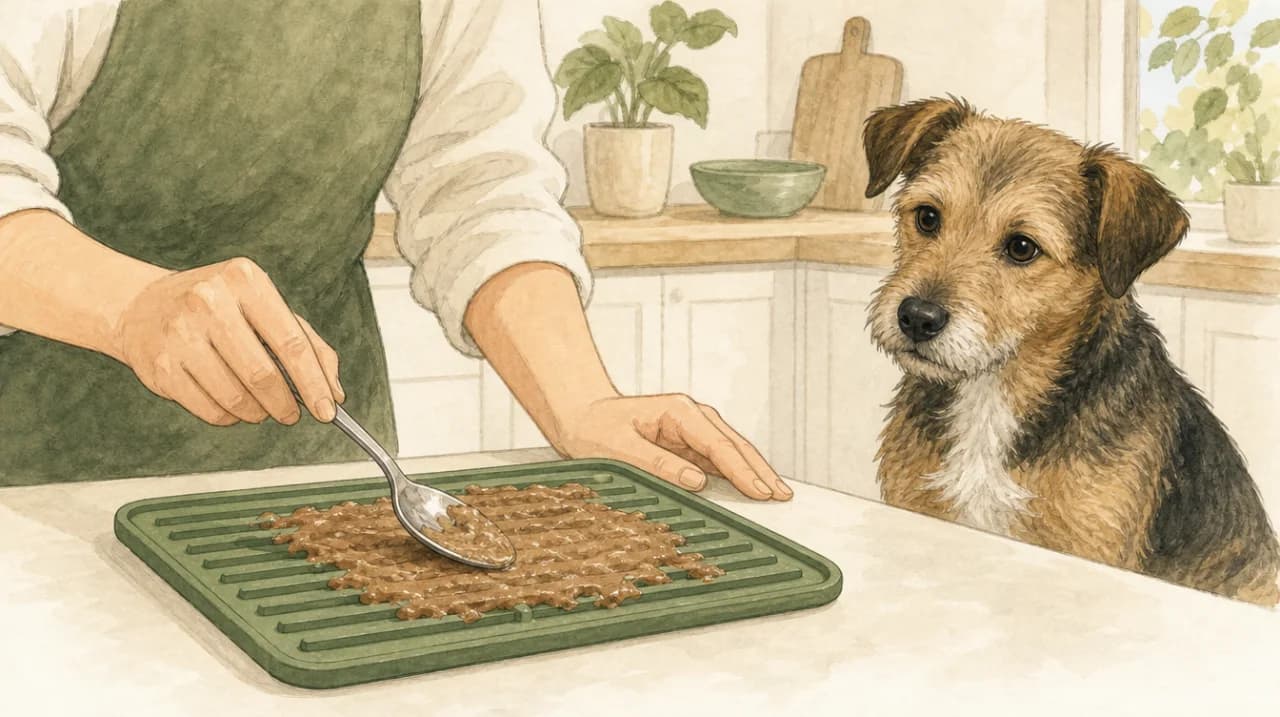
Pick a spreadable base
LickiMat’s maker shows crushed dog food sprinkled onto a damp mat. Ohio State’s veterinary guide says wet food or soft treats can be spread across a mat’s surface and grooves.
Mat pattern and depth affect which textures fit. These examples describe texture and placement, not which foods suit every dog.
| Starting point | When it may fit | Next check |
|---|---|---|
| Usual wet dog food | It already fits your dog’s plan. | Keep the existing food instructions. |
| Familiar soft dog treat | It is already allowed in the food plan. | Read the full label if it is packaged. |
| New or unclear food | The diet fit or ingredients are uncertain. | Pause; ask your regular veterinarian. |
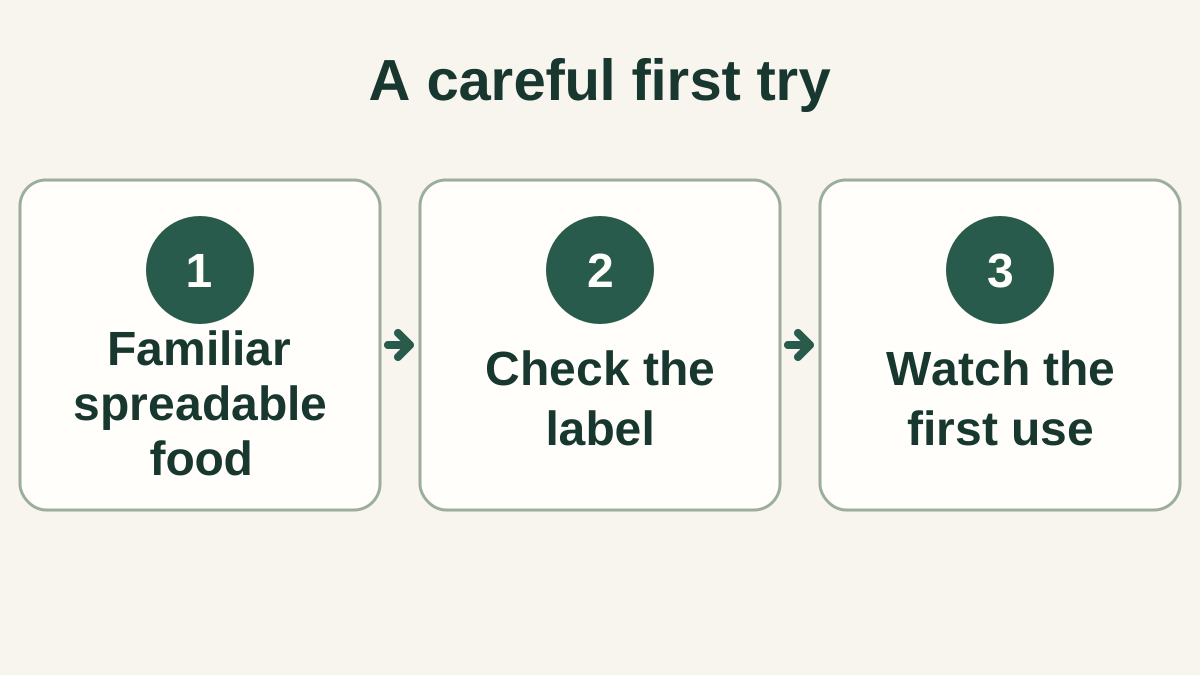
Check the label
Xylitol is toxic to dogs. It may also be labeled wood sugar, birch sugar, or birch bark extract, and can appear in sugar-free nut butters. Read labels. Xylitol-free only clears that hazard check, not dietary approval for all dogs or a prescribed plan.
Watch the first use
Supervise the introduction, as Ohio State advises for new toys. Watch for stress, frustration, attempts to ingest pieces, or damage; stop and remove a damaged mat if any appear.
Considering pumpkin? Read the pumpkin label guide.
Plan a first try
Use these checks to plan; this checklist cannot predict food safety.
Stop if stressed or trying to ingest pieces; remove a damaged mat.
Research notes
Sources behind this guide
Written and source-checked by Puni Pet Guides Editorial Team · Reviewed Oct 30, 2026
This guide synthesizes the public references below; it does not report hands-on product testing or independent veterinary review.
Review scope: practical context, source traceability, and clear non-diagnostic boundaries. Diagnosis and treatment decisions stay with veterinarians.