
Is a Humidifier Safe for Cats? Check Water, Heat and Oils
A water-only humidifier and an oil diffuser create different exposures. For a cat’s room, choose water-only output and leave any aroma feature off. Then check how the unit makes mist, whether it heats water, and what its manual says about cleaning.
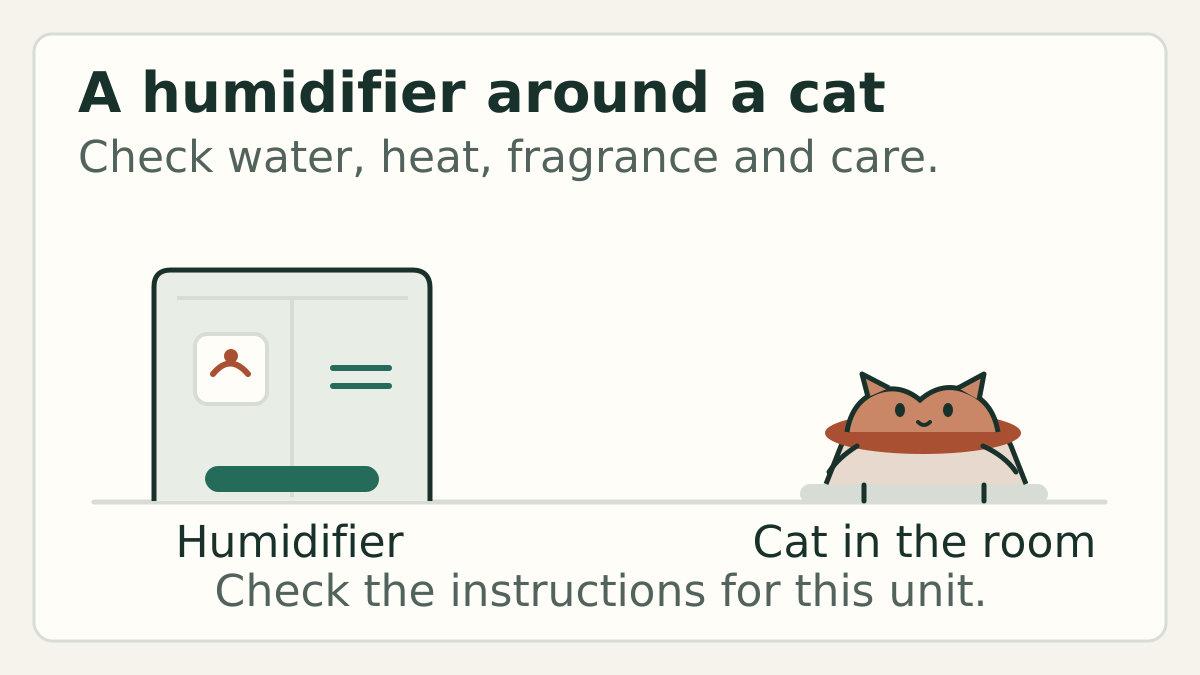
Use a humidifier only when the room needs more moisture. The EPA recommends keeping the room and nearby surfaces from becoming damp. EPA: Use and Care of Home Humidifiers
Identify what enters the air
A water-only humidifier adds moisture to the air. An active oil diffuser also emits oil microdroplets; the Pet Poison Helpline says those droplets can settle on a cat’s coat and be swallowed during grooming. “Ultrasonic” alone does not tell you which output a product has: the term describes a humidifier mechanism and also appears in oil-diffuser types. Check the manual for an oil reservoir or fragrance feature, and use only water the manual approves. Pet Poison Helpline: Essential Oils and Cats
Passive fragrance and active oil diffusion are different exposures. The Helpline says strong fragrance from a passive diffuser can irritate, and that oil risk depends on the oil and exposure details. The ASPCA says brief diffuser use in a secured area that a pet cannot access is not likely to be an issue; it also says it may be best to avoid diffusers around pets with a history of breathing problems. For this humidifier choice, use water-only output in the cat’s room and leave an aroma feature off. ASPCA: The Essentials of Essential Oils Around Pets
Mist type changes the maintenance question
| Type | What to check |
|---|---|
| Ultrasonic or impeller cool mist | The EPA says these types can disperse minerals and microorganisms from tank water into indoor air. Low-mineral water and careful cleaning can reduce that dispersal. |
| Evaporative | A fan moves air through a damp wick or filter. The EPA says these units generally disperse less, if any, of those pollutants, but a tank can still hold standing water where microorganisms may grow. |
| Steam or warm mist | A heating element makes steam. Warm-mist models cool the steam before it exits, but still heat the water; the EPA warns that steam and boiling water can burn. |
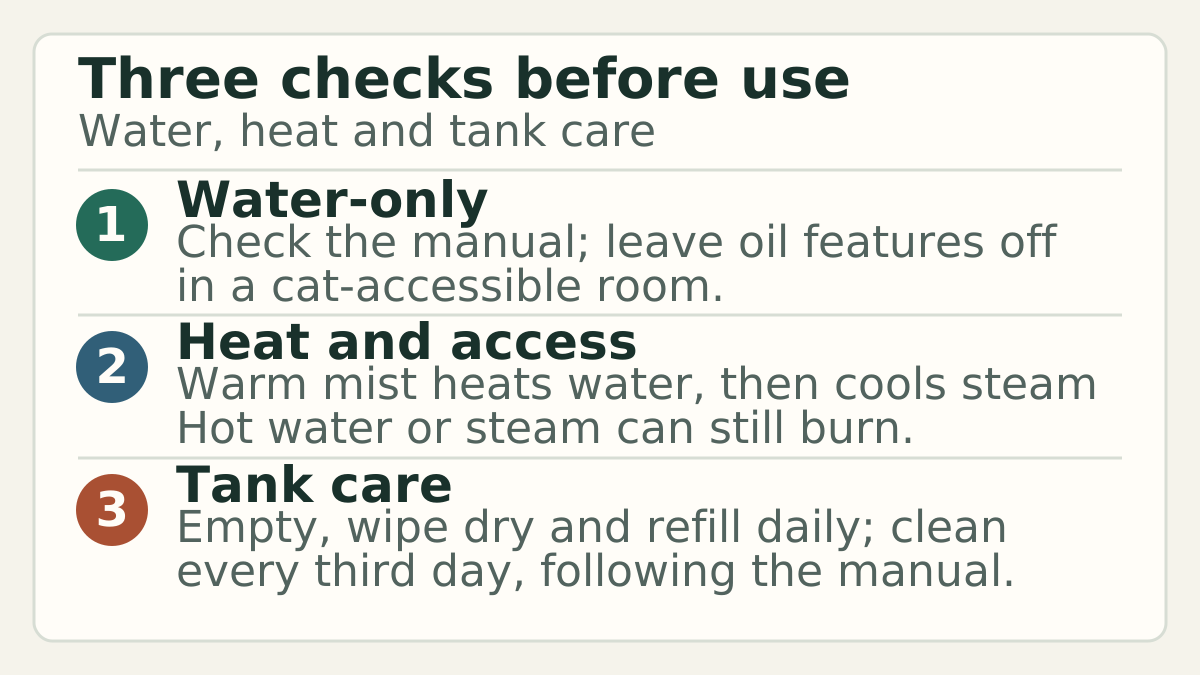
For a portable humidifier, the EPA recommends emptying the tank, wiping surfaces dry, and refilling it daily; it recommends cleaning portable units every third day. Follow the model’s manual for approved water, cleaners, and replacement parts, and unplug the unit before cleaning. The EPA also advises low-mineral water, such as distilled water, to reduce mineral dispersal, especially with ultrasonic or impeller models.
A quick pre-use check
Before buying or switching on the unit, fill this in from its label and manual:
- Output: Water-only, oil diffuser, or unclear? If it is unclear, find the manual and leave the aroma feature off.
- Water and care: Manual-approved water: _____. Daily refill reminder: _____. Next cleaning date: _____.
- Heat and access: Does the unit heat water? _____. If it uses steam or warm mist, choose a place the cat cannot reach. The EPA warns that steam and boiling water may burn. For an oil diffuser, the ASPCA advises securing it where a pet cannot access or knock it over.
- Room check: Does the room need humidifying? _____. Relative-humidity reading: _____. Any damp surface or condensation? _____. The EPA says not to humidify above 50% relative humidity; if condensation or dampness occurs, lower the setting, relocate the humidifier, or reduce its use. This is general indoor guidance, not a feline humidity target.
If your cat has difficulty breathing, seek urgent veterinary care. For possible essential-oil exposure, contact your veterinarian or the ASPCA’s Animal Poison Control Center promptly.
If litter-box odor is the concern, check what an air purifier can filter.
Research notes
Sources behind this guide
Written and source-checked by Puni Pet Guides Editorial Team · Reviewed Nov 14, 2026
This guide synthesizes the public references below; it does not report hands-on product testing or independent veterinary review.
Review scope: practical context, source traceability, and clear non-diagnostic boundaries. Diagnosis and treatment decisions stay with veterinarians.