
Do Indoor Cats Need Flea Prevention in Winter?
Yes. Keeping a cat indoors does not eliminate winter flea risk, even when outdoor weather turns colder. Keep following the prevention plan agreed with your veterinarian; the season alone is not a reason to change it.

Why winter is not a reset
Tufts Cummings School explains that flea pupae can remain in household carpet, furniture, and bedding, and that indoor heating can support a year-round problem. Not seeing fleas does not rule them out: regular grooming can remove visible evidence. Tufts includes indoor cats in household prevention planning.
The Companion Animal Parasite Council (CAPC)’s 2026 annual guidance recommends prevention through winter. Its general guidelines say veterinarians should tailor control programs to local parasite conditions and an individual pet’s lifestyle. This supports a conversation with your veterinarian, not an automatic product choice for every cat.
A simple winter check-in
| Situation | What to do next |
|---|---|
| Cold outside; your cat stays indoors | Keep the veterinarian-agreed plan unless your veterinarian advises otherwise. |
| No fleas are visible | Not spotting fleas does not rule them out; grooming can remove visible evidence. |
| An application was missed, or you are unsure about a product | Contact your veterinarian for individual advice before changing anything. |
| Your cat is a kitten or its health or lifestyle has changed | Tell the veterinarian what changed and ask whether the plan needs review. |
Make the conversation useful
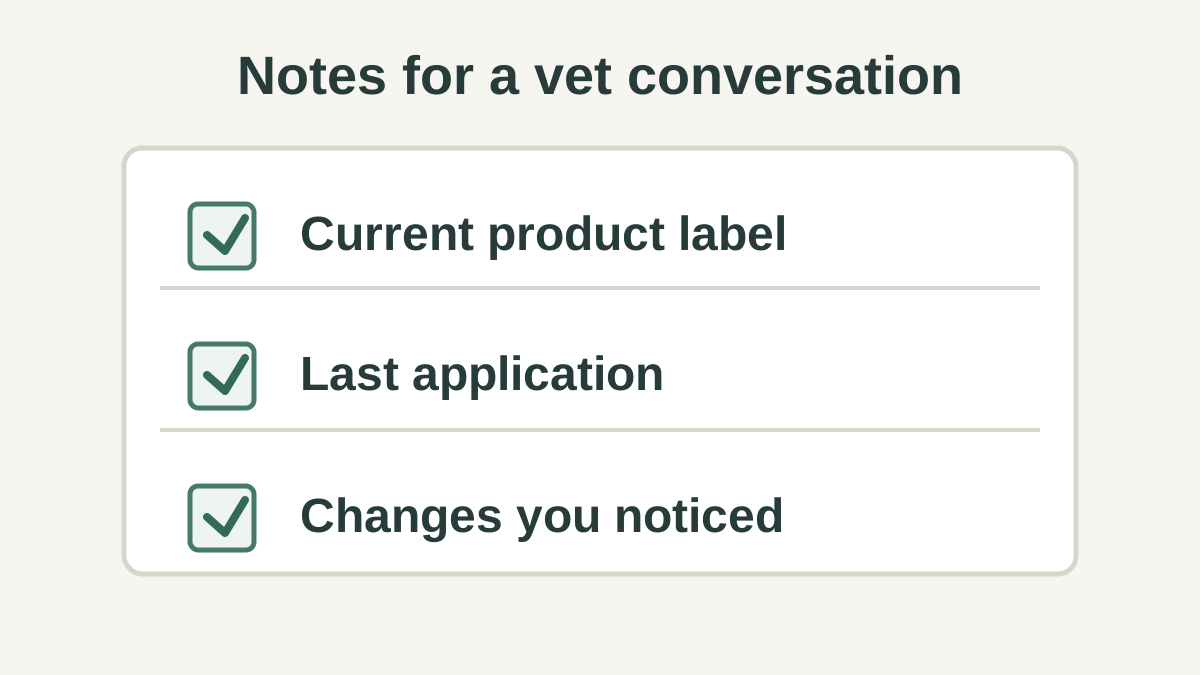
Bring the current product label and note when it was last given, along with any changes you have noticed. Tufts advises discussing product use and safety with a primary-care veterinarian. CAPC says prevention programs should reflect local parasite conditions and the pet’s lifestyle, so ask whether the current plan still fits your cat. This guide does not choose a product or tell you how to use one.
Research note: The sources below were checked November 15, 2026. This guide summarizes published guidance; it does not diagnose an individual cat.
Research notes
Sources behind this guide
Written and source-checked by Puni Pet Guides Editorial Team · Reviewed Nov 15, 2026
This guide synthesizes the public references below; it does not report hands-on product testing or independent veterinary review.
Review scope: practical context, source traceability, and clear non-diagnostic boundaries. Diagnosis and treatment decisions stay with veterinarians.