
How Cold Is Too Cold to Walk a Dog?
There isn’t one temperature that makes a walk safe or unsafe for every dog. Let your dog’s size, age, coat, health, and experience with cold guide the decision, then check the wind, wetness, and footing. On a cold day, you can shorten a normal walk, go out just for a necessary bathroom break if conditions allow, or bring exercise indoors.
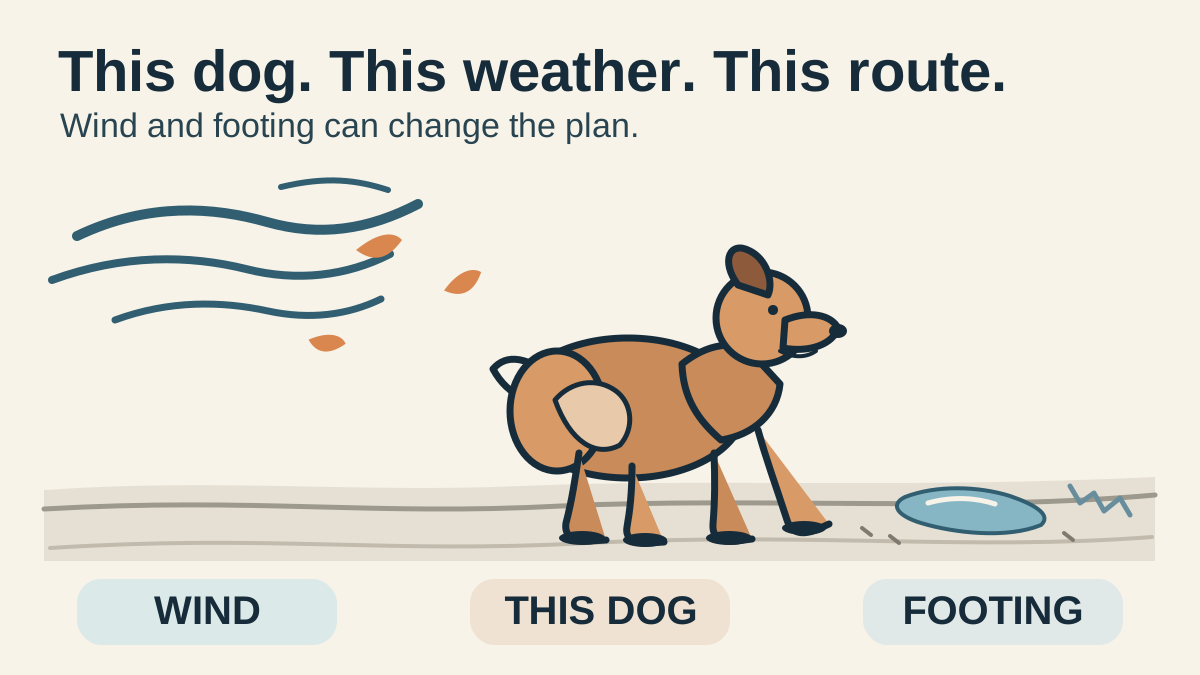
Start with your dog and the weather
Small, young, thin-coated, and older dogs, as well as dogs with some health problems, may need shorter outings. A sudden cold snap can also be harder to handle than a gradual change. Cornell’s winter guidance recommends paying attention to those differences rather than relying on one rule for every dog.
A thick coat is not a reason to stay outside for a long time. LSU’s veterinary school cautions that even thick-coated dogs should not spend prolonged time outside in below-freezing conditions. Think of the forecast as one part of the choice; your dog and the route matter too.
Wind, wet weather, and slick ground can change a familiar walk. If the route is icy or the weather feels severe, skip the exercise walk. A quick bathroom outing may still make sense if the surface is safe and your dog is comfortable; otherwise, keep your dog inside. AAHA’s winter-walk guidance also flags black ice as a hazard.
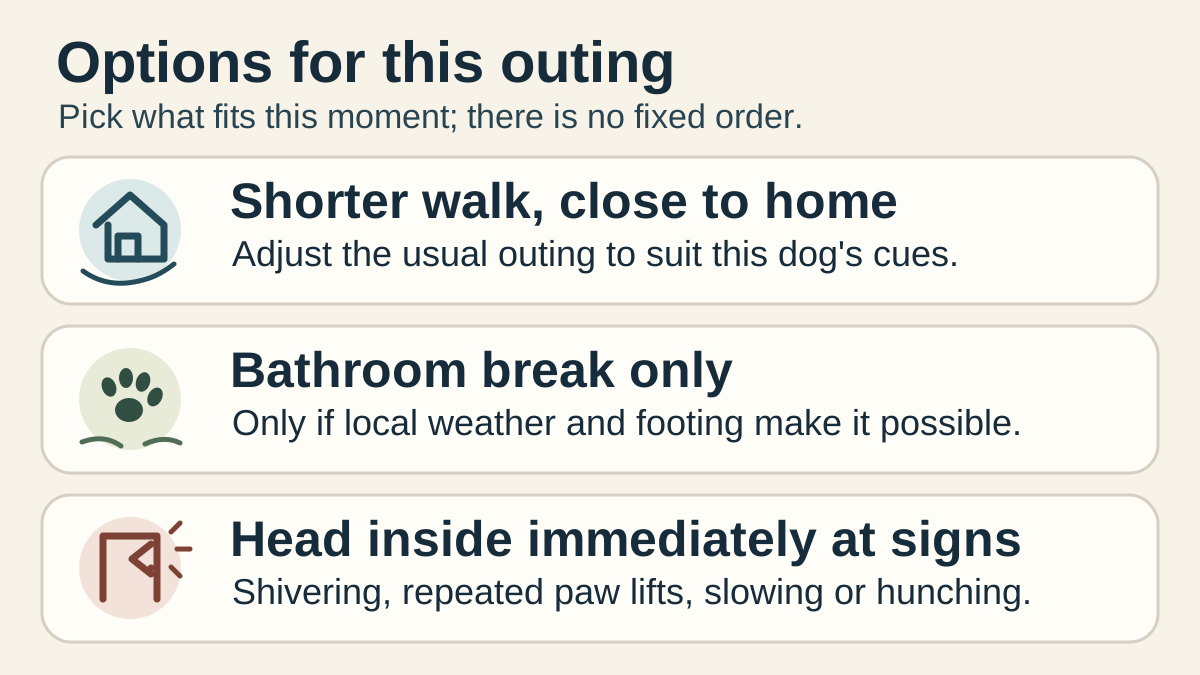
Choose the outing that fits today
- Shorten the usual walk when your dog seems comfortable and the route is manageable. Stay close enough to head back easily, and don’t treat a familiar routine as a reason to push on.
- Make it a bathroom-only trip when the cold, wind, or wetness makes a full walk a poor choice but the nearby path is safe. Then bring exercise indoors. A simple sniff game with a familiar toy is one option.
- Skip the walk and stay inside if the only route is icy, weather is severe, or your dog already shows signs of discomfort.
For example, two dogs may face the same route and need different plans. A dog that is new to cold weather might get a short, sheltered outing during a sudden cold snap, while a dog that seems comfortable can have a brief walk if the route is safe. Even on the same block, the dog that is less used to the cold may do better with a bathroom break and indoor play.
Know when to turn back
Shivering, repeatedly lifting paws, slowing down, refusing to walk, or hunching are reasons to end the outing and get your dog to a warm, dry place. Stop even if the forecast looked mild. Check your dog and paws once you’re home. If the route was salted, see how to rinse and dry your dog’s paws.
If your dog seems weak, is markedly slowed, or signs continue after coming inside, call your veterinarian promptly. If you suspect a cold injury, seek veterinary care right away.
Research notes
Sources behind this guide
Written and source-checked by Puni Pet Guides Editorial Team · Reviewed Nov 7, 2026
This guide synthesizes the public references below; it does not report hands-on product testing or independent veterinary review.
Review scope: practical context, source traceability, and clear non-diagnostic boundaries. Diagnosis and treatment decisions stay with veterinarians.