
Should Your Dog Wear a Sweater Indoors?
A sweater may help some dogs in a cool home while you can keep an eye on them. If your dog settles comfortably, skip the extra layer. For sleep when nobody is watching, start with a warm, dry bed away from drafts. The Cornell Riney Canine Health Center describes both options.
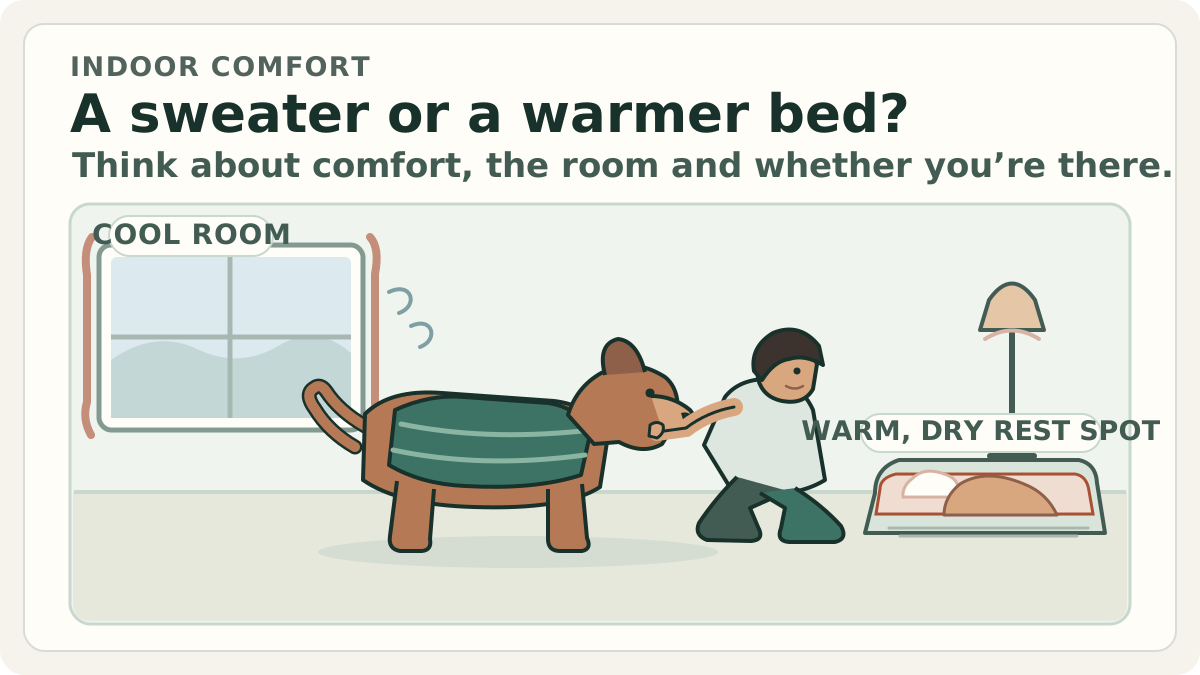
When an indoor sweater may help
If the room feels cool and your dog has trouble settling, try a dry sweater while you’re nearby. It should fit without restricting movement. Check that your dog can walk, sit, lie down, and move as usual in it. Take it off if it gets damp, restricts movement, or your dog shows visible discomfort.
The Dutch veterinary team advises keeping an eye on dogs wearing clothing. A sweater can snag on a crate, and a dog can get too warm indoors. Follow your veterinarian’s instructions if the garment was prescribed for a specific reason.
For sleep, set up a warm place first
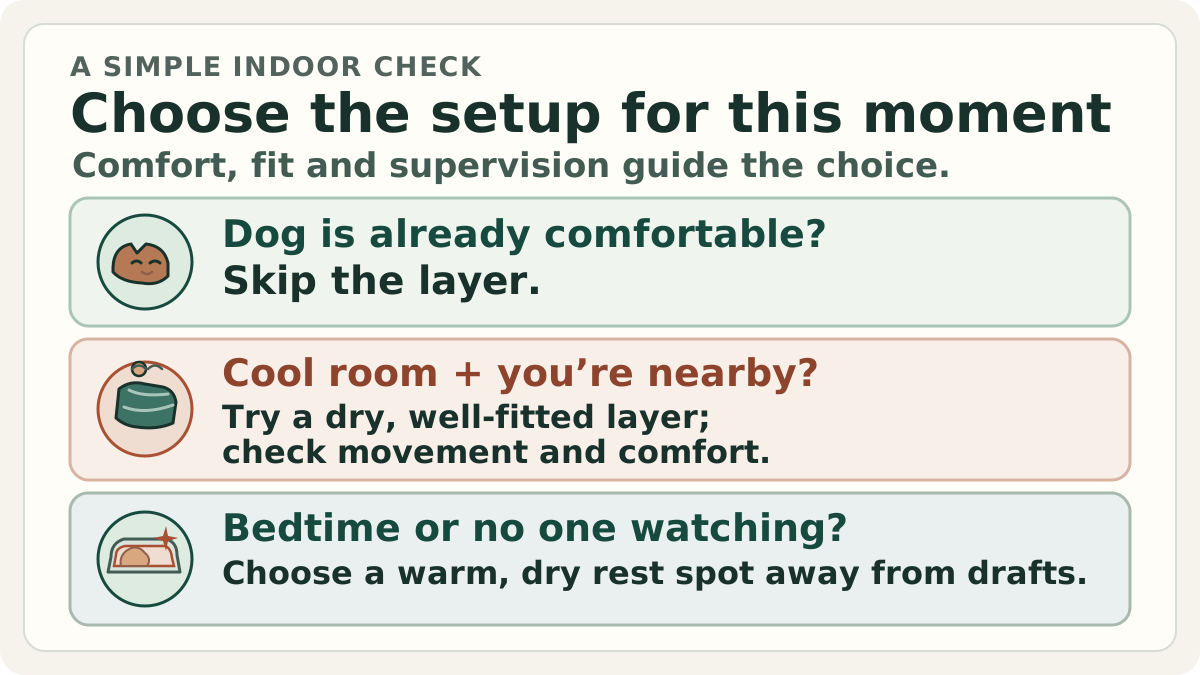
The ASPCA’s cold weather guidance recommends a warm sleeping spot off the floor and away from drafts. Move the bed out of the path of a drafty door or window and away from direct heat. Offer a dry blanket if your dog likes to nest.
If you notice a new pattern of discomfort that persists even after the room and bed are warm, call your veterinarian. For time outdoors, see our guide to how cold is too cold to walk a dog.
Research notes
Sources behind this guide
Written and source-checked by Puni Pet Guides Editorial Team · Reviewed Nov 10, 2026
This guide synthesizes the public references below; it does not report hands-on product testing or independent veterinary review.
Review scope: practical context, source traceability, and clear non-diagnostic boundaries. Diagnosis and treatment decisions stay with veterinarians.