
Dog Scared of Smoke Detector Chirps? What to Do
If the sound could be a fire or carbon monoxide alarm, get outside immediately and call 911 from outside. Don't stay inside to check the sound or calm your dog. Once you've confirmed it's only a maintenance chirp, follow the instructions for your exact alarm and give your dog a quiet place away from the sound.
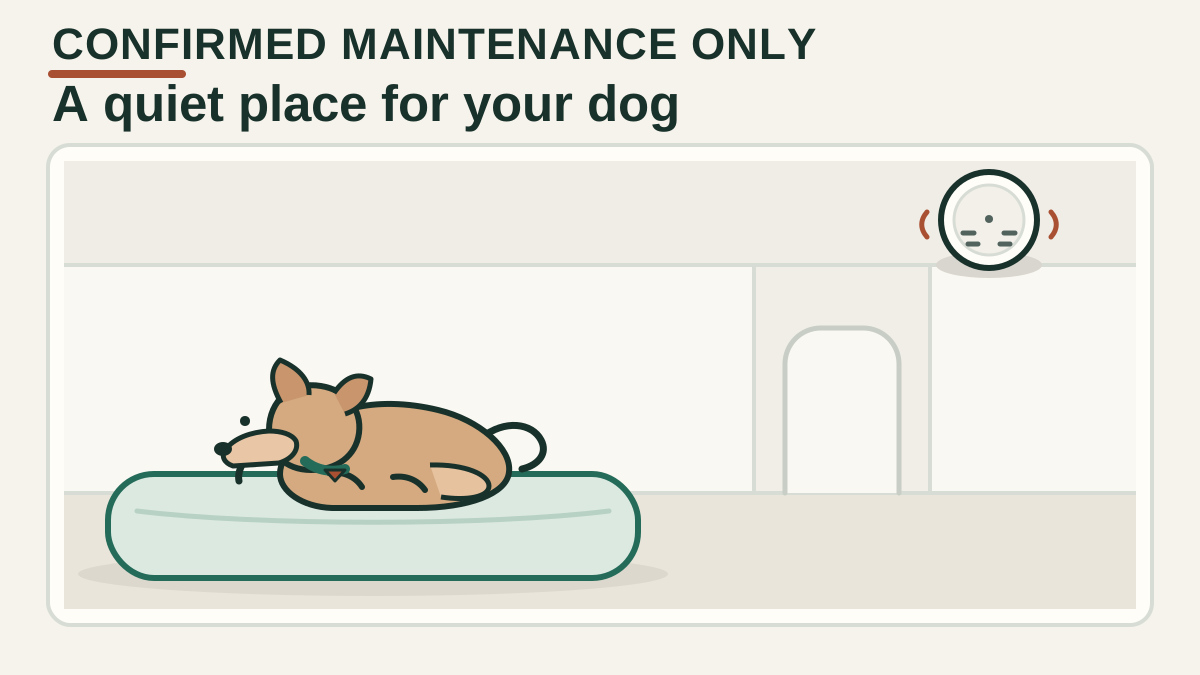
Treat an uncertain alarm as an emergency
A dog's reaction doesn't tell you what the alarm means. A familiar chirp alone doesn't rule out danger, either. If you can't tell whether the sound is a warning, leave first. The U.S. Consumer Product Safety Commission tells people to get outside and then call 911 when a smoke or carbon monoxide alarm sounds.
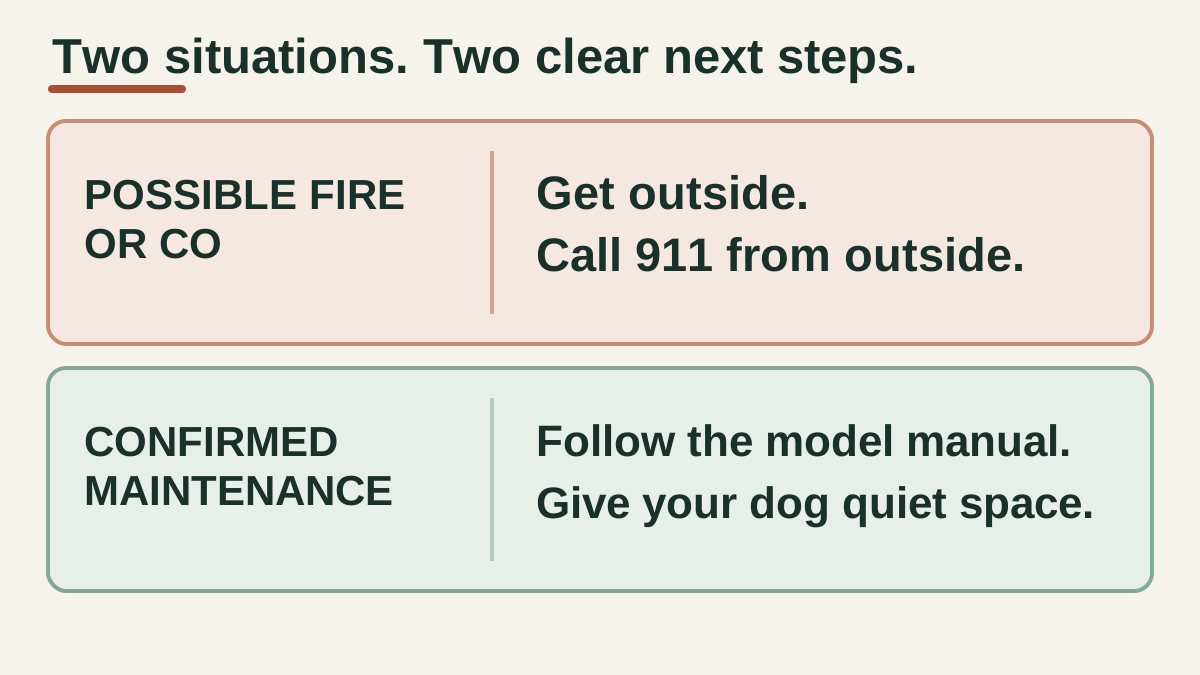
Follow the instructions for your exact alarm
Once you know it's a maintenance signal, check the model's instructions and deal with the issue promptly. A low battery is one possible reason, but Kidde's support guide shows why the device matters. The U.S. Fire Administration advises keeping smoke alarms working. Don't disable one to stop the sound or make your dog more comfortable.
Give your dog room to settle
Offer a familiar spot away from the sound. Let your dog choose whether to rest there. An observational study of household noise found stronger fear responses to intermittent, high-pitched sounds than to steady, lower-pitched sounds. The study didn't test what would calm an individual dog.
If your dog stays distressed after the sound stops or reacts this way often, ask your veterinarian. Cornell's guidance for noise fears recommends quiet refuge and veterinary advice when the fear is hard to manage. If storms are also a trigger, see what to do when your dog is scared of thunder.
Research notes
Sources behind this guide
Written and source-checked by Puni Pet Guides Editorial Team · Reviewed Nov 9, 2026
This guide synthesizes the public references below; it does not report hands-on product testing or independent veterinary review.
Review scope: practical context, source traceability, and clear non-diagnostic boundaries. Diagnosis and treatment decisions stay with veterinarians.
- U.S. Consumer Product Safety Commission: Safety Tips to Prevent Carbon Monoxide Poisoning and Fires
- U.S. Fire Administration: Smoke Alarms
- Kidde: What Causes Consistent Chirping?
- Grigg et al.: Stress-Related Behaviors in Companion Dogs Exposed to Common Household Noises
- Cornell Riney Canine Health Center: Fear of fireworks and thunderstorms