
Why Does My Dog Drool in the Car?
Drooling before the car moves can point to anxiety or learned anticipation. If it starts after the car moves, consider asking your veterinarian whether motion sickness could be involved. Timing can give your veterinarian a clue, since anxiety and motion sickness can happen together. (Merck Veterinary Manual; VCA)
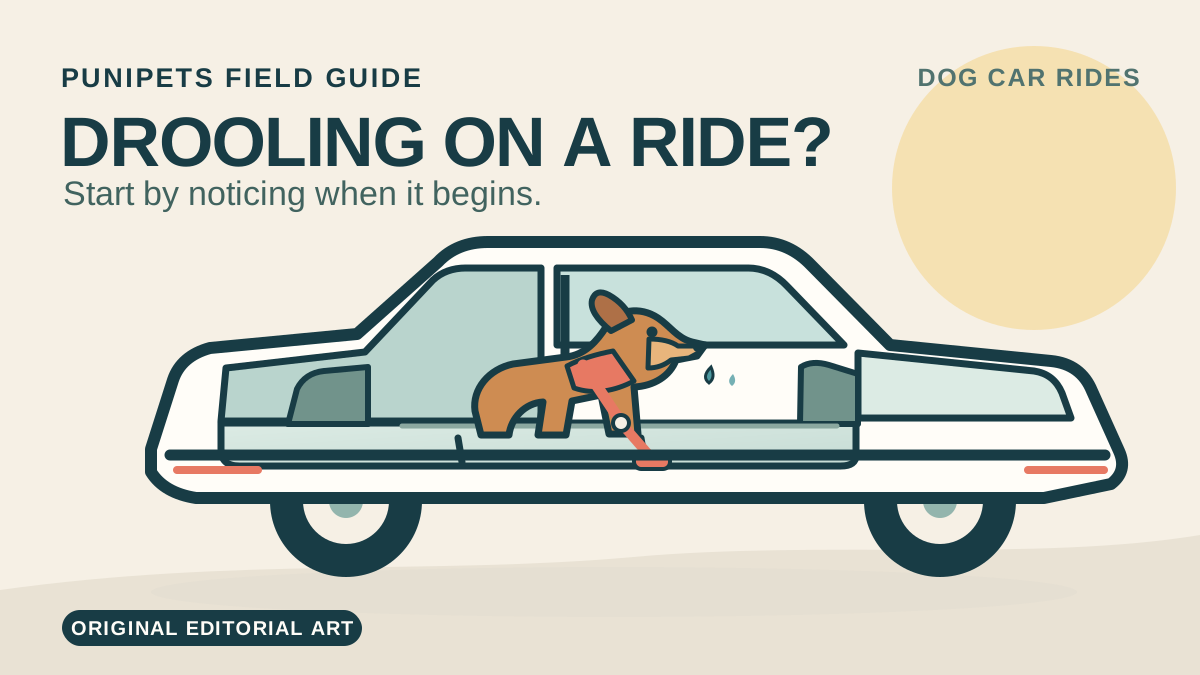
If it starts while the car is parked
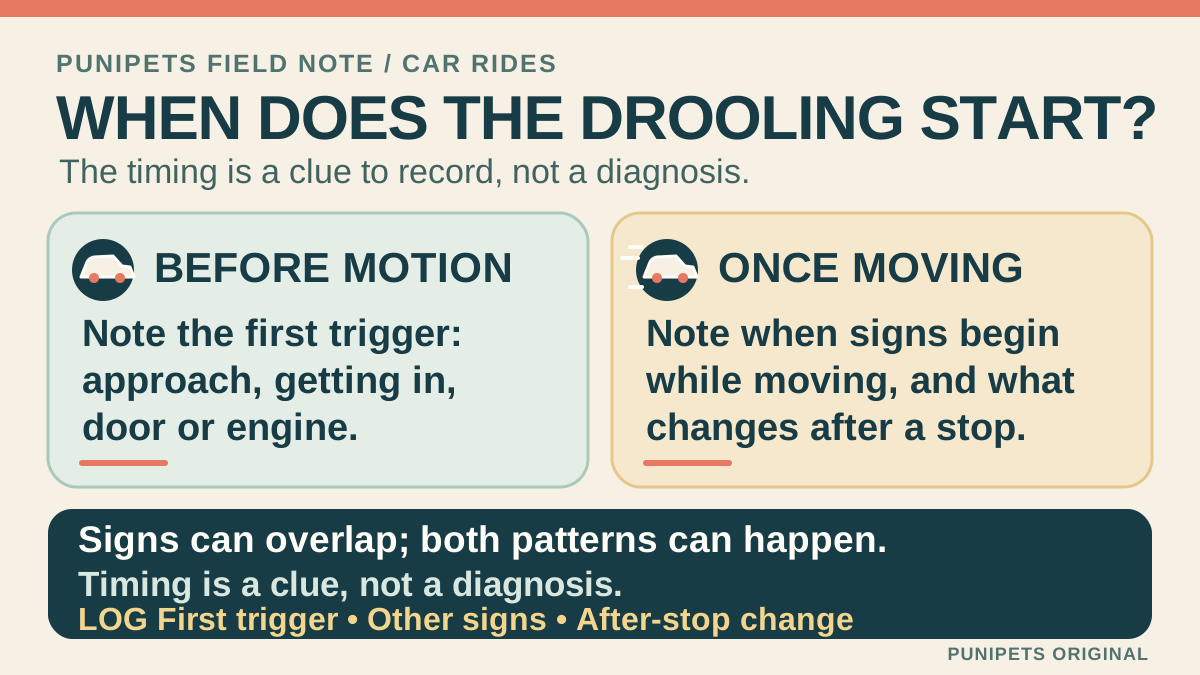
Notice the first trigger: approaching the car, getting inside, closing the door, or starting the engine. A dog that felt sick on an earlier trip may now react as soon as they get in.
If your dog is comfortable, invite them to step into the parked car while the engine is off. Keep practice gentle and stop if your dog shows stress; don't force them through it. (Wisconsin Humane Society)
If it begins after the car moves
Note whether the drooling starts as soon as you pull away or later in the ride. Also notice whether it eases once you stop. (Merck Veterinary Manual; VCA)
Don't take another ride just to see whether the drooling happens again. If your dog seems distressed on the road, pull over safely and keep them secured. Attach the leash before opening the door at a stop. (VCA car behavior guide; VCA road trip guide)
A short timing note for your veterinarian
Write down these three observations. If you're driving, wait until you're safely stopped to make a note.
- First trigger: When did the drooling begin—approaching, getting in, the engine starting, or the car moving?
- Other signs: Did your dog also whine or vomit?
- After stopping: What happened to the drooling once the car was parked?
Call your veterinarian if the drooling keeps happening or comes with vomiting or distress. If a long drive is coming up and your dog has had trouble riding in the car, call before you leave. Share the timing note when you call. (Merck Veterinary Manual; VCA)
For the car's physical back-seat setup, see our rear-seat setup guide.
Research notes
Sources behind this guide
Written and source-checked by Puni Pet Guides Editorial Team · Reviewed Nov 9, 2026
This guide synthesizes the public references below; it does not report hands-on product testing or independent veterinary review.
Review scope: practical context, source traceability, and clear non-diagnostic boundaries. Diagnosis and treatment decisions stay with veterinarians.