
Why Is My Cat Hissing at My Other Cat After a Vet Visit?
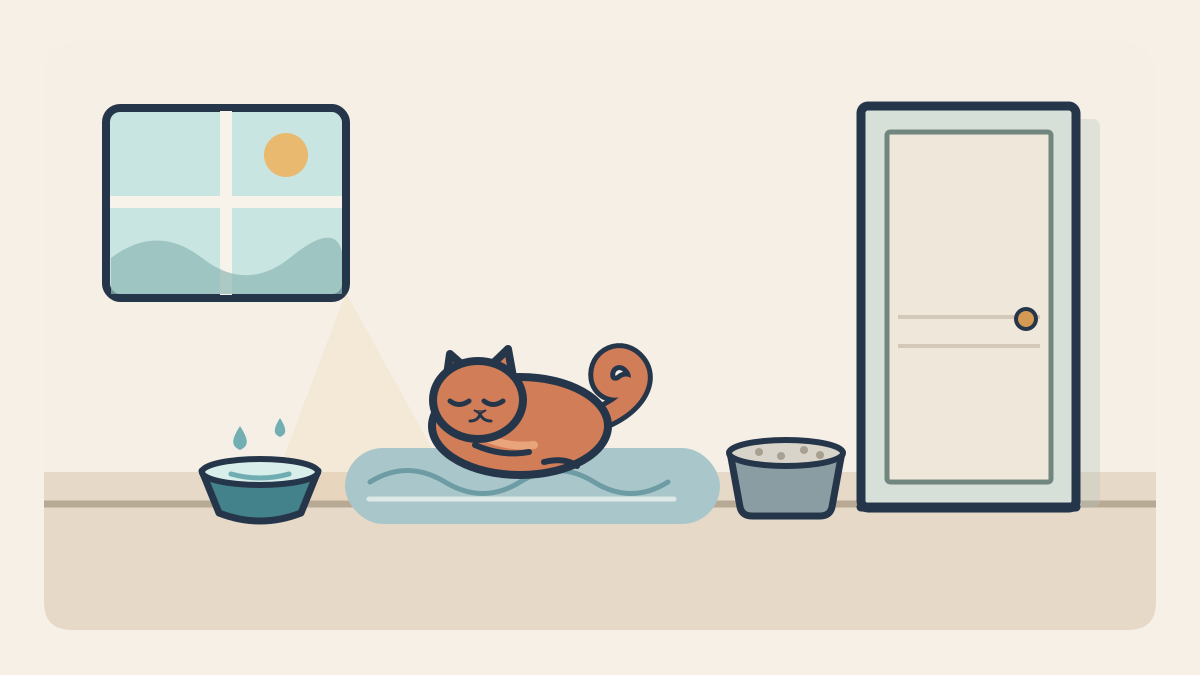
If your cat hisses at a housemate returning from the vet, give them separate space. Take the returning cat to a quiet room with water, a litter box and familiar bedding. Close the room door before opening the carrier. Follow any food or activity instructions from the clinic.
Why the reunion can feel different
A cat may come home smelling different. A cone or bandage can also make them look unfamiliar to the cat who stayed home. The Feline Veterinary Medical Association’s guidance for returning home recommends a quiet, separate room if the cats hiss, followed by gradual contact. The Atlantic Veterinary College’s cat-fighting tips also advise separating the cats and avoiding forced interactions.
For more on hissing, see why cats hiss.
Give them space, then look for calm
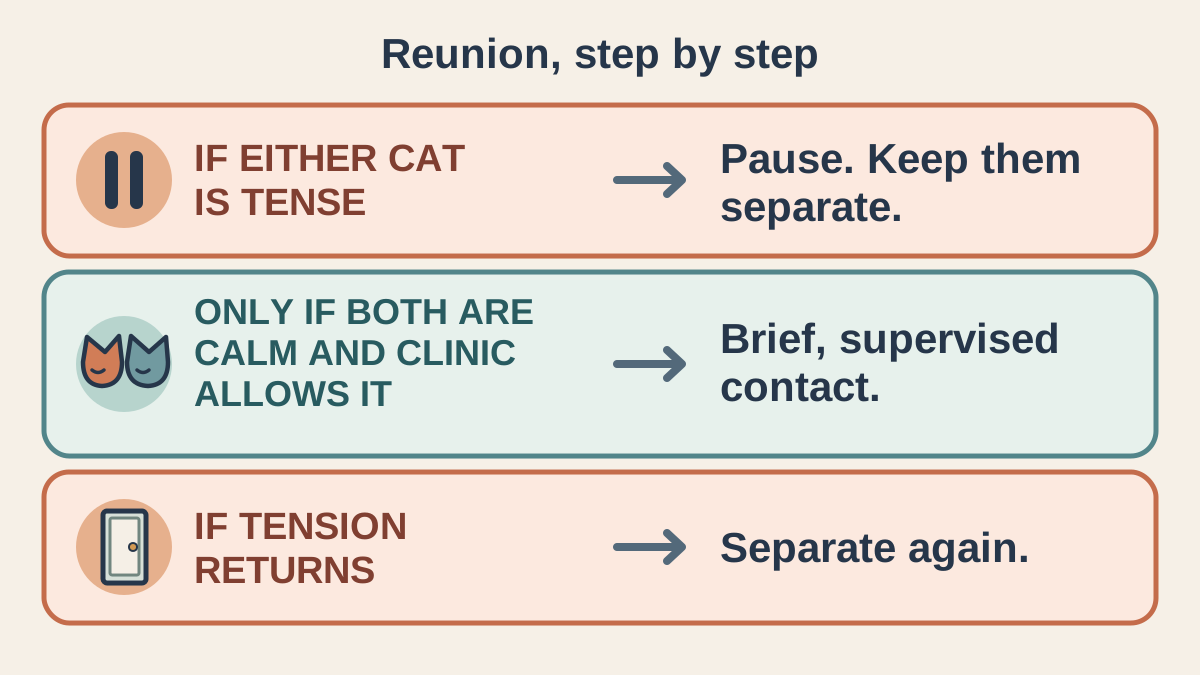
Keep the cats separated while either one seems tense. If the clinic allows it, swap clean blankets or other bedding that carries each cat’s scent. Let each cat sniff it from their own space.
Try a brief, supervised reunion only when both cats are calm and the clinic’s recovery instructions allow it. Give each cat room to retreat. If either cat hisses, stares tensely, stalks, blocks the doorway or retreats in fear, separate them again and try later. After a procedure, ask the clinic if you’re unsure when contact can resume. The Cornell Feline Health Center’s aggression guidance recommends separating the cats and reintroducing them gradually. If the cats are fighting, don’t put your hands between them.
When to call the clinic
Contact the clinic if either cat is injured, you’re concerned about recovery, or the tension keeps returning or worsens. Call for help if you’re unsure how to keep them safely apart.
Research notes
Sources behind this guide
Written and source-checked by Puni Pet Guides Editorial Team · Reviewed Nov 9, 2026
This guide synthesizes the public references below; it does not report hands-on product testing or independent veterinary review.
Review scope: practical context, source traceability, and clear non-diagnostic boundaries. Diagnosis and treatment decisions stay with veterinarians.