
Everyday cat care · petting and biting
Why Does My Cat Bite When I Pet Them?
If your cat bites during petting, stop contact, calmly withdraw your hand, and give them space to leave. A bite alone does not tell you why it happened. Don’t reach after your cat or try to hold them still. If a bite breaks skin, wash it right away with warm, soapy water.

Why a cat may bite during petting
The cause is not always clear. Cornell notes that a cat may bite when overstimulated or when trying to end contact, but one incident cannot confirm either cause. Medical issues can also be involved, so don’t treat “overstimulation” as an automatic explanation.
Look at the whole interaction, including your cat’s pupils, ears, tail, and whether they are moving away. Cats Protection advises letting a cat approach, avoiding touch when they are asleep or hiding or when they may be in pain, and stopping if they hiss, growl, or bite. If a relaxed cat chooses to approach, they may welcome a light pet on the cheek or chin. For the separate question of what a cat’s tail signals, see our cat tail signals guide.
Let your cat choose the next interaction
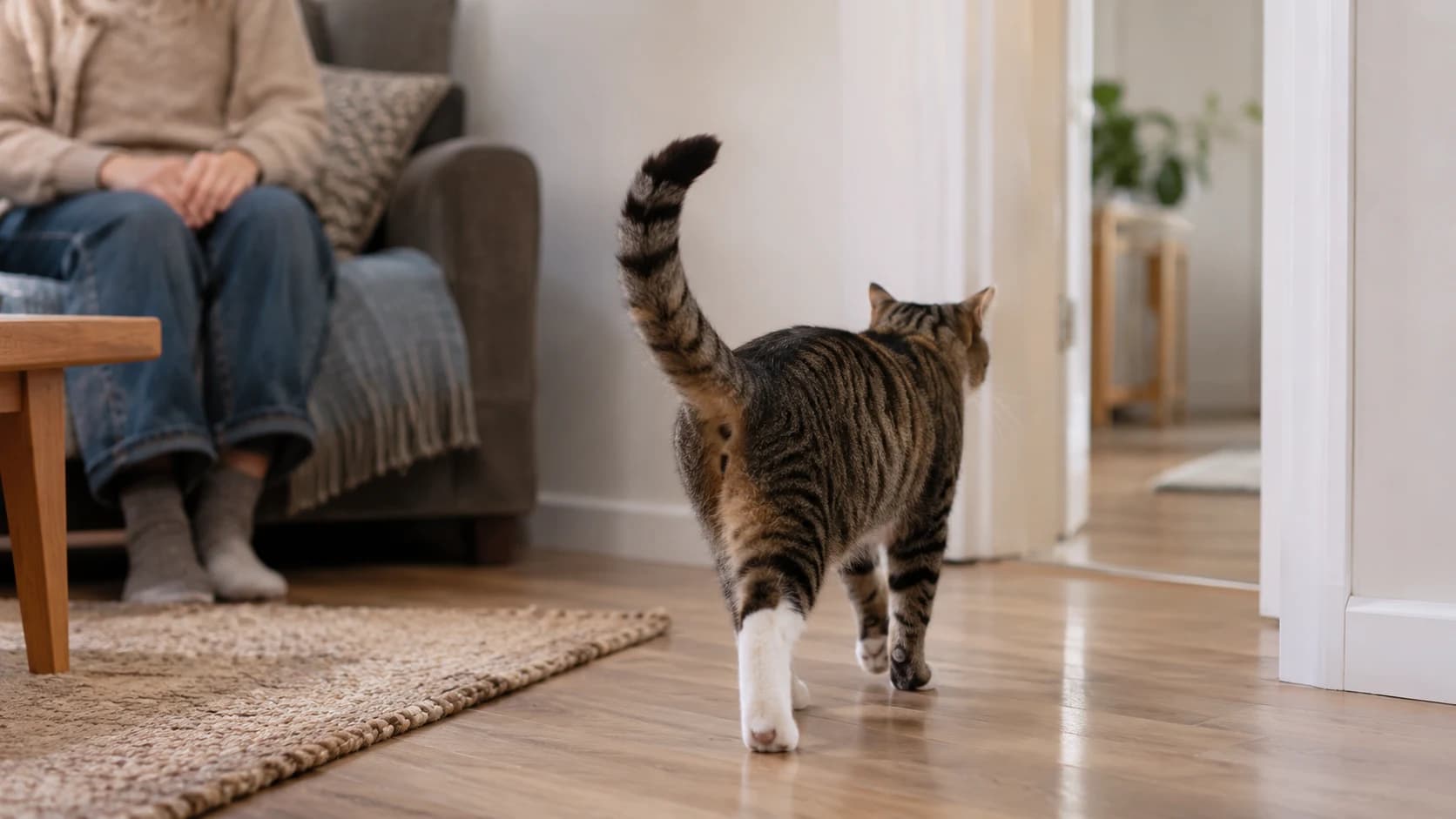
After a bite or any sign of stress, calmly and slowly withdraw your hand and give your cat a clear path to leave. Don’t punish, corner, follow, or restrain them. There is no set number of strokes or length of time that works for every cat. Stop when your cat shows they have had enough.
If your cat later approaches and seems relaxed, gently pet them on the cheek or chin and let them end the interaction. Staying nearby does not necessarily mean a cat wants to be touched. Keep young children away from contact with a cat that has bitten before, and supervise child interactions.
Know when to call a veterinarian or doctor
Ask your veterinarian to assess possible medical causes before trying to change the behavior, especially if the biting is new or unusual for your cat. Pain or illness can contribute; the bite itself does not identify a diagnosis.
If a bite or scratch breaks your skin, wash it immediately with warm, soapy water. The CDC advises seeking medical attention if the wound is serious, red, painful, warm, or swollen; if the cat is ill or its rabies vaccination status is unknown; or if your last tetanus shot was more than five years ago.
| What you notice | What to do |
|---|---|
| Your cat bites, hisses, growls, or moves away during petting | Stop contact, calmly withdraw your hand, and give your cat room to leave. Do not punish or restrain them. |
| Your cat approaches and appears relaxed | Let them choose. Gently pet your cat on the cheek or chin only if they welcome it, and stop at the first sign of stress. |
| A bite or scratch breaks your skin | Wash it right away with warm, soapy water. Seek medical care for the wound or any cat-related concerns described above, or if your last tetanus shot was over five years ago. |
Research notes
Sources behind this guide
Written and source-checked by Puni Pet Guides Editorial Team · Reviewed Nov 16, 2026
This guide synthesizes the public references below; it does not report hands-on product testing or independent veterinary review.
Review scope: practical context, source traceability, and clear non-diagnostic boundaries. Diagnosis and treatment decisions stay with veterinarians.