
Everyday dog care · yawning and context
Why Do Dogs Yawn? When to Give Them Rest or Space
Some dogs yawn when tired; they may also yawn in an uneasy moment or when they need more space. The movement by itself cannot tell you which explanation fits. Look at what was happening just before it and the rest of your dog’s body.
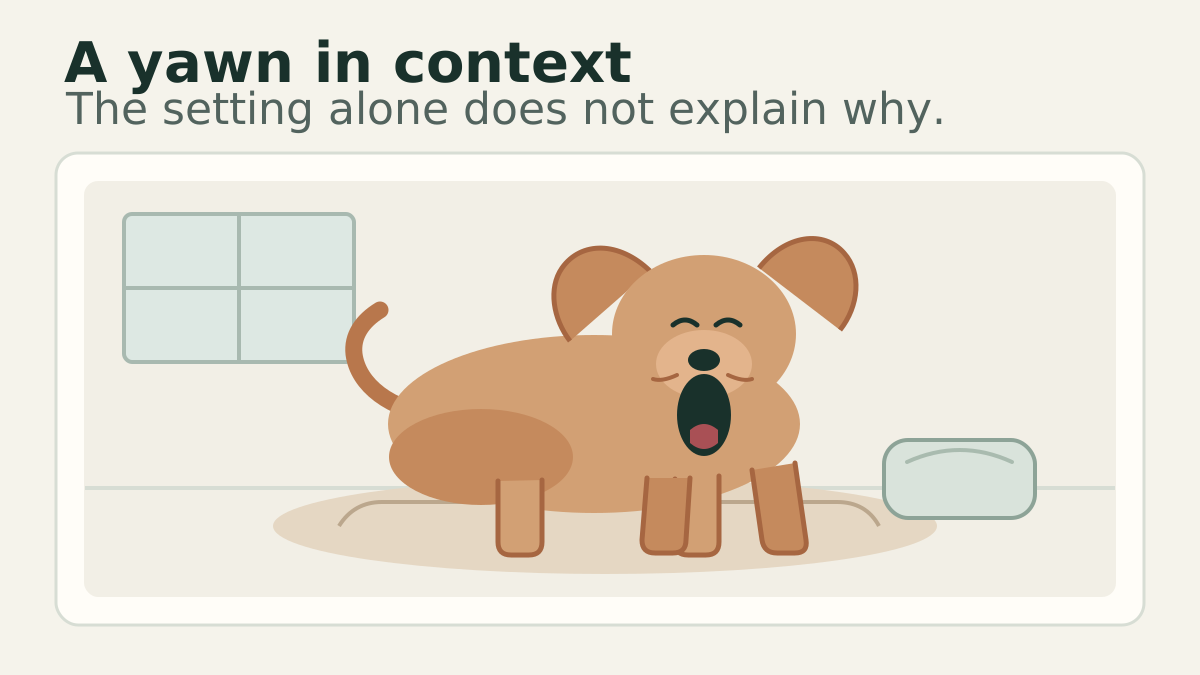
A yawn has more than one context
The American Kennel Club also notes that dogs may yawn when stressed or uncomfortable, and that yawning can be contagious. If a dog yawns after seeing another dog yawn, that is another possible context.
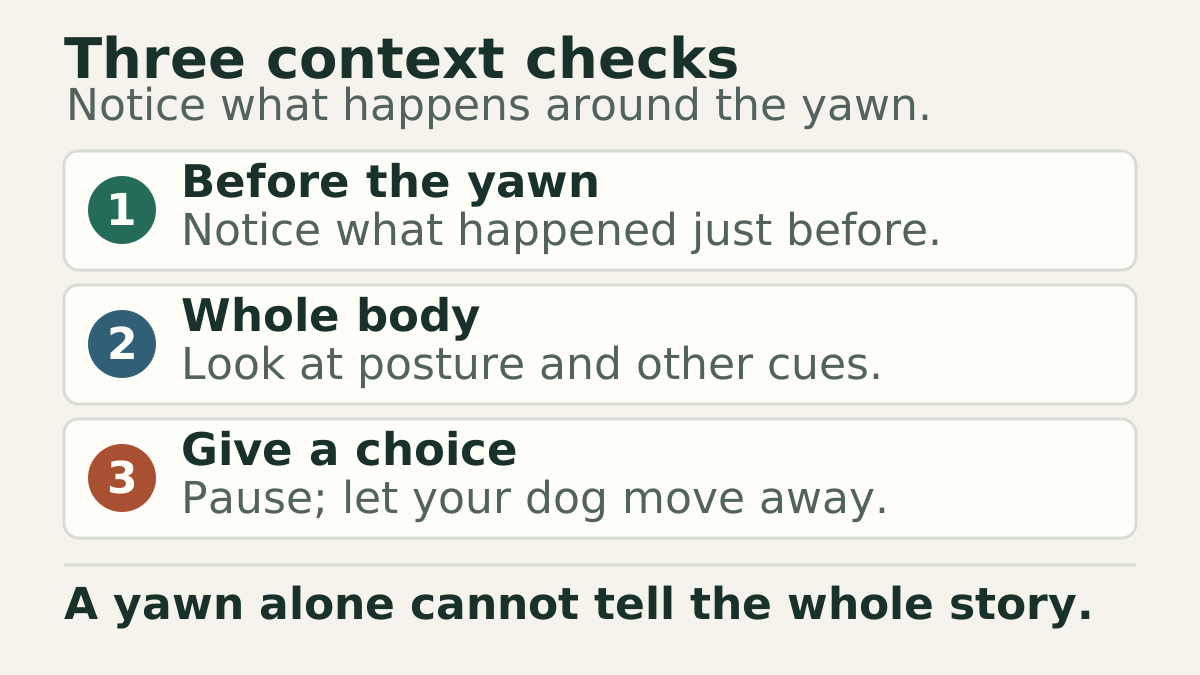
Look at what happened around it
A dog who yawns while settling to rest and otherwise looks relaxed may simply be tired. Let them rest. There is no need to interrupt, make the yawn happen again, or repeat a situation to test its meaning.
A yawn during a greeting, petting, or another close interaction calls for a wider look. Is the dog turning their head or body away, licking their lips when there is no food, going still, or holding tension in the body? Dogs Trust and PDSA describe these kinds of changes as possible signs of discomfort or a request for space.
Give space when the dog wants distance
If the dog turns away, stiffens, or moves off, pause the interaction. Stop reaching, step back, and let the dog leave without following or blocking their path. If they move to a resting place, leave them undisturbed. Dogs Trust advises giving space and choice instead of forcing interaction; PDSA says walking away can be a dog’s way to leave an uncomfortable situation.
In a busy room, step back or ask others to give the dog room.
When to talk with your vet
If yawning appears as part of a noticeable new or ongoing change in your dog’s behavior, or you are concerned, talk with your veterinarian. Useful details are the setting, what happened just before the yawn, and whether your dog chose to stay, turn away, or leave.
For busy doorbell evenings, plan a quieter routine for visitors.
Research notes
Sources behind this guide
Written and source-checked by Puni Pet Guides Editorial Team · Reviewed Oct 29, 2026
This guide synthesizes the public references below; it does not report hands-on product testing or independent veterinary review.
Review scope: practical context, source traceability, and clear non-diagnostic boundaries. Diagnosis and treatment decisions stay with veterinarians.