
Everyday cat care · petting
Why Does My Cat Raise Their Bum When I Pet Them?
When a cat raises their rear as you pet them, they may enjoy the contact or be moving a preferred spot closer to your hand. Cats Protection offers both as possibilities, not a universal explanation. The raised rear alone cannot tell you whether your cat wants more petting.
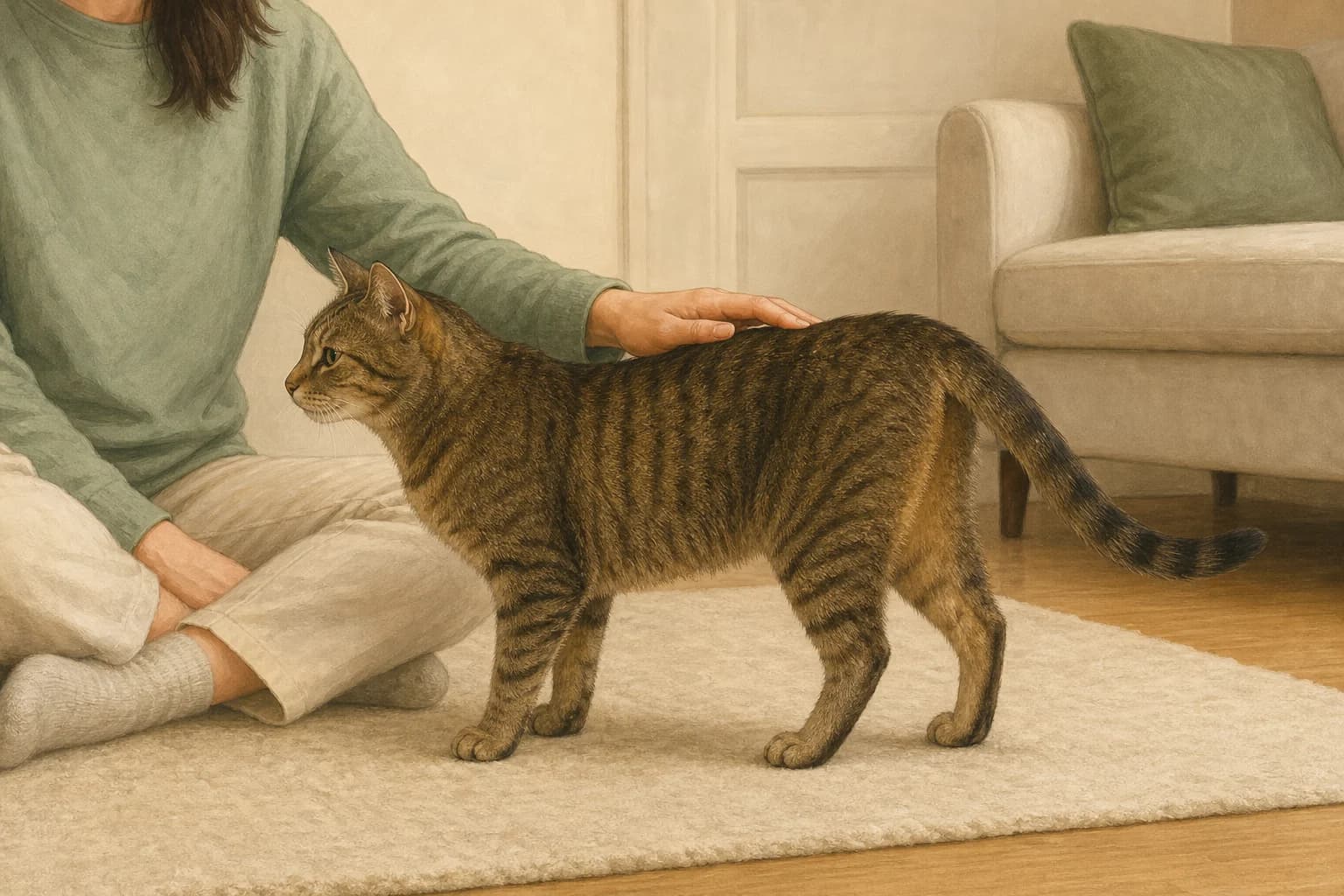
What the raised rear may mean
Some cats enjoy strokes around the cheeks, chin, head, or neck. Some also like strokes at the base of the tail. Let your cat’s response guide the next touch; the pose is not permission to press harder or keep going.
Let the cat choose
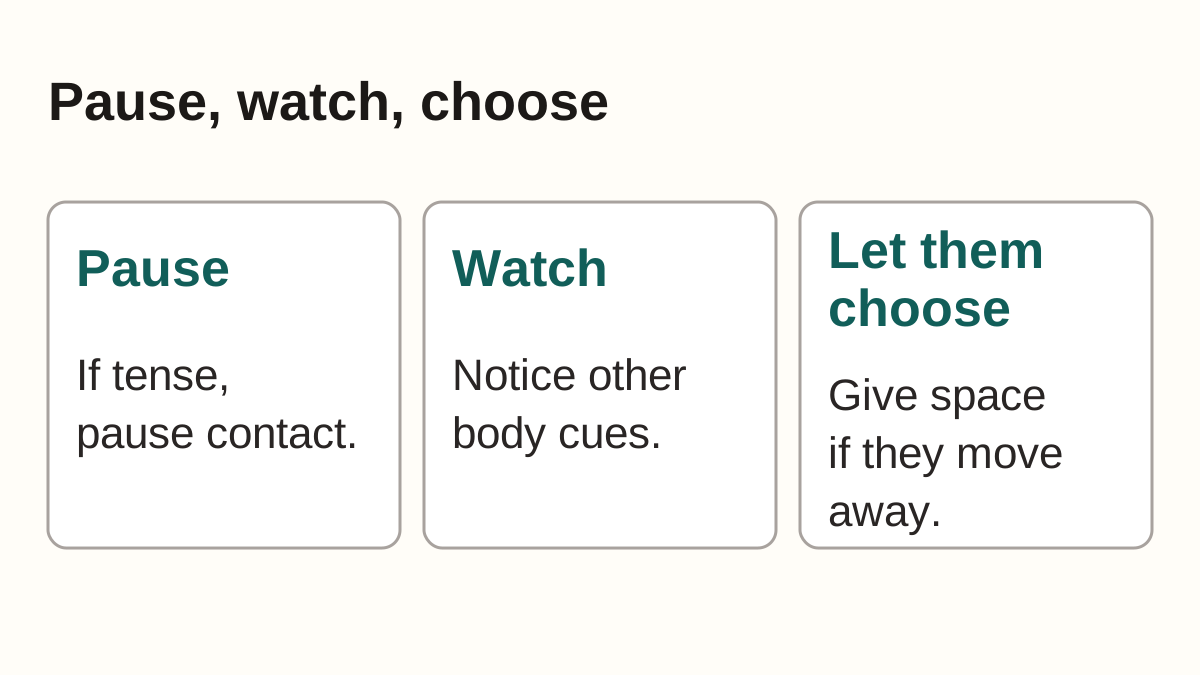
Let your cat approach. Try a brief pause during petting and leave room for them to move toward your hand or away. Continue gently only while they remain relaxed and choose contact.
If they flatten or rotate their ears, twitch or flip their tail, become restless, turn their head toward your hand, or move away, stop and give them space; do not follow.
The ASPCA’s petting-aggression guidance describes several of these warning signs. Treat these cues as reasons to pause, not as a way to assign a mood.
When to ask a veterinarian
An unspayed female cat may raise her rear when she is in heat, but the gesture during petting alone cannot establish that. Ask your veterinarian if you are unsure. If touch sensitivity is new, focused on one area, or comes with unexpected aggression, stop petting and contact your veterinarian. The ASPCA recommends a veterinary examination for cats showing aggression.
Research notes
Sources behind this guide
Written and source-checked by Puni Pet Guides Editorial Team · Reviewed Oct 29, 2026
This guide synthesizes the public references below; it does not report hands-on product testing or independent veterinary review.
Review scope: practical context, source traceability, and clear non-diagnostic boundaries. Diagnosis and treatment decisions stay with veterinarians.