
Everyday cat care · behavior
Why Do Cats Purr? Look Beyond the Sound
Some cats purr when relaxed or seeking attention; purring can also accompany stress or pain. PDSA and Cats Protection describe these contexts. A purr alone does not show exactly how your cat feels or whether it is well. Look at your cat’s posture and surroundings, and compare with its usual behavior.
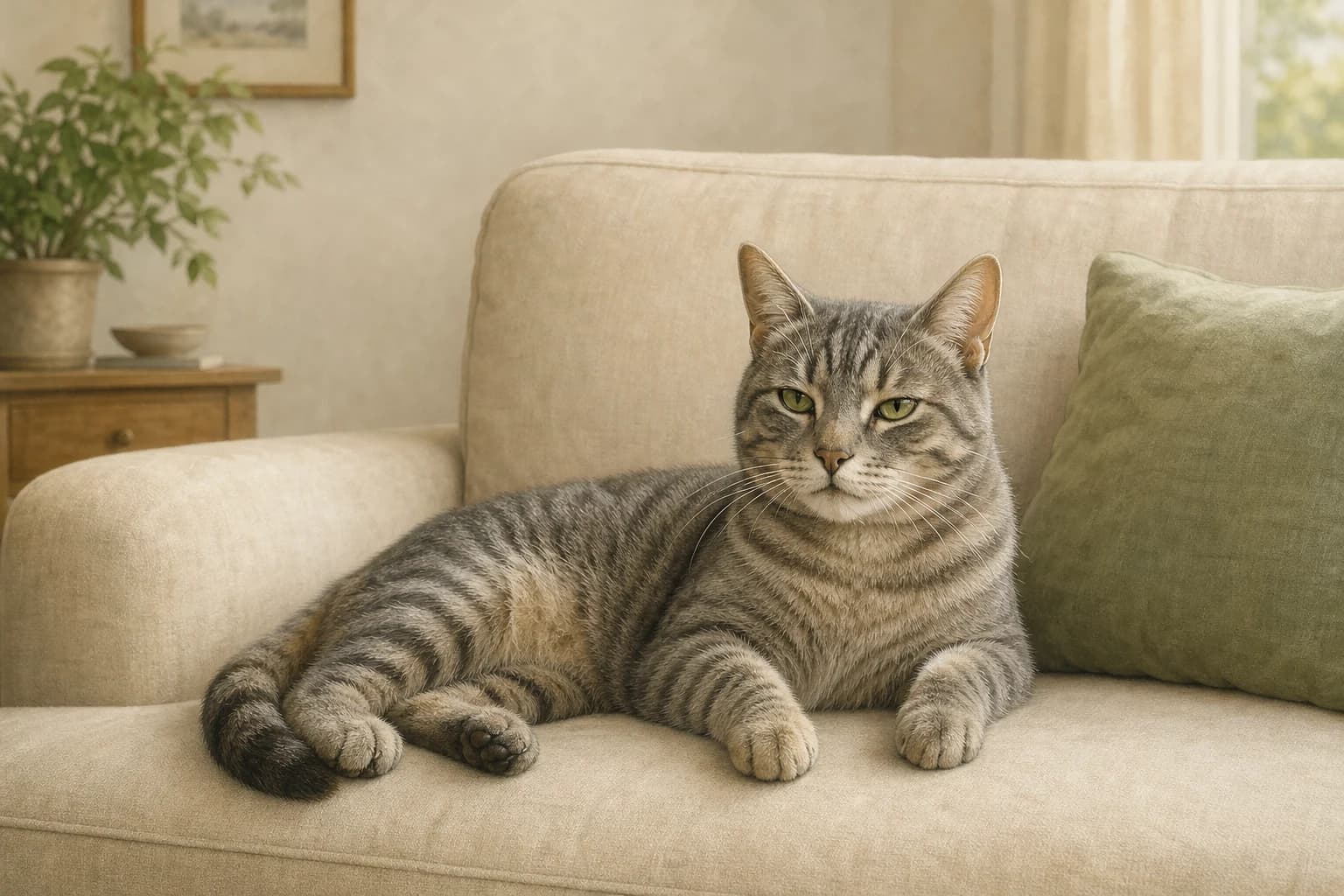
What a relaxed purr may mean
PDSA says a purr alongside a relaxed body often accompanies contentment. Cats Protection describes attention as another possible context.
Look at posture and setting
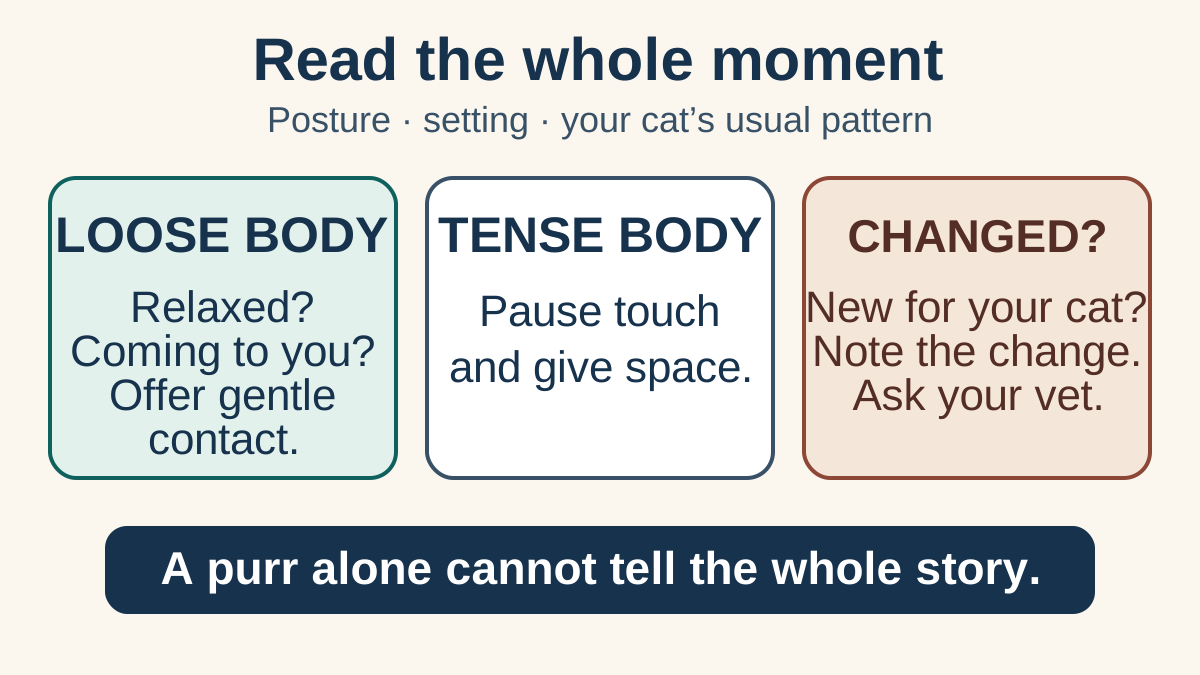
The RSPCA describes relaxed body language with a loose posture, smooth fur, and soft eyes. A cat that approaches may welcome gentle contact. Offer a stroke only if the cat comes to you relaxed. A belly display alone is not permission to touch.
The RSPCA describes tense or crouched posture, a tail held close, or ears laid back as reasons to give a cat space. If a cat hides, do not pull it out. Cats Protection notes that stroking can become overstimulating; stop contact if the cat bites or scratches. PDSA notes pupils may enlarge in low light or with excitement, so consider the room and the cat’s posture together.
Use the visual as a quick note: describe posture, setting, and what differs from your cat’s usual behavior.
When to ask a veterinarian
Not every cat purrs, Cats Protection notes. Compare with your cat’s usual pattern rather than another cat’s habits. If you notice an unusual change in purring or behavior, contact a veterinarian and describe what changed. A purr itself is not a diagnosis.
Research notes
Sources behind this guide
Written and source-checked by Puni Pet Guides Editorial Team · Reviewed Nov 6, 2026
This guide synthesizes the public references below; it does not report hands-on product testing or independent veterinary review.
Review scope: practical context, source traceability, and clear non-diagnostic boundaries. Diagnosis and treatment decisions stay with veterinarians.