
Everyday cat care
Why Do Cats Groom Each Other? Watch What Happens Next
Mutual grooming, often called allogrooming, is usually friendly when the cat being groomed cooperates, especially around the head and neck (AVSAB).
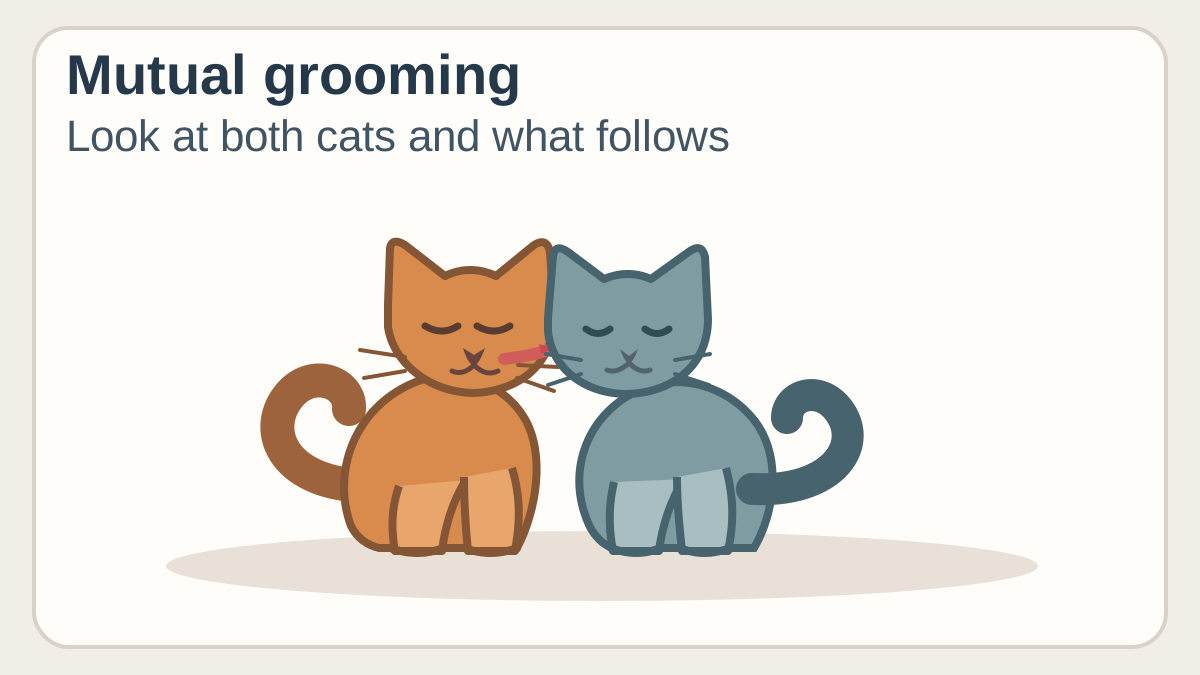
Cats Protection lists grooming, rubbing, and sleeping in contact as signs that cats share a social group (Cats Protection). But a single grooming bout cannot explain the whole relationship or tell you exactly why a cat acted. Watch both cats and what happens after the licking stops.
What to watch next
Look for signs of friendliness beyond a single moment, such as whether the cats choose to spend time near each other. Cats can live together while still experiencing tension, so fighting is not the only thing to watch for.
| What you see | What to do |
|---|---|
| The cat being groomed cooperates; any play has pauses and the cats swap roles. | Keep watching the whole interaction; cooperative grooming and play in which the cats take turns are consistent with friendly contact. |
| One-sided chasing, hissing, growling, or a cat trying to get away. | Note which cat is trying to leave. Never put your hands between fighting cats. |
| A sudden behavior change or conflict that keeps recurring. | Contact a veterinarian about a sudden change; seek a qualified behavior professional for ongoing conflict. |
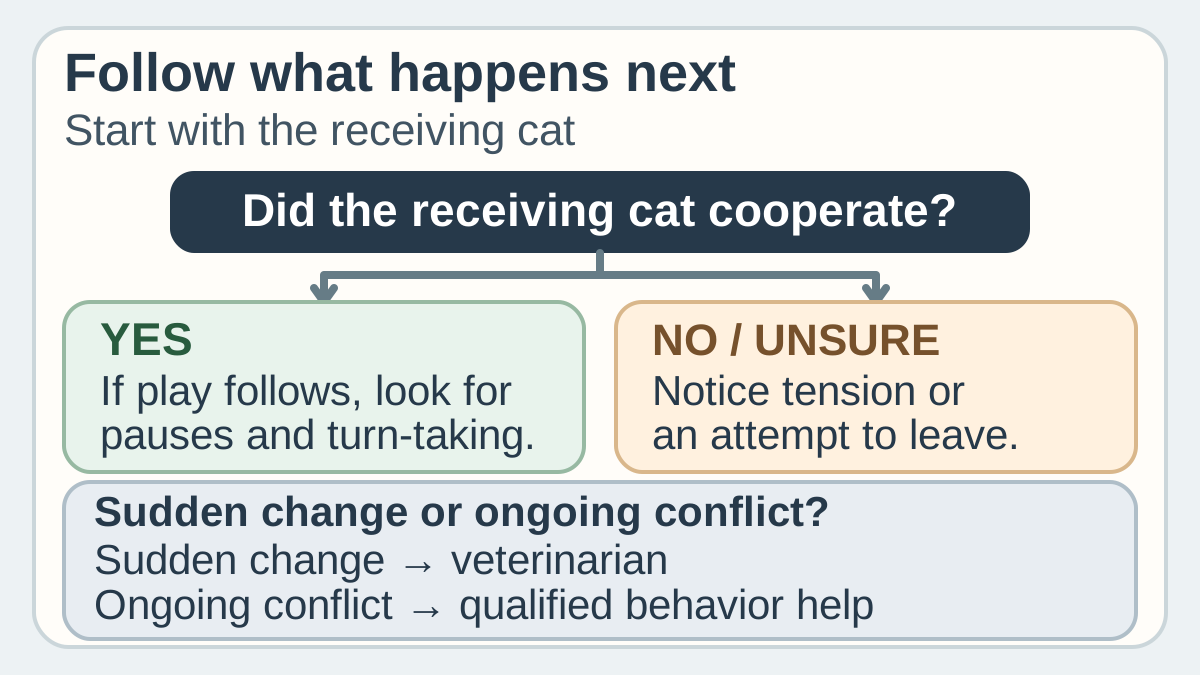
For the next bout, watch both cats from the first lick through what follows. Note whether each chooses to stay, take turns, or leave.
Research notes
Sources behind this guide
Written and source-checked by Puni Pet Guides Editorial Team · Reviewed Nov 15, 2026
This guide synthesizes the public references below; it does not report hands-on product testing or independent veterinary review.
Review scope: practical context, source traceability, and clear non-diagnostic boundaries. Diagnosis and treatment decisions stay with veterinarians.