
Lilies in a Bouquet: What Should Cat Owners Do?
Keep true lilies and daylilies out of a home with cats. If your cat may have bitten one, gotten pollen on its fur, groomed pollen from its coat, or drunk vase water, contact a veterinarian or pet poison service immediately. Share a photo of the flower or its label, but do not delay the call while you try to identify it. A bouquet being in the room does not by itself establish that your cat touched or ingested a plant.
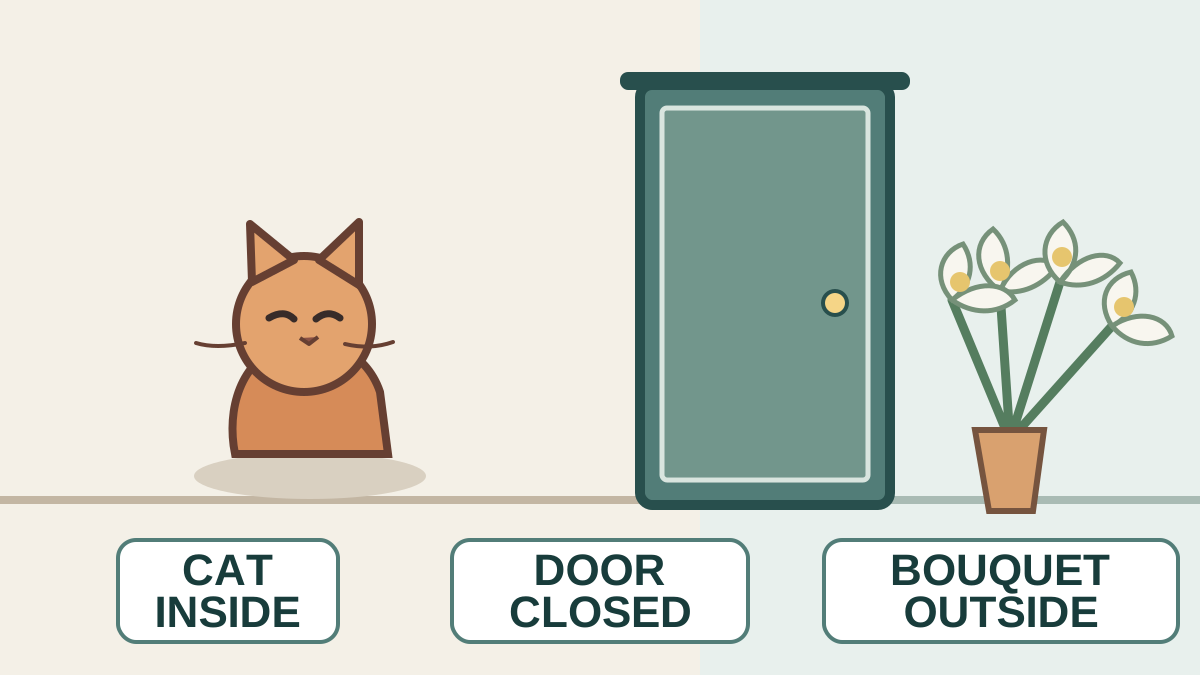
Start with the flower name
“Lily” is a common name, not a precise plant identification. True lilies (Lilium) and daylilies (Hemerocallis) are dangerous to cats. Relevant parts include leaves, stems, flowers, pollen, and water from the vase. Pollen on a cat’s coat can be swallowed during grooming, so exposure is not limited to chewing a petal.
Other plants with “lily” in their names can have different hazards. That difference is not a reason to assume a bouquet is safe. A tag that says only “lily” may not identify the plant closely enough to answer the question. Keep the flower label or take a photo to share with a veterinary professional.
| What you know | Next step |
|---|---|
| No contact is known, but true lilies or daylilies are in the home | Keep these flowers out of a home with cats. If you are unsure whether contact occurred, use the next row. |
| Your cat may have chewed the plant, gotten pollen on its coat, groomed pollen, or drunk vase water | Contact a veterinarian or pet poison service immediately. |
| The flower name or possible contact is unclear | If contact may have happened, call and share the photo or label; do not wait to identify the flower yourself. |
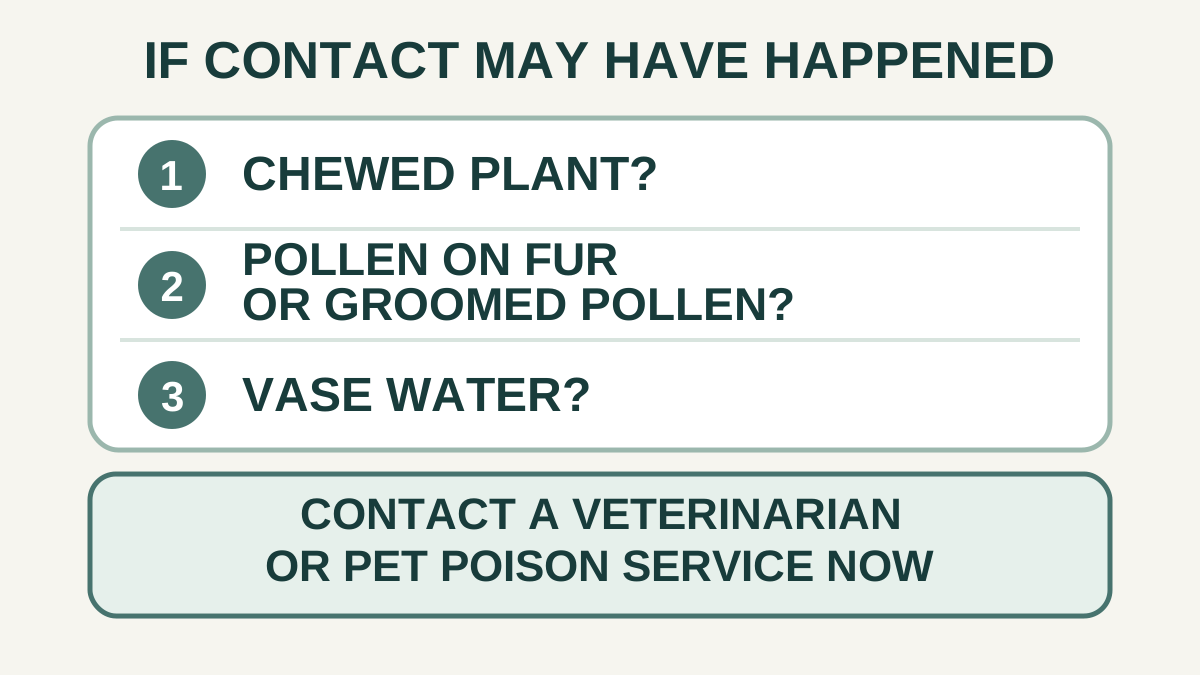
If contact may have happened, call now
A veterinarian or pet poison service can assess the specific plant and what you observed. Describe what you saw—chewing, pollen on the coat, grooming, or possible vase-water access. A photo of the plant or the florist’s label can help identify it.
Check future bouquets before they come home
If you live with a cat, keep true lilies and daylilies out of your home. When ordering flowers or accepting a bouquet, check the full names on the card or ask the florist to identify any flower listed only as “lily.” A clear label makes it easier to tell plants with similar common names apart.
Research note: This article uses public FDA and Pet Poison Helpline guidance. Sources checked November 15, 2026.
Research notes
Sources behind this guide
Written and source-checked by Puni Pet Guides Editorial Team · Reviewed Nov 15, 2026
This guide synthesizes the public references below; it does not report hands-on product testing or independent veterinary review.
Review scope: practical context, source traceability, and clear non-diagnostic boundaries. Diagnosis and treatment decisions stay with veterinarians.