
Cat care · cold-weather outings
How Cold Is Too Cold to Walk a Cat? A Caution Around 45°F
About 45°F (7°C) is a useful point for extra caution on a cat outing, especially if your cat will be outside for a long time. It does not guarantee that conditions are safe above that temperature, and it does not set a limit for short walks: cats and weather conditions differ. If cold weather also brings wind, snow, or ice, keep your cat indoors. Cornell says staying indoors is the best way to avoid cold-related hypothermia and frostbite.
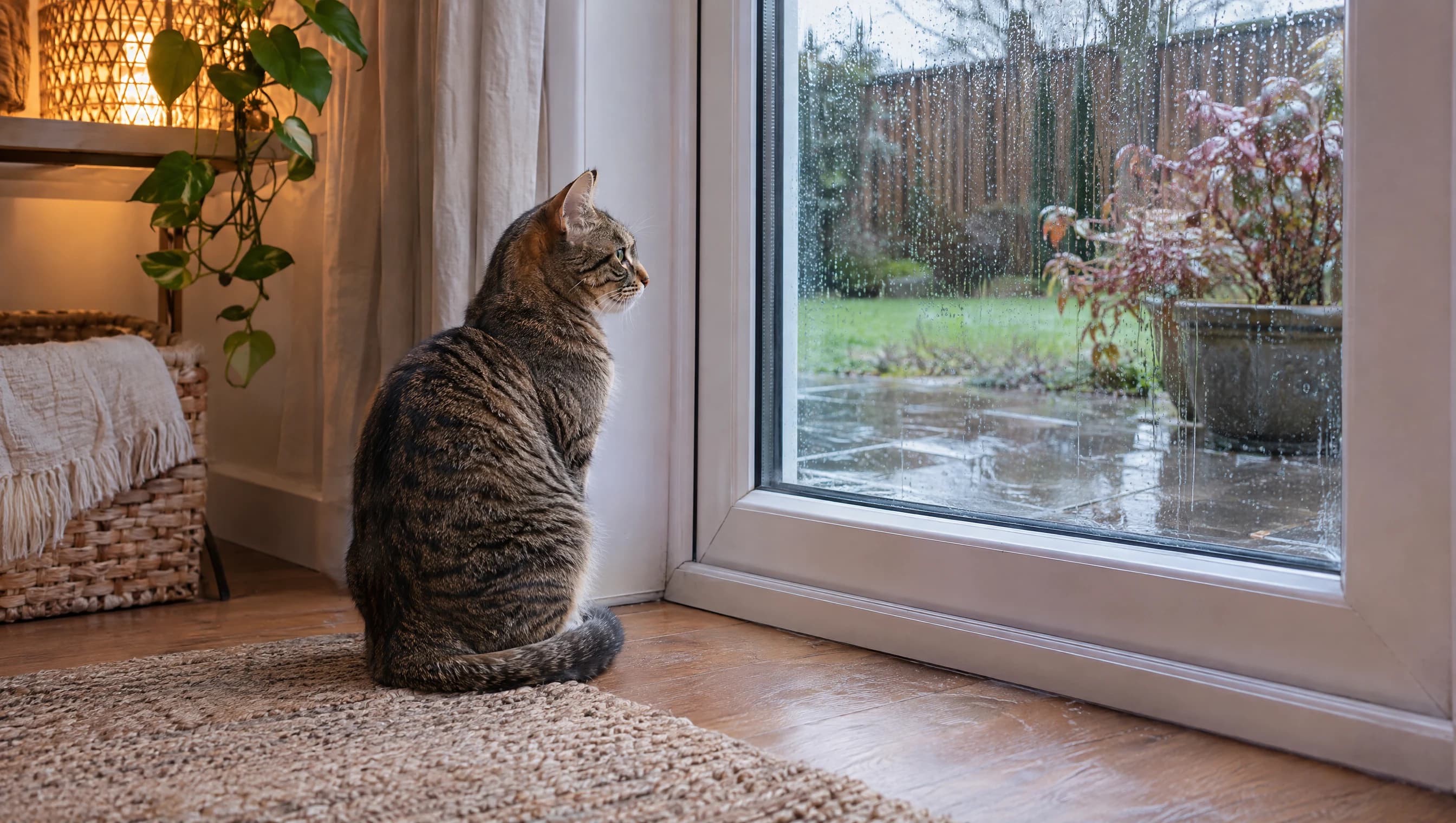
Treat 45°F as a caution, not a green light
Cats Protection says temperatures below about 7°C can start to be unsafe for cats outside, particularly for long periods. “About” matters: the risk depends on the individual cat and the conditions, so 45°F is a rounded reference point, not a precise boundary. Kittens, older cats, cats who are unwell, and hairless cats need extra caution. Long fur does not necessarily protect a cat from the cold.
If you are deciding whether to go out, consider the whole situation rather than temperature alone. Wind, snow, and ice are also factors, and the longer your cat stays outside, the more cautious you should be. No temperature listed here guarantees that an outing is safe for every cat. On a cold or unsettled day, indoor activity is a reasonable option.
Let your cat’s behavior guide the next step
Signs that your cat may be too cold include shivering, curling up tightly, unusual tiredness or lethargy, and cold-feeling extremities. If you notice any of these, end the outing and bring your cat indoors right away. A warm, dry, draft-free place to rest can help your cat settle indoors.
Marked weakness, trouble walking, or slow, shallow breathing are serious signs. Collapse or being unresponsive is an emergency. If you suspect hypothermia, bring your cat inside and contact a veterinarian as soon as possible; do not try to diagnose the problem from a temperature threshold.
| What you notice | What to do |
|---|---|
| Around or below 45°F (7°C), especially for a long outing or in wind, snow, or ice | Treat it as a caution point. Keep your cat indoors if the conditions or your cat’s needs make an outing concerning. |
| Shivering, tightly curled posture, unusual tiredness, or cold extremities | End the outing and bring your cat indoors right away. |
| Marked weakness, trouble walking, slow shallow breathing, collapse, or unresponsiveness | Contact a veterinarian promptly; collapse or unresponsiveness is an emergency. |
Make indoor activity the easy alternative
Indoor interactive play can keep your cat active when outdoor conditions are cold. Try free play with a supervised wand toy. If your cat enjoys food puzzles, a puzzle feeder is another option, though it is not required. See our guide to cat puzzle feeders if you are choosing between stationary and rolling designs.
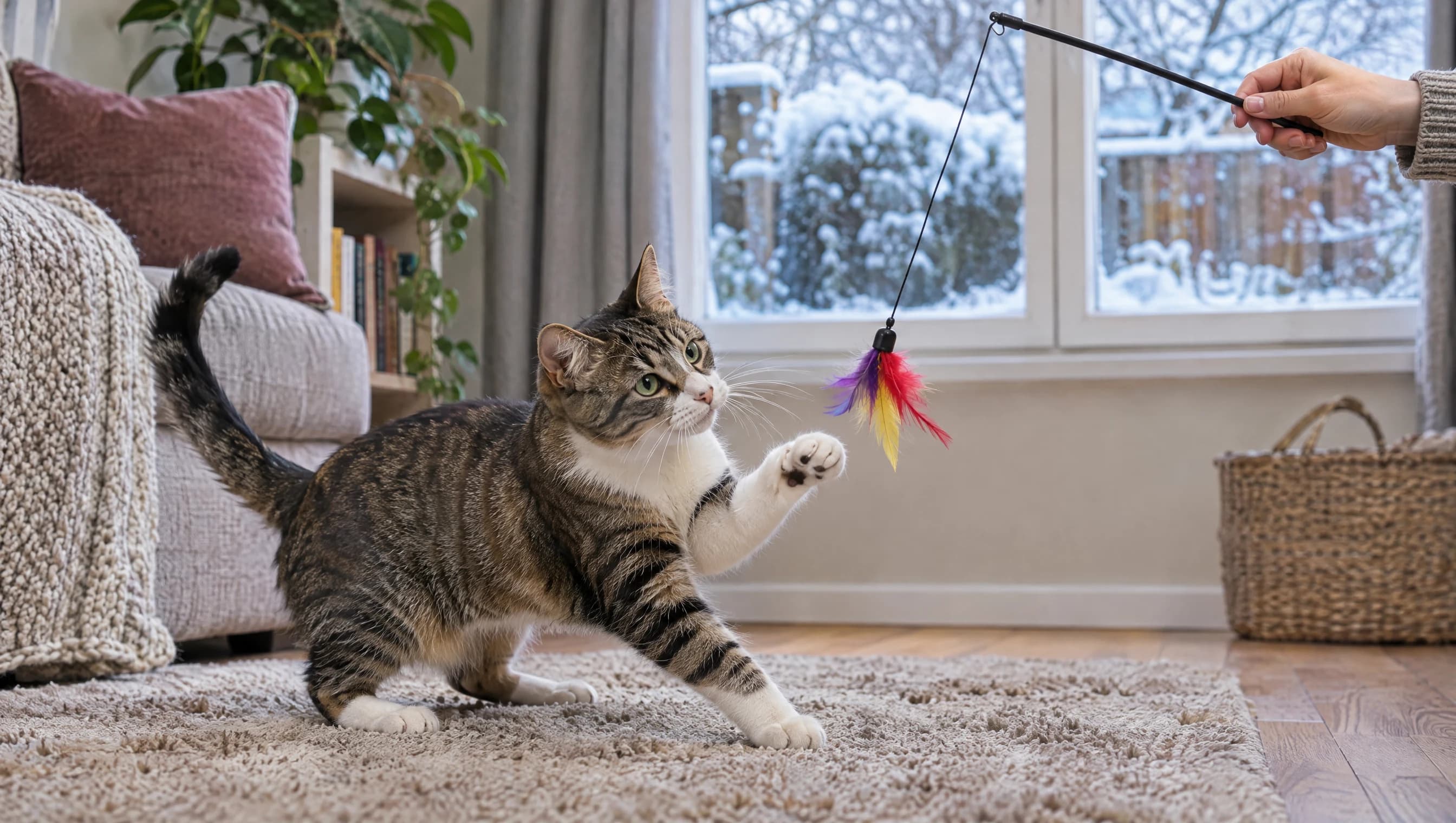
After snow, wipe road grit or salt from your cat’s paws and fur. If your cat gets wet, dry them with a towel. Keep cats indoors at night in cold weather, and contact a veterinarian immediately if you suspect winter poisoning.
Research notes
Sources behind this guide
Written and source-checked by Puni Pet Guides Editorial Team · Reviewed Nov 16, 2026
This guide synthesizes the public references below; it does not report hands-on product testing or independent veterinary review.
Review scope: practical context, source traceability, and clear non-diagnostic boundaries. Diagnosis and treatment decisions stay with veterinarians.