
Cat care guides · food labels and testing
Heavy Metals in Cat Food: What Does Detected Mean?
When a test says heavy metals were detected in cat food, it means a lab reported finding an element in the sample it tested. Detection alone does not tell you whether your cat ate a harmful amount. Read the result against the exact food and batch, its units, and the comparison being made. If you have a problem with a particular package, keep its details for follow-up.
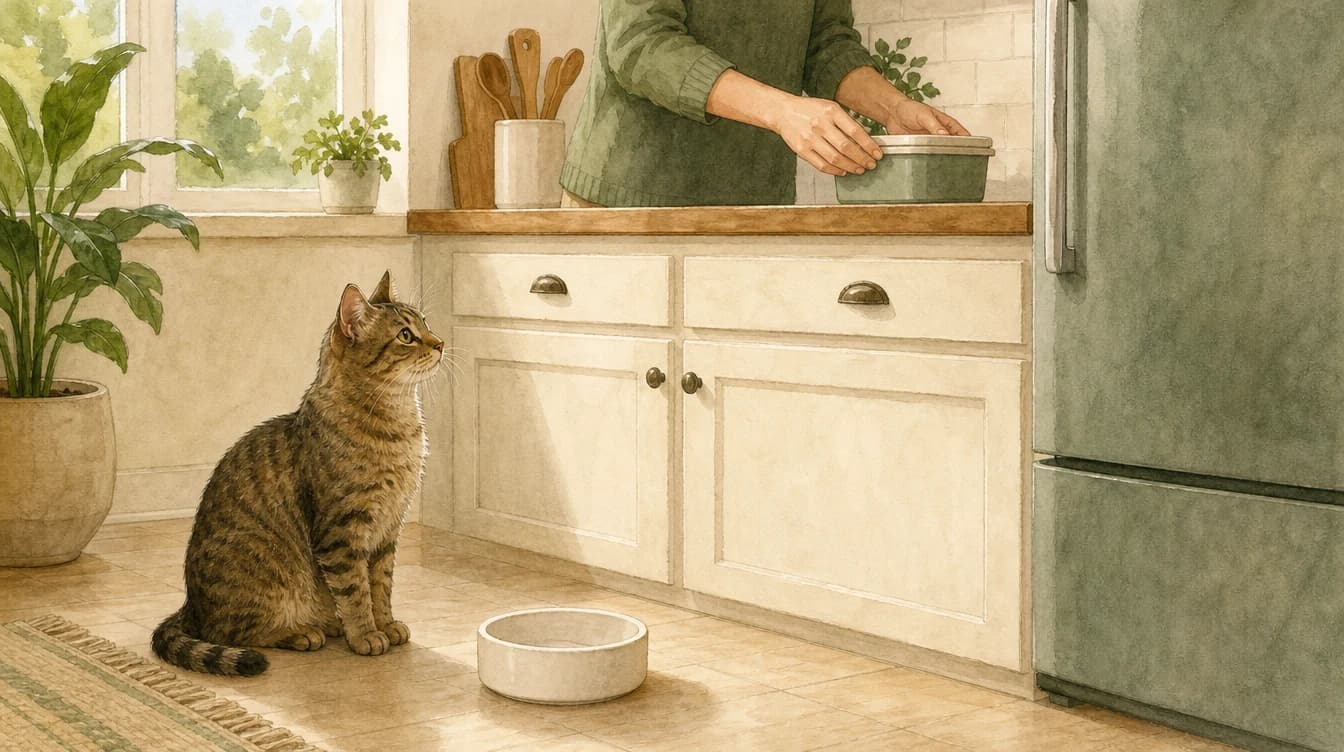
A detection is a test result, not a verdict
The FDA says it routinely tests animal food, including pet food, for essential and nonessential trace elements. Arsenic, cadmium, mercury and lead are examples of nonessential elements; excess can be harmful.
That testing context does not make every detection a safety verdict. The Clean Label Project says a detected result alone does not establish danger. A result is a measurement from a defined sample, not a description of every bag on a shelf.
Match the food, batch, and units
Start with the study's exact food and sample. The Clean Label Project's October 2026 cat-food study reports results per 1,000 kilocalories and ranks products within its tested cat-food category. It says one test represents one batch. A per-1,000-kilocalorie result cannot be compared directly with a per-kilogram result. Check whether the report calls a result detected, trace or quantified.
| What you have | What it can tell you |
|---|---|
| Headline only | A finding in a sample, not proof about every bag or harm to your cat. |
| Different food or batch | It may not describe the package you bought. |
| A package concern | Keep the package and its identifying details for follow-up. |
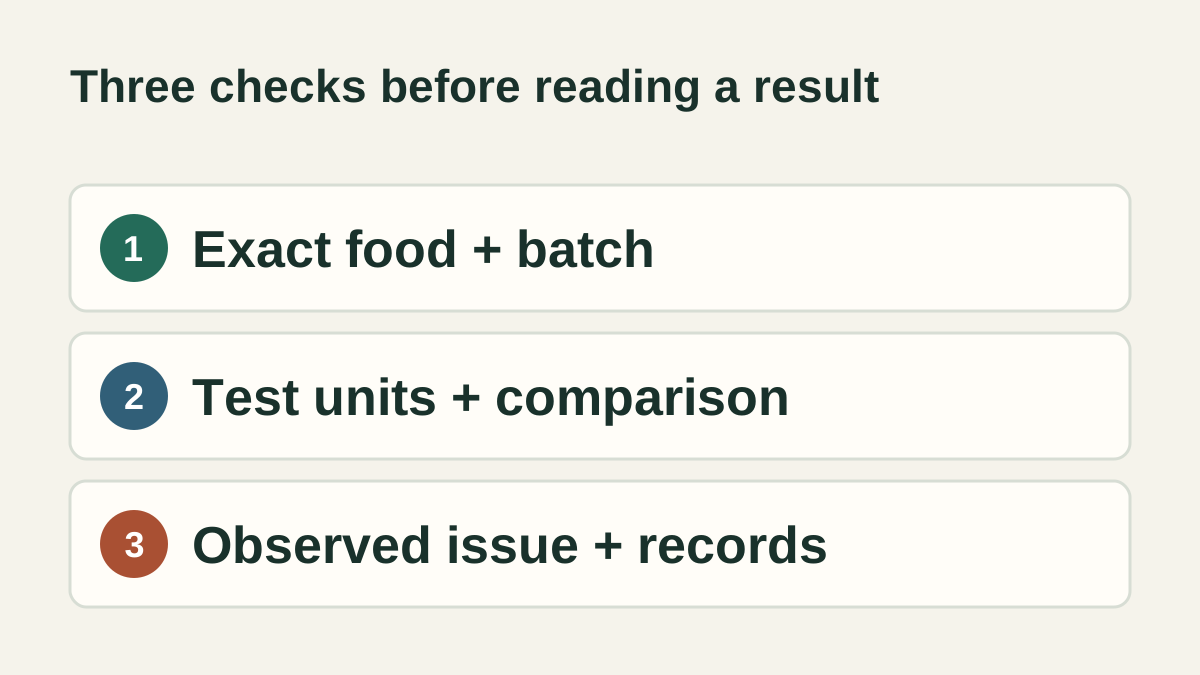
If a specific package concerns you
For a product problem you observed, the FDA complaint guide asks for as much product information as you can provide. If possible, save the original packaging. Note the product name, lot number, best-by date, UPC, where and when you bought it, and how it was handled. You can report a product problem electronically through the FDA Safety Reporting Portal. The agency may follow up, but follow-up is not guaranteed.
If your cat is unwell, contact your veterinarian and share the package details. An online test result cannot determine what caused a problem for an individual cat.
Research notes
Sources behind this guide
Written and source-checked by Puni Pet Guides Editorial Team · Reviewed Nov 3, 2026
This guide synthesizes the public references below; it does not report hands-on product testing or independent veterinary review.
Review scope: practical context, source traceability, and clear non-diagnostic boundaries. Diagnosis and treatment decisions stay with veterinarians.