Can Two Cats Share a Carrier in the Car? Check Room for Two
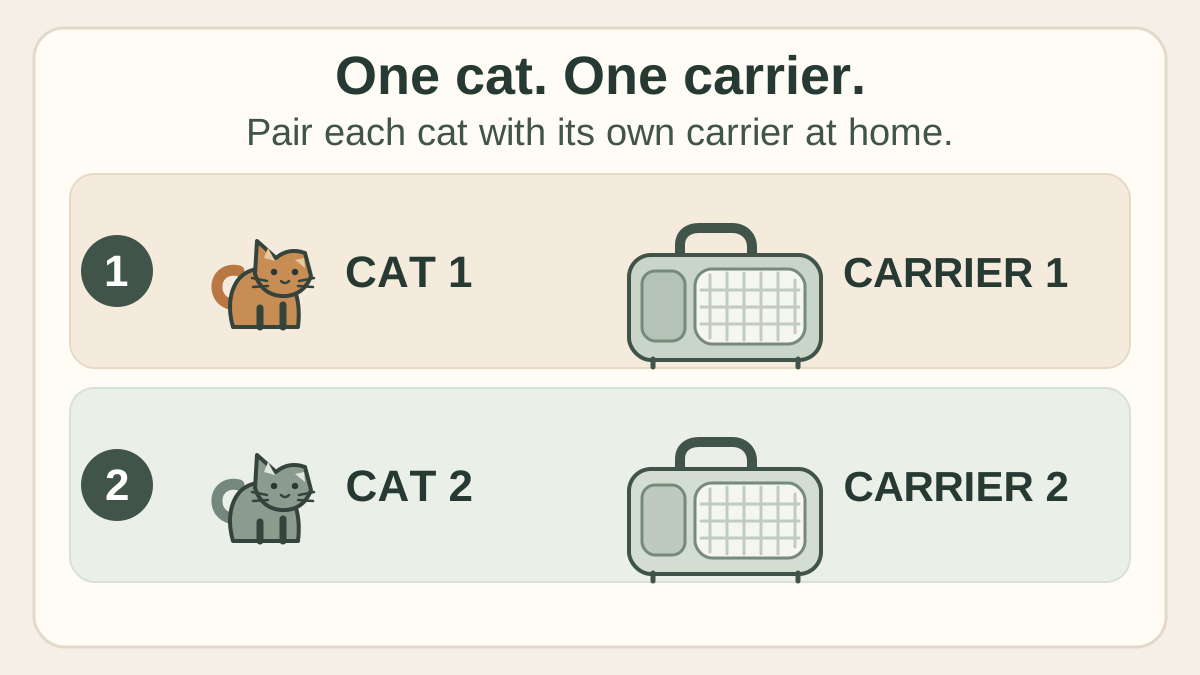
Use a separate, properly fitted carrier for each cat, even if they are bonded. Reuse carriers that already fit before buying anything, then check each cat and the car separately. The Feline Veterinary Medical Association’s 2025 caregiver guide recommends one carrier per cat, including for cats that normally get along, because travel stress can change how they interact.
Illustration: one carrier for each cat.
Fit each cat first
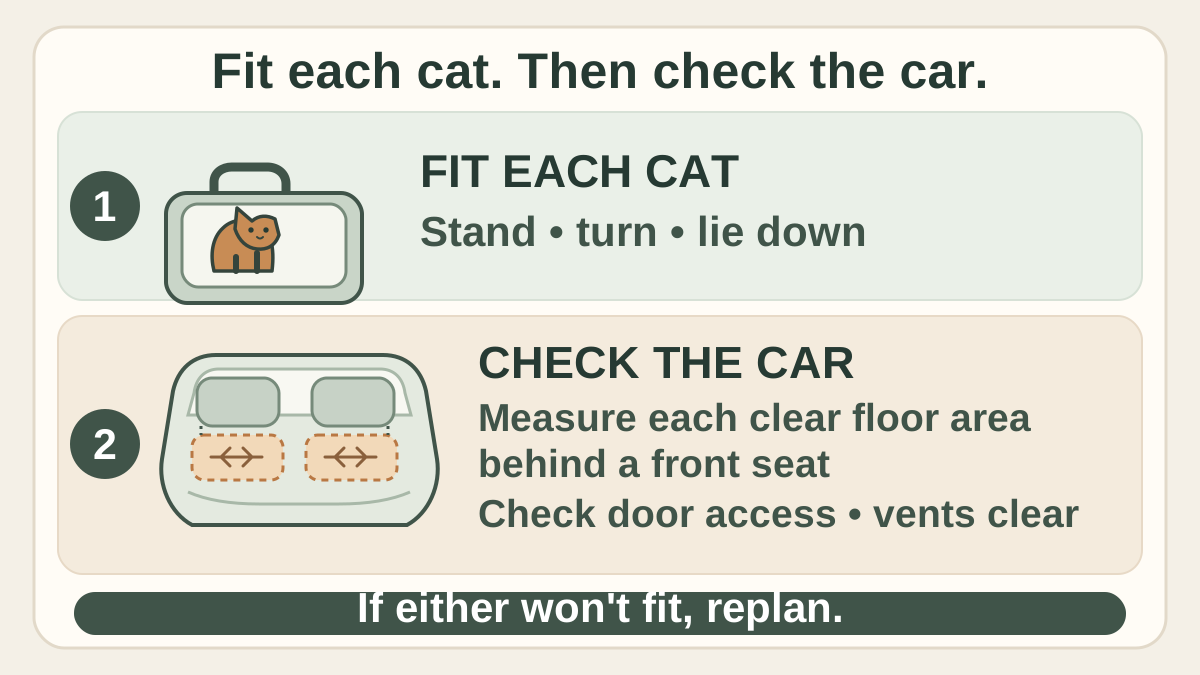
Check the cats one at a time. A carrier should give each cat room to sit, stand, move, and lie down; Battersea’s cat travel guidance includes those fit points in its carrier advice.
With the carrier assembled and open, let each cat approach without pushing it inside. Check that the cat can use the interior naturally, then repeat the check with the second cat. Matching the cats’ combined weight to a carrier limit is not enough: the fit must work for each animal. A listed limit is a screening rule, not a promise that the interior suits your cat.
Check the actual car space
For car placement, the FelineVMA’s 2025 motor-vehicle statement says to secure carriers on the floor behind either front seat. It says to use seat belts only with carriers verified as crash-test certified. Certification was not verified for the Petmate option below, so this guide does not recommend a seat-belt installation for it.
Set the front seats where you will keep them for the trip. Measure the clear floor area behind each seat, then place each empty, assembled carrier in its proposed spot. Check that both fit, the doors can open and close, and ventilation openings remain clear without changing those seat positions. This is a household measuring step, not a tested fit list for any vehicle.
Illustration: check each cat’s space and each vehicle floor area separately.
Two-cat carrier fit worksheet
Set the front seats where they will be for the trip. Record each cat’s fit separately, then measure the clear floor space behind each front seat and check access at both carrier spots.
Compare interior dimensions with each cat’s fit and exterior dimensions with the actual car space. Do not add the two carriers’ dimensions together to decide whether they will fit in the car.
What if two carriers do not fit in the car?
If the two floor spots do not work, pause and ask your veterinary team about the trip setup. Do not put both cats into one carrier to make the car-space problem disappear.
One optional carrier if you need another
Petmate 2-Door Top Load Kennel 24 in, Pearl Tan (SKU 21232)
Amazon ASIN: B0062JFGFC.
If you need a second carrier, first check whether an existing carrier passes both checks. One possible new option is Petmate’s 24-inch two-door top-load kennel in Pearl Tan.
Petmate lists its interior as 21 × 14.5 × 13.5 inches and its maximum as 15 pounds. Treat those figures as screening information, not proof of fit. Skip it if a cat cannot sit, stand, move, and lie down naturally inside, exceeds the 15-pound limit, or the assembled carrier does not fit in the recommended floor spot.
The selected Amazon listing gives outside dimensions of 24 × 16.8 × 14.5 inches. Compare them with the floor space behind your front seats; check the interior dimensions against each cat’s fit. You do not need to buy two matching units. Petmate’s SKU 21232 specifications
Paid link
As an Amazon Associate I earn from qualifying purchases. This is a paid link.
Editorial scope: This is a source-based guide, without hands-on product or vehicle testing.
Factual sources (4)
FelineVMA supplies transport guidance. Battersea covers fit and access. Petmate lists interior dimensions; the selected Amazon option supplies the exterior dimensions.