
Everyday dog care · winter gear
Dog Won’t Wear Boots? Start With One Paw
If your dog won’t wear boots, start with the easiest accepted step—not all four at once. Reward your dog for the paw handling they already accept, then let them inspect a boot. Try one correctly fitted boot briefly, reward, and take it off. Increase wear time, then add boots, only while your dog stays comfortable. If they pull away or try to remove a boot, back up. Wait until your dog is comfortable in all four before trying a short outdoor walk.
Make paw handling the first step
If your dog pulls a paw away when you reach for it, put the boot aside. Start with brief, gentle contact your dog already accepts and reward the calm response; keep the practice short. The AKC recommends working on paw handling first when a dog dislikes foot contact. Don’t hold the paw in place to get through the exercise. If your dog has trouble with even gentle handling, pause and ask a reward-based trainer to help you find a comfortable starting point.
Let the boot be familiar before fitting it
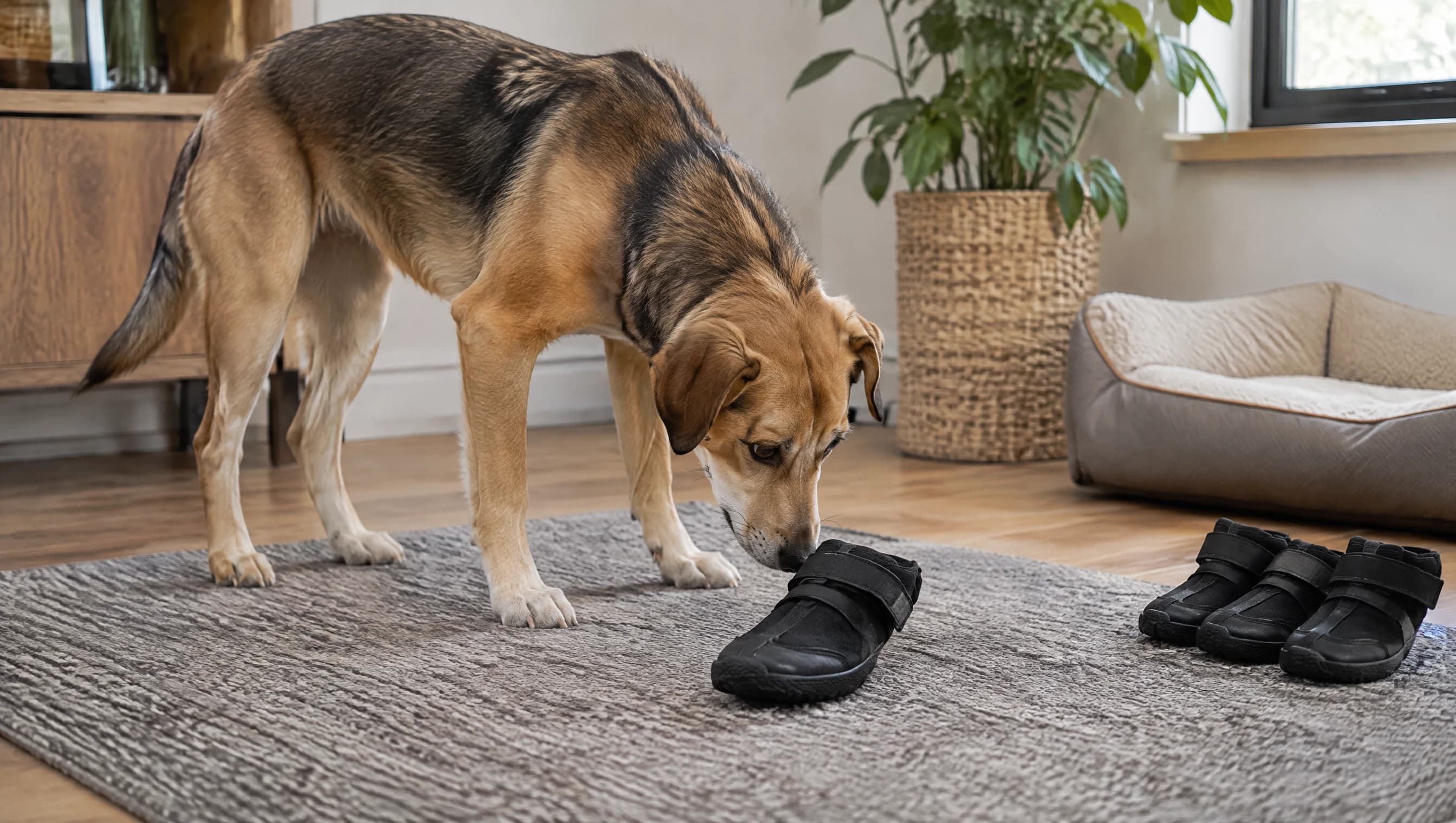
Set a boot on the floor and let your dog choose whether to approach or sniff it. Reward curiosity, then put the boot away before practice turns into a struggle. There is no need to move it toward your dog’s face or slip it on during this step. The AKC advises rewarding a dog’s exploration and checking that the boots fit properly before using them.
Try one boot, then build time gradually
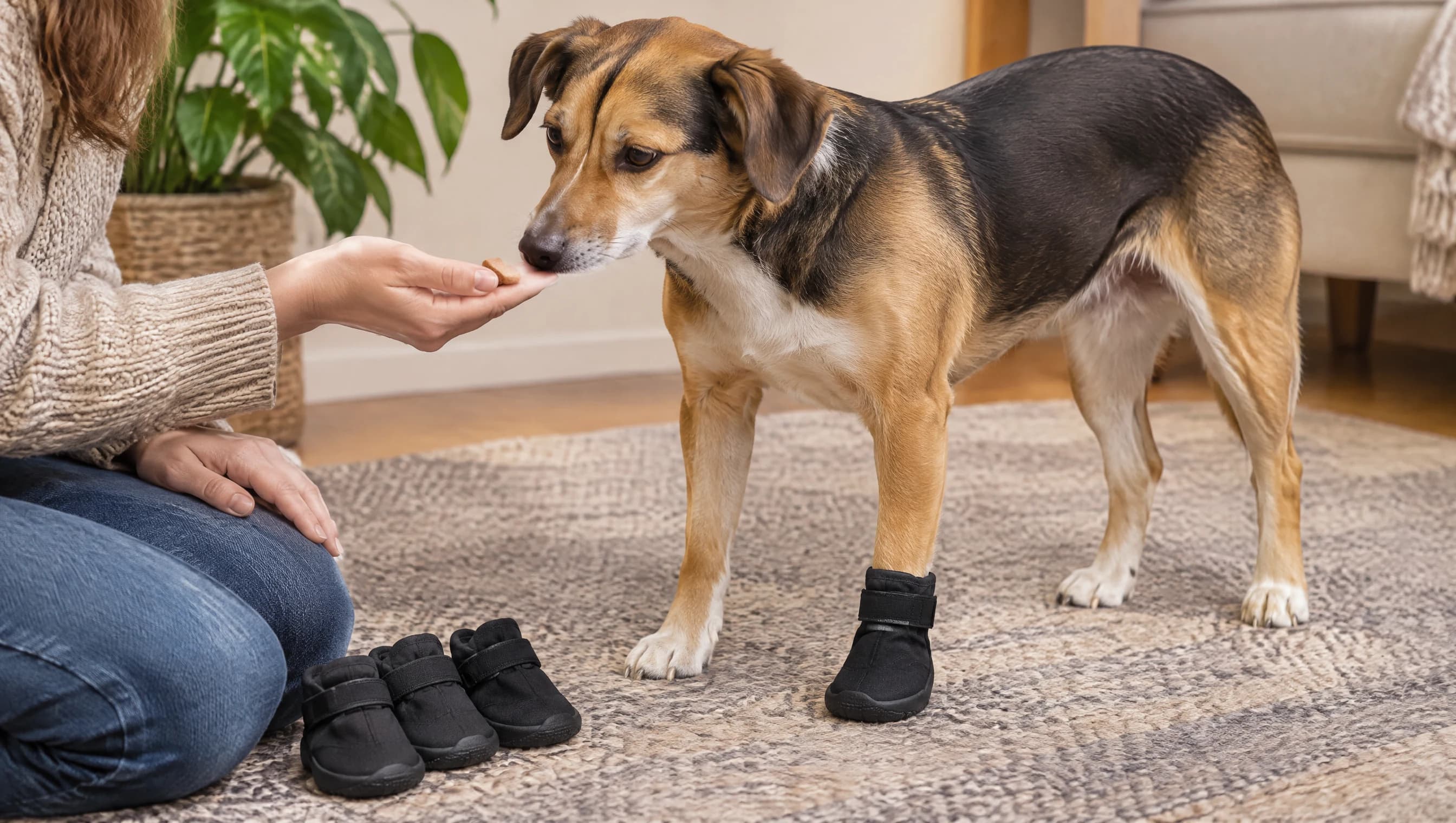
Once your dog is comfortable with paw handling and boot exploration, try one correctly fitted boot briefly indoors or in a quiet yard. Reward your dog, then take the boot off. Keep this as a short practice, not a walk. If your dog tries to remove it, end that try, make the next try shorter, and return to an easier rewarded step. Once your dog is comfortable in one boot, gradually extend the time it stays on. Then add a second boot, followed by the remaining boots, only while your dog remains comfortable. Let your dog’s response set the pace rather than following a fixed number of days. The AKC’s boot guidance recommends brief, rewarded practice and gradual progress.
Choose the next step by your dog’s response
Go back to the earliest step your dog can manage comfortably. There is no set timeline; don’t push through a refusal.
| What you observe | Next step |
|---|---|
| Your dog pulls a paw away from touch | Leave the boot off. Return to brief, rewarded paw handling your dog already accepts. |
| Your dog approaches or sniffs a boot | Reward the exploration and keep the boot off for now. |
| Your dog accepts one brief boot without trying to remove it | Reward, take it off, then gradually extend wear time before adding another boot. |
| Your dog tries to remove a boot | End that try, make the next try shorter, or return to an easier step. Don’t force the boot to stay on. |
AVSAB’s position supports reward-based methods for dog training and behavior modification. Keep boots optional during practice: don’t hold your dog down, punish them, or leave a boot on while they try to remove it. A step back is useful information, not a reason to force the next one.
Wait for four comfortable boots before a walk
Once your dog is comfortable wearing all four boots, try a short outdoor walk. If they are still trying to remove a boot, go back to easier practice rather than making the outing the test. The AKC recommends progressing to short walks only after a dog is comfortable in all four.
Plan winter walks while you practice
Until boots are comfortable, avoid heavily salted routes when you can, keep walks shorter in extreme cold, and heed your dog’s discomfort. After a winter walk, wash or wipe paws with warm water if salt or de-icer may be present. VCA notes that paw balm is another option when a dog will not accept boots. For the separate choice between boots and paw wax on snowy or salted routes, see our winter paw-protection guide.
Research notes
Sources behind this guide
Written and source-checked by Puni Pet Guides Editorial Team · Reviewed Nov 16, 2026
This guide synthesizes the public references below; it does not report hands-on product testing or independent veterinary review.
Review scope: practical context, source traceability, and clear non-diagnostic boundaries. Diagnosis and treatment decisions stay with veterinarians.